
… or, when kids try to run a financial institute. more stuff about BlueGuardian here
The proprietary trading industry is built on one thing above all else: trust.
Traders trust firms to evaluate them fairly. Firms trust traders to follow the rules. Without that mutual trust, the entire business model falls apart.
Unfortunately, my recent experience with Blue Guardian demonstrated what happens when that trust is replaced by hostility, assumptions, and a customer support culture that appears to treat legitimate customers as suspects from the very beginning.
How It Started
The issue itself was remarkably simple.
I purchased a trading account through Blue Guardian. During the checkout process, the country field was automatically populated as Taiwan instead of Thailand.
After noticing the mistake, I immediately contacted support.
I did not request a refund. I did not dispute the transaction. I did not attempt to create multiple accounts.
I simply explained that the country selection was incorrect and asked whether it could be adjusted to avoid possible KYC verification problems later.
In other words, I was proactively trying to prevent future compliance issues.
The Immediate Response: Fraud Accusations
Rather than assisting with the correction, support immediately began treating the situation as if it were evidence of fraud.
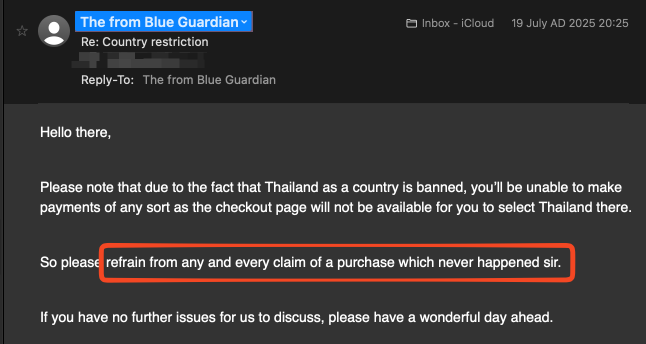
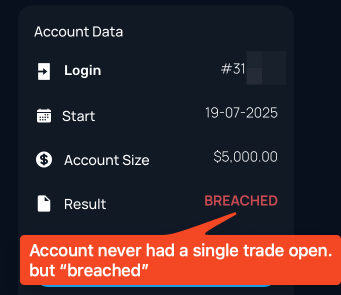
At one point, I was informed that my purchase supposedly did not exist, despite the fact that I had an order number generated through their own system, ther system provided me with a trading account (basically shipped the product already) but for some reason there was no order?
To help resolve the confusion, I provided evidence from my credit card application showing that Blue Guardian had successfully charged my card.
Instead of acknowledging the possibility of an internal error, support escalated the accusations and suggested that the payment evidence had been manipulated.
Think about that for a moment.
A customer contacts support to fix a country field. The customer provides an order number.
The customer provides payment evidence. The customer does not request a refund.
Yet the response is not assistance, but repeated accusations.
A Support Culture Problem
The most concerning aspect of this experience was not the technical issue itself.
Mistakes happen. Websites malfunction.
Payment processors occasionally create confusion.
What concerned me was the attitude displayed throughout the interaction.
At every stage, the default assumption appeared to be that the customer was attempting something dishonest.
Good customer support starts from a position of investigation and verification.
Bad customer support starts from a position of accusation.
In my case, it felt very much like the latter.
Weeks later, the account was disabled entirely.
This raises a reasonable question:
I still have difficulty understanding the logic.
The Bigger Pattern
After this experience, I began reading public reviews from other traders.
A recurring theme appeared repeatedly:
- Sudden accusations of rule violations.
- Aggressive communication from support.
- Account terminations.
- Difficulty resolving disputes.
- Customers feeling treated as adversaries rather than clients.
Of course, every review site contains both genuine complaints and unreasonable complaints. No company is perfect.
However, when the same themes continue appearing across a large number of independent reviews, they deserve attention.
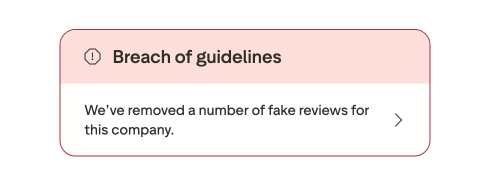
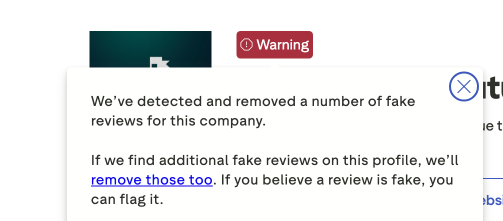
even Trustpilot noticed that there is a pattern as now there are two profiles for the same company, and one appears to have significanly large number of positive reviews.
A prop firm’s reputation is not built by marketing videos or Discord announcements.
It is built by how the company treats customers when problems occur.
Questions About Transparency
Another aspect that deserves scrutiny is the corporate structure presented to traders.
Blue Guardian’s public branding often emphasizes a UK presence. However, public company information raises questions regarding the scale of operations compared to the image being projected.
At the same time, account sales appear to be conducted through Dubai-based entities.
This may be entirely legitimate, but it can create confusion regarding which legal entity is actually responsible for customer relationships, disputes, and regulatory oversight.
For traders considering any prop firm, understanding exactly who they are doing business with is important.
The answer should never require detective work.
Leadership and Professionalism
A company’s culture often reflects its leadership.
In the modern prop-firm industry, many firms are founded by very young entrepreneurs, particularly those emerging from social media, crypto, and online marketing backgrounds.
Youth itself is not a problem.
Many successful businesses have been built by young founders. The issue arises when a company begins to operate more like a social-media brand than a financial-services business.
When customer interactions begin to feel emotional, defensive, or confrontational, confidence in the organization naturally declines.
Thoughts
My experience with Blue Guardian started with a simple request:
What followed was a series of fraud accusations, dismissal of evidence, a disabled account.
and of course NO Refund.
Whether this was the result of poor internal procedures, inadequate staff training, or a broader cultural issue. more stuff about BlueGuardian here