
Articles

General Market Analysis – 18/09/25
421625 September 18, 2025 14:14 ICMarkets Market News
Stocks Mixed After Fed Delivers on Rate Cut – Dow up 0.6%
US stock markets had a choppy reaction to the Fed’s highly anticipated 25-basis point rate cut in trading yesterday. The Dow pushed up 0.57% to 46,018, the S&P fell 0.10% to 6,600, and the Nasdaq dropped 0.33% to 22,261. The Fed’s update came largely in line with market pricing, penciling in two further cuts by the year-end, but the dollar and yields rallied. The 2-year yield added 5 basis points to move up to 3.553%, and the benchmark 10-year moved up 5.9 basis points to 4.087%. The dollar ultimately finished higher after an initial dip on the cut, with the DXY up 0.40% to 97.02. Oil prices fell back from recent highs, Brent down 0.83% to $67.90, and WTI off 0.73% to $64.05. Gold initially spiked to a new record level but then fell back with the stronger dollar, down 0.81% by the close at $3,659.32 an ounce.
Bank of England on Hold Today
The Bank of England is expected to keep interest rates on hold today after cutting by 25 basis points last month. Inflation data and employment numbers earlier this week largely came in on expectations, which has locked in the ‘hold’ from the MPC for most market participants. However, FX traders are still expecting to see some big moves in Cable around the event today. Traders will be focusing closely on the forward guidance from the MPC, with high inflation still a concern for many. Cable is now trading around the 1.3625 level, having spiked yesterday up to 1.3678 on the Fed announcement, but a more hawkish (or less dovish) update from the bank today could see those levels examined again swiftly—especially if the recent dollar bear trend resumes and interest rate differentials kick in for longer-term traders.
More Central Bank Action Ahead Today
Traders are expecting another busy day in financial markets with more data and central bank rate calls scheduled today on the back of the Fed rate cut late in the New York session. The Asian session has already seen New Zealand GDP data come in much lower than expected, which has put pressure on the Kiwi across the board. Later this morning, we have the Australian employment data due out, with the employment change expected to show a 21k increase and the unemployment rate expected to remain steady at 4.2%. The focus will again be on UK markets during the European day, with the Bank of England likely to keep rates on hold at 4.00%. The New York session is expected to see a continued response from yesterday’s Fed move from investors; however, we also have the weekly unemployment claims data (exp. 241k) and the Philly Fed Manufacturing Index (exp. 1.7) due out, which will add more to the mix.
The post General Market Analysis – 18/09/25 first appeared on IC Markets | Official Blog.
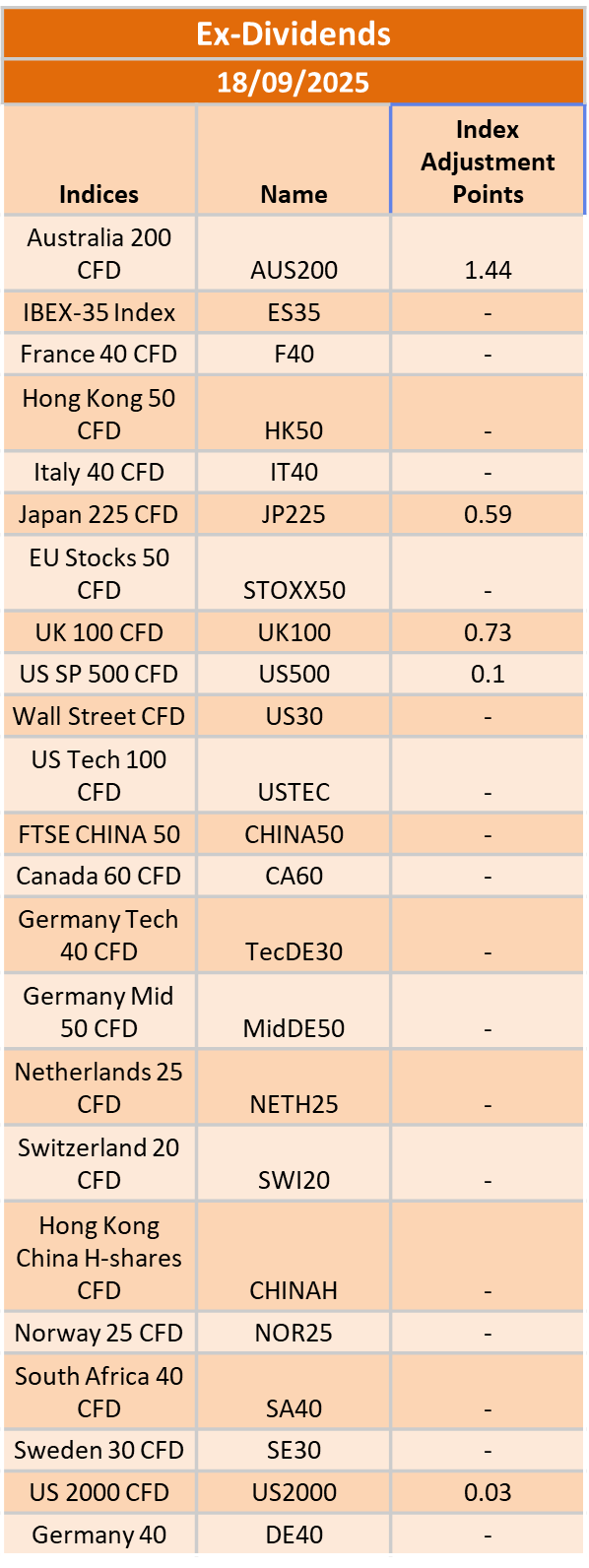
Ex-Dividend 18/9/2025
421605 September 17, 2025 19:14 ICMarkets Market News
The post Ex-Dividend 18/9/2025 first appeared on IC Markets | Official Blog.
Wednesday 17th September 2025: Asian Markets Slip as Investors Await Fed Rate Decision
421593 September 17, 2025 13:39 ICMarkets Market News
Global Markets:
- Asian Stock Markets : Nikkei down 0.14%, Shanghai Composite up 0.32%, Hang Seng up 1.75% ASX down 0.6%
- Commodities : Gold at $3,715.20 (-0.04%), Silver at $42.090 (-1.28%), Brent Oil at $65.53 (-0.15%), WTI Oil at $64.54 (-0.15%)
- Rates : US 10-year yield at 4.026, UK 10-year yield at 4.6380, Germany 10-year yield at 2.6904
News & Data:
- (CAD) CPI m/m -0.1% to 0.0% expected
- (USD) Core Retail Sales m/m 0.7% to 0.4% expected
- (USD) Core Retail Sales m/m 0.6% to 0.2% expected
Markets Update:
Asian markets traded mostly lower on Wednesday, weighed down by caution ahead of the U.S. Federal Reserve’s policy announcement later in the day. While a quarter-point rate cut is widely expected, many fear it won’t be enough to counter recent weak jobs data and persistent inflation. Traders are holding back from major moves, waiting for the Fed’s statement and updated projections for clues on the path ahead. Markets are also pricing in the possibility of further cuts in October and December.
In Australia, the S&P/ASX 200 slipped 0.69 percent to 8,816.10, reversing Tuesday’s gains. Mining and financial stocks dragged the index lower, with BHP, Rio Tinto, and Fortescue all falling, while BHP also announced job cuts and a mine suspension. Technology and energy stocks provided some support, with Block, WiseTech, and Xero posting gains alongside Woodside and Beach Energy.
Japan’s Nikkei 225 managed modest gains, up 0.21 percent at 44,995.79, lifted by strong tech names like Tokyo Electron, which surged more than 6 percent. However, weakness in automakers, banks, and exporters limited the upside.Elsewhere, markets in South Korea, Taiwan, and Singapore edged lower, while Hong Kong advanced 1.2 percent.
Globally, Wall Street finished slightly down overnight after hitting record intraday highs, while Europe also closed weaker. Oil prices rose nearly 2 percent amid geopolitical tensions and Fed uncertainty.
Upcoming Events:
- 01:45 PM GMT – CAD Overnight Rate
- 02:30 PM GMT – CAD BOC Press Conference
- 06:00 PM GMT – USD Federal Funds Rate
- 06:00 PM GMT – USD FOMC Statement
- 06:30 PM GMT – USD FOMC Press Conference
The post Wednesday 17th September 2025: Asian Markets Slip as Investors Await Fed Rate Decision first appeared on IC Markets | Official Blog.
IC Markets Europe Fundamental Forecast | 17 September 2025
421592 September 17, 2025 13:39 ICMarkets Market News
IC Markets Europe Fundamental Forecast | 17 September 2025
What happened in the Asia session?
The Asia session was dominated by pre-Fed positioning, with major asset classes (especially forex pairs and gold) showing heightened sensitivity to shifting US rate expectations. UK CPI provided stability for the pound, but overall trading was muted ahead of major North American central bank announcements later in the day. Asian equity indices tracked global caution, while gold and the yen benefited from broad risk aversion and a weak USD heading into this critical policy window.
What does it mean for the Europe & US sessions?
Today’s convergence of Fed and Bank of Canada decisions, alongside critical inflation data from the UK and economic releases from New Zealand, creates a pivotal moment for global markets. The Fed’s first rate cut of 2025 and accompanying economic projections will likely set the tone for risk sentiment through the remainder of the year, while ongoing geopolitical tensions in energy markets and persistent inflation in major economies continue to present challenges for policymakers and traders alike.
The Dollar Index (DXY)
Key news events today
Federal Funds Rate (6:00 pm GMT)
FOMC Economic Projections (6:00 pm GMT)
FOMC Statement (6:00 pm GMT)
FOMC Press Conference (6:30 pm GMT)
What can we expect from DXY today?
September 17, 2025 marked a pivotal day for the US dollar as the Federal Reserve delivered its first rate cut of the year amid significant political pressure and economic uncertainty. The 25 basis point reduction drove the dollar to multi-month lows against major currencies, with the DXY falling below 97.00. While the Fed cited labor market weakness as justification for easing, persistent inflation concerns and tariff-driven price pressures create a complex backdrop for future policy decisions. Market expectations for additional cuts through year-end suggest continued headwinds for dollar strength, though the central bank’s commitment to data-dependent policy adjustments leaves room for potential shifts in monetary policy direction.
Central Bank Notes:
- The Federal Open Market Committee (FOMC) voted, by majority, to lower the federal funds rate target range by 25 basis points to 4.00%–4.25% at its September 16–17, 2025, meeting, marking the first policy rate adjustment since December 2024 after five consecutive holds.
- The Committee maintained its long-term objective of achieving maximum employment and 2% inflation, acknowledging recent labor market softening and continued tariff-driven price pressures.
- Policymakers expressed elevated concern about downside risks to growth, citing a stalling labor market, modest job creation, and an unemployment rate drifting up toward 4.4%. At the same time, inflation remains above target, with CPI at 3.2% and core inflation at 3.1% as of August 2025; higher energy and food prices, largely attributable to tariffs, continue to weigh on headline measures.
- Although economic activity expanded at a moderate pace in the third quarter, the growth outlook has weakened. Q3 GDP growth is estimated near 1.0% (annualized), with full-year 2025 GDP growth guidance revised to 1.2%, reflecting slowing household consumption and tighter financial conditions.
- In the updated Summary of Economic Projections, the unemployment rate is projected to average 4.5% for the year, with headline PCE inflation revised up slightly to 3.1% for 2025. The Committee anticipates core PCE inflation to remain stubborn, requiring sustained vigilance and a flexible approach to risk management.
- The Committee reiterated its data-dependent approach and openness to further adjustments should employment or inflation deviate meaningfully from current forecasts. Several members dissented, either advocating a larger 50 basis point cut or preferring no adjustment at this meeting, revealing heightened divergence within the Committee.
- Balance sheet reduction continues at a measured pace. The monthly Treasury redemption cap remains at $5B and the agency MBS cap at $35B, as the Board aims to support orderly market conditions in the face of evolving global and domestic uncertainty
- The next meeting is scheduled for 28 to 29 October 2025.
Next 24 Hours Bias
Weak Bearish
Gold (XAU)
Key news events today
Federal Funds Rate (6:00 pm GMT)
FOMC Economic Projections (6:00 pm GMT)
FOMC Statement (6:00 pm GMT)
FOMC Press Conference (6:30 pm GMT)
What can we expect from Gold today?
Gold’s performance on Wednesday, September 17, 2025, exemplified its role as the ultimate safe-haven asset in an environment of monetary policy transition and geopolitical uncertainty. The combination of Fed rate cut expectations, sustained central bank buying, robust ETF inflows, and broader economic concerns propelled the precious metal to unprecedented levels above $3,700 per ounce.
Next 24 Hours Bias
Strong Bullish
The Euro (EUR)
Key news events today
ECB President Lagarde speaks(7:30 am GMT)
What can we expect from EUR today?
The Euro is supported by steady ECB policy and cautious optimism about inflation, but faces headwinds from proposed U.S. tariffs, Russian energy sanctions, and heightened geopolitical instability. EUR/USD is on an upward trajectory but remains vulnerable to corrections driven by U.S. data releases and global events. Lagarde’s commentary and the ECB’s conference today will be critical for traders and policymakers assessing the next moves for the Euro.
Central Bank Notes:
- The Governing Council kept the three key ECB interest rates unchanged at its September 11, 2025, meeting. The main refinancing rate remains at 2.15%, the marginal lending facility at 2.40%, and the deposit facility at 2.00%. These levels have been maintained after the cuts earlier in 2025, reflecting the Council’s confidence that the current stance is consistent with the price stability mandate.
- Evidence that inflation is running close to the ECB’s medium-term target of 2% supported the decision to hold rates steady. Domestic price pressures are easing as wage growth continues to moderate, and financing conditions remain accommodative. Policymakers reaffirmed a data-dependent, meeting-by-meeting approach to further policy moves, with no pre-commitment to a predetermined path amid ongoing global and domestic risks.
- Eurosystem staff projections foresee headline inflation averaging 2.0% for 2025, 1.8% for 2026, and 2.0% in 2027. The 2025 and 2026 forecasts reflect a downward revision, primarily on lower energy costs and exchange rate effects, even as food inflation remains persistent. Core inflation (excluding energy and food) is expected at 2.0% for both 2026 and 2027, with only minor changes since prior rounds.
- Real GDP growth in the euro area is projected at 1.1% for 2025, 1.1% for 2026, and 1.4% for 2027. A robust first quarter—partly due to firms accelerating exports ahead of anticipated tariff hikes—cushioned a weaker outlook for the remainder of 2025. While business investment continues to face uncertainty from ongoing global trade disputes, especially with the US, government investment and infrastructure spending are expected to provide some support to the outlook..
- Household spending is backed by rising real incomes and continued strength in the labor market. Despite some fading tailwind from previous rate cuts, financing conditions remain broadly favorable and are expected to underpin the resilience of private consumption and investment against outside shocks. Moderating wage growth and profit margin adjustments are helping to absorb residual cost pressures.
- Household spending is backed by rising real incomes and continued strength in the labor market. Despite some fading tailwind from previous rate cuts, financing conditions remain broadly favorable and are expected to underpin the resilience of private consumption and investment against outside shocks. Moderating wage growth and profit margin adjustments are helping to absorb residual cost pressures.
- All future interest rate decisions will continue to be guided by the integrated assessment of economic and financial data, the inflation outlook, and underlying inflation dynamics, and the effectiveness of monetary policy transmission—without any pre-commitment to a specific future rate path.
- The ECB’s Asset Purchase Programme (APP) and Pandemic Emergency Purchase Programme (PEPP) portfolios are declining predictably, as reinvestment of maturities has ceased. Balance-sheet normalization continues in line with the ECB’s previously communicated schedule.
- The next meeting is on 29 to 30 October 2025
Next 24 Hours Bias
Medium Bullish
The Swiss Franc (CHF)
Key news events today
No major news event
What can we expect from CHF today?
The Swiss Franc’s performance on September 17, 2025, reflects its enduring role as the premier global safe-haven currency. While facing significant headwinds from US trade policy with punitive 39% tariffs, the currency benefits from Fed uncertainty, global political instability, and Switzerland’s reputation for financial stability. The SNB’s cautious approach to monetary policy, combined with inflation within target ranges, supports expectations for policy stability at the September 25 meeting. Technical indicators suggest continued strength, with major financial institutions positioning the franc as their preferred defensive play in an uncertain global environment.
Central Bank Notes:
- The SNB eased monetary policy by lowering its key policy rate by 25 basis points, from 0.25% to 0% on 19 June 2025, marking the sixth consecutive reduction.
- Inflationary pressure has decreased further as compared to the previous quarter, decreasing from 0.3% in February to -0.1% in May, mainly attributable to lower prices in tourism and oil products.
- Compared to March, the new conditional inflation forecast is lower in the short term. In the medium term, there is hardly any change from March, putting the average annual inflation at 0.2% for 2025, 0.5% for 2026, and 0.7% for 2027.
- The global economy continued to grow at a moderate pace in the first quarter of 2025, but the global economic outlook for the coming quarters has deteriorated due to the increase in trade tensions.
- Swiss GDP growth was strong in the first quarter of 2025, but this development was largely because, as in other countries, exports to the U.S. were brought forward.
- Following the strong first quarter, growth is likely to slow again and remain rather subdued over the remainder of the year; the SNB expects GDP growth of 1% to 1.5% for 2025 as a whole, while also anticipating GDP growth of 1% to 1.5% for 2026.
- The SNB will continue to monitor the situation closely and will adjust its monetary policy if necessary to ensure inflation remains within the range consistent with price stability over the medium term.
- The next meeting is on 25 September 2025.
Next 24 Hours Bias
Medium Bullish
The Pound (GBP)
Key news events today
CPI y/y (6:00 am GMT)
What can we expect from GBP today?
The British pound remains well-positioned heading into today’s inflation data and tomorrow’s BoE decision. The combination of expected Fed dovishness and BoE hawkishness continues to support sterling, with GBP/USD trading at two-month highs. However, persistent inflation pressures and fiscal challenges create medium-term headwinds. Today’s CPI data will be crucial for shaping expectations around the BoE’s future policy path, particularly regarding the November meeting, where many economists expect the next rate cut.
Central Bank Notes:
- The Bank of England’s Monetary Policy Committee (MPC) voted on 7 August 2025 by a majority (exact split likely 5–3–1 or similar, based on expectations) to cut the Bank Rate by 25 basis points to 4.00%. Multiple members supported the move, citing fragile economic growth and signs of disinflation, while others preferred a larger reduction, and at least one member voted to hold the rate steady due to concerns about persistent inflation.
- The Committee unanimously decided to continue reducing the stock of UK government bond purchases held for monetary policy purposes by £100 billion over the next 12 months, targeting a balance of £558 billion by October 2025. As of 7 August, the gilt stock stands at £590 billion.
- Disinflation has been substantial since 2023 owing to policy tightening and the fading of external shocks. However, an unexpected uptick in headline CPI inflation—to 3.6% in June—reflects pass-through from regulated prices and earlier energy price rises, as well as signs of sticky core inflation.
- Headline CPI inflation is now 3.6%, above the Bank’s 2% target, reflecting regulated and energy price effects. The Committee expects inflation to remain around this level through Q3 before resuming its downward trend into 2026.
- UK GDP growth remains weak. Business and consumer surveys point to lackluster activity, and the labor market continues to loosen, with increasing evidence of slack. Wage growth has softened but remains above pre-pandemic norms.
- Pay growth and employment indicators have moderated further, and the Committee expects a significant slowing in pay settlements over the rest of 2025.
- Global uncertainty remains elevated, especially with rising energy prices and supply disruptions linked to conflict in the Middle East and renewed trade tensions. These factors prompt the MPC to remain vigilant in monitoring cost and wage shocks.
- The risks to inflation are considered two-sided. With the outlook for growth subdued and inflation persistence less clear, the Committee argues that a gradual and careful approach to further easing is warranted, with future policy decisions highly data-dependent.
- The Committee’s bias is still towards maintaining monetary policy at a restrictive stance until there is firmer evidence that inflation will return sustainably to the 2% target over the medium term. Further adjustments to policy will be decided on a meeting-by-meeting basis, with scrutiny of developments in demand, costs, and inflation expectations.
- The next meeting is on 18 September 2025.
Next 24 Hours Bias
Medium Bullish
The Canadian Dollar (CAD)
Key news events today
BOC Rate Statement (1:45 pm GMT)
Overnight Rate (1:45 pm GMT)
BOC Press Conference (2:30 pm GMT)
What can we expect from CAD today?
The Canadian dollar faces a pivotal day with the Bank of Canada virtually certain to deliver its first rate cut since March 2025. While economic data supports easing – particularly the significant job losses and below-target inflation – the currency has strengthened recently due to oil price support and broad US dollar weakness. The timing coordination with Fed easing creates competing forces, but market positioning suggests the loonie could maintain relative stability if both central banks deliver expected 25 basis point cuts with measured forward guidance.
Central Bank Notes:
- The Bank of Canada reduced its target for the overnight rate to 2.50% at its September 17 meeting, with the Bank Rate at 2.75% and the deposit rate at 2.25%. This marks the first rate cut since early 2025, as the Bank responded to a string of softer inflation prints and persistent economic headwinds.
- The Council cited continued U.S. tariff volatility and slow progress on trade negotiations as major contributors to ongoing uncertainty. While headline tariffs have not escalated further, the unpredictability of U.S. policy remains a significant risk for Canadian exports and business confidence.
- Uncertainty about U.S. trade policy and recurring tariff threats continued to weigh on growth prospects. The Bank flagged downside risks to the export sector, with survey data indicating ongoing hesitancy among manufacturers and exporters.
- After modest growth in Q1, Canada’s economy slipped into contraction, with GDP shrinking by 0.8% in Q2 and forecast to decrease again by 0.8% in Q3. Economic weakness has been most pronounced in manufacturing and goods-producing sectors affected by trade frictions and softer U.S. demand.
- Early estimates show that growth stabilized in September but remained well below the Bank’s 2% forecast for Q4. Manufacturing output has improved slightly—supported by a modest rebound in petroleum and mining activity—while consumer spending and retail sales were largely flat.
- Consumer spending remained subdued as households continued to limit discretionary purchases amid uncertainty and a slower job market. Housing activity stayed weak, despite earlier government efforts to boost affordability and modest gains in some real estate segments.
- Headline CPI inflation edged up to 1.9% in August, undershooting economist expectations but still showing emerging pressures from shelter and imported goods costs. Core inflation metrics were mixed, though price growth remains just below the Bank’s 2% target.
- The Governing Council reaffirmed its cautious approach, emphasizing that while further rate cuts are possible, the pace will hinge on the path of U.S. tariffs, domestic inflation dynamics, and signs of a sustainable recovery. The Bank remains vigilant against the risk of inflation falling below target in the face of economic slack.
- The next meeting is on 29 October 2025.
Next 24 Hours Bias
Weak Bearish
Oil
Key news events today
EIA Crude Oil Inventories (2:30 pm GMT)
What can we expect from Oil today?
Oil markets on September 17, 2025, are navigating a complex environment characterized by immediate supply disruption concerns from Ukrainian attacks on Russian infrastructure, gradual OPEC+ production increases, and anticipation of Federal Reserve monetary easing. While current prices remain supported by geopolitical tensions and supply risks, medium-term forecasts point to significant downward pressure from expected inventory builds and increased production. The market’s direction will largely depend on the evolution of the Russia-Ukraine conflict’s impact on energy infrastructure, OPEC+’s production decisions, and global economic conditions influenced by central bank policies.
Next 24 Hours Bias
Medium Bearish
The post IC Markets Europe Fundamental Forecast | 17 September 2025 first appeared on IC Markets | Official Blog.
IC Markets Asia Fundamental Forecast | 17 September 2025
421590 September 17, 2025 13:14 ICMarkets Market News
IC Markets Asia Fundamental Forecast | 17 September 2025
What happened in the U.S. session?
The overnight U.S. session on September 16, 2025, was characterized by cautious positioning ahead of the Federal Reserve’s anticipated rate cut, with markets digesting surprisingly strong retail sales data that reinforced the resilience of consumer spending. The session’s key developments included significant funding market stress evidenced by SOFR’s spike, individual stock volatility driven by corporate-specific news (Oracle’s TikTok involvement, Warner Bros. Discovery’s deal uncertainty), and broad sector rotation favoring energy while pressuring financials.
What does it mean for the Asia Session?
Wednesday, September 17, 2025, presents a packed schedule of high-impact events for Asian traders. The Federal Reserve’s widely anticipated rate cut will likely dominate market sentiment, potentially weakening the US dollar and supporting risk assets across Asian markets. The Bank of Canada’s expected rate reduction reflects broader global easing trends, while UK inflation data will test the Bank of England’s resolve regarding future policy moves.
The Dollar Index (DXY)
Key news events today
Federal Funds Rate (6:00 pm GMT)
FOMC Economic Projections (6:00 pm GMT)
FOMC Statement (6:00 pm GMT)
FOMC Press Conference (6:30 pm GMT)
What can we expect from DXY today?
The U.S. dollar faces its most challenging day in months as the Federal Reserve prepares to announce its first rate cut of 2025. With the currency already at multi-month lows against major counterparts and markets fully pricing in monetary policy easing, today’s decision and Powell’s subsequent commentary will be crucial in determining whether the dollar’s bearish trend accelerates or finds some stabilization. The combination of labor market weakness, political pressure, and dovish market expectations has created a perfect storm for dollar weakness, with the currency’s future trajectory heavily dependent on the Fed’s policy guidance for the remainder of 2025.
Central Bank Notes:
- The Federal Open Market Committee (FOMC) voted, by majority, to lower the federal funds rate target range by 25 basis points to 4.00%–4.25% at its September 16–17, 2025, meeting, marking the first policy rate adjustment since December 2024 after five consecutive holds.
- The Committee maintained its long-term objective of achieving maximum employment and 2% inflation, acknowledging recent labor market softening and continued tariff-driven price pressures.
- Policymakers expressed elevated concern about downside risks to growth, citing a stalling labor market, modest job creation, and an unemployment rate drifting up toward 4.4%. At the same time, inflation remains above target, with CPI at 3.2% and core inflation at 3.1% as of August 2025; higher energy and food prices, largely attributable to tariffs, continue to weigh on headline measures.
- Although economic activity expanded at a moderate pace in the third quarter, the growth outlook has weakened. Q3 GDP growth is estimated near 1.0% (annualized), with full-year 2025 GDP growth guidance revised to 1.2%, reflecting slowing household consumption and tighter financial conditions.
- In the updated Summary of Economic Projections, the unemployment rate is projected to average 4.5% for the year, with headline PCE inflation revised up slightly to 3.1% for 2025. The Committee anticipates core PCE inflation to remain stubborn, requiring sustained vigilance and a flexible approach to risk management.
- The Committee reiterated its data-dependent approach and openness to further adjustments should employment or inflation deviate meaningfully from current forecasts. Several members dissented, either advocating a larger 50 basis point cut or preferring no adjustment at this meeting, revealing heightened divergence within the Committee.
- Balance sheet reduction continues at a measured pace. The monthly Treasury redemption cap remains at $5B and the agency MBS cap at $35B, as the Board aims to support orderly market conditions in the face of evolving global and domestic uncertainty.
- The next meeting is scheduled for 28 to 29 October 2025.
Next 24 Hours Bias
Medium Bearish
Gold (XAU)
Key news events today
Federal Funds Rate (6:00 pm GMT)
FOMC Economic Projections (6:00 pm GMT)
FOMC Statement (6:00 pm GMT)
FOMC Press Conference (6:30 pm GMT)
What can we expect from Gold today?
Gold’s performance on September 17, 2025, reflects a convergence of powerful fundamental and technical factors. The precious metal’s advance to record highs above $3,700 represents the culmination of sustained central bank buying, dollar weakness, geopolitical uncertainty, and anticipation of Fed policy accommodation. While technical indicators suggest overbought conditions, the underlying drivers supporting gold remain robust, with major institutions forecasting continued gains toward $3,800-$4,000 levels over the coming months.
Next 24 Hours Bias
Strong Bullish
The Australian Dollar (AUD)
Key news events today
No major news events.
What can we expect from AUD today?
The Australian dollar is experiencing its strongest performance in months, benefiting from a confluence of factors including expected US Federal Reserve rate cuts, resilient domestic economic growth, and recovering commodity prices. However, rising inflation expectations have reduced the likelihood of further RBA rate cuts in the near term, creating a more complex monetary policy outlook. The currency’s technical momentum suggests potential for further gains, particularly if the Federal Reserve delivers the expected rate cut on September 17 and Chinese economic stimulus measures boost commodity demand. Key risks include any unexpected hawkish shifts in RBA communication or deterioration in global risk sentiment.
Central Bank Notes:
- The RBA held its cash rate steady at 3.60% at its September meeting on 8–9 September 2025, following a 25 basis point reduction at the August meeting. This maintains a cautious yet supportive stance, with the decision largely anticipated given recent evidence of inflation settling within the target band.
- Inflation readings continue to ease, with headline CPI most likely tracking near 2.1–2.3%—comfortably within the 2–3% target range. September quarter figures are pending, but leading indicators show further moderation in non-housing components, even as insurance and housing-related costs remain sticky.
- The RBA’s preferred trimmed mean inflation is estimated at around 2.7%–2.9%, further reflecting progress toward the midpoint of the target range. Energy and food volatility still create some short-term uncertainty, but underlying inflation is broadly on track.
- Global conditions are a key source of risk. While U.S.–EU trade tensions have stabilized slightly, volatility in equities and commodities persists, with uncertainty feeding through to Australia’s trade and export outlook.
- Domestic demand shows tentative improvement. Real household incomes and a stabilizing housing sector have underpinned modest consumption growth, though business investment remains uneven—service sectors outperforming manufacturing and construction.
- Labor market tightness persists, but momentum continues to slow from earlier in the year. Employment gains remain, but job vacancies and hiring intentions have softened, with underutilization rising marginally for the second straight month.
- Wage growth has slowed in line with easing labour pressures, but unit labour costs remain elevated due to weak productivity. The RBA continues to flag subdued productivity as a medium-term cost risk.
- Forward indicators suggest household consumption may be softer than previously forecast. Elevated rents and high borrowing costs are dampening discretionary spending, despite modest income recovery.
- The Board continues to highlight the risk that household spending could underperform, potentially weighing on business investment and job creation if confidence remains subdued.
- Monetary policy remains mildly restrictive, in line with greater inflation control and ongoing economic rebalancing. The decision to hold rates recognizes both progress and ongoing uncertainties, with future moves explicitly tied to incoming data.
- The Reserve Bank reinforced its goals of price stability and full employment, stating readiness to adjust policy if economic or inflation outcomes diverge from baseline projections.
- The next meeting is on 29 to 30 September 2025.
Next 24 Hours Bias
Medium Bullish
The Kiwi Dollar (NZD)
Key news events today
GDP q/q (10:45 pm GMT)
What can we expect from NZD today?
The New Zealand dollar enters Wednesday’s double-barrelled risk events in a tight holding pattern. A Fed cut is broadly priced, so guidance on subsequent U.S. easing will dictate whether NZD/USD can finally clear the stubborn 0.60 ceiling. Domestically, a negative GDP print would confirm a mid-year growth stumble and likely accelerate RBNZ easing expectations, adding downward pressure. Offsetting these risks, record terms-of-trade readings and the new UAE free-trade deal strengthen New Zealand’s external position, providing fundamental support once global rate uncertainty settles.
Central Bank Notes:
- The Monetary Policy Committee (MPC) agreed to cut the Official Cash Rate (OCR) by 25 basis points to 3.00% on 20 August 2025, marking a three-year low and continuing the easing cycle after July’s pause. The vote was split 4-2, with two members advocating a 50-basis-point cut, highlighting diverging views within the Committee.
- Policymakers indicated that significant uncertainty and a stalling economic recovery prompted this move, leaving the door open for further rate cuts later in the year, with a possible trough around 2.5% by December.
- Annual consumer price index inflation rose to 2.7% in the June quarter and is expected to reach 3% for the September quarter—at the upper end of the MPC’s 1 to 3% target band—but medium-term expectations remain anchored near the 2% midpoint.
- Despite the near-term uptick, headline inflation is projected to return toward 2% by mid-2026, as tradables inflation pressures ease and significant spare capacity continues to dampen domestic price momentum.
- Domestic financial conditions are broadly aligning with MPC expectations, as lower wholesale rates have translated into reduced borrowing costs for households. However, declining consumption and investment demand, higher unemployment, and subdued wage growth reflect ongoing economic slack.
- GDP growth stalled in the second quarter of 2025, contrasting with earlier projections. High-frequency indicators point to continued weakness driven by rising prices for essentials, weakening household savings, and constrained business lending.
- The MPC cautioned that ongoing global tariff uncertainties and policy shifts, especially recent changes in US trade regulations, could amplify market volatility and present both upside and downside risks to New Zealand’s recovery.
- Subject to medium-term inflation pressures continuing to ease as projected, the MPC signaled scope for further OCR cuts, possibly down to 2.5% by year-end, consistent with the latest Monetary Policy Statement outlook.
- The next meeting is on 22 October 2025.
Next 24 Hours Bias
Weak Bullish
The Japanese Yen (JPY)
Key news events today
No major news events.
What can we expect from JPY today?
The Japanese Yen enters September 17, 2025, from a position of recent strength, primarily driven by US Dollar weakness amid Fed rate cut expectations. While the BoJ is expected to maintain its current policy stance this week, the combination of persistent inflation, political uncertainty, and external trade pressures creates a complex environment for the currency. The upcoming Fed decision and BoJ communication will be critical in determining whether the yen can sustain its recent gains or face renewed pressure from domestic political developments and trade headwinds.
Central Bank Notes:
- The Policy Board of the Bank of Japan decided on 17 September, by a unanimous vote, to set the following guidelines for money market operations for the inter-meeting period:
- The Bank will encourage the uncollateralized overnight call rate to remain at around 0.5%.
- The BOJ will continue its gradual reduction of monthly outright purchases of Japanese Government Bonds (JGBs). The scheduled amount of long-term government bond purchases remains unchanged from the prior decision, with a quarterly reduction pace of about ¥400 billion through March 2026 and about ¥200 billion per quarter from April to June 2026 onward, aiming for a purchase level near ¥2 trillion in January to March 2027.
- Japan’s economy continues to show a moderate recovery, with household consumption supported by rising incomes, although corporate activity has softened somewhat. Overseas economies remain on a moderate growth path, with the impact of global trade policies still weighing on Japan’s export and industrial production outlook.
- On the price front, the year-on-year rate of change in consumer prices (excluding fresh food) remains in the mid-3% range. Inflationary pressures remain broad-based, with persistent cost-push factors in food and energy, alongside solid wage pass-through. However, input cost pressures from past import surges are showing early signs of easing.
- Short-term inflation momentum may moderate as cost-push effects diminish, though rent increases and service-related price gains tied to labor shortages are likely to provide support. Inflation expectations among firms and households continue a gradual upward drift.
- Looking ahead, the economy is projected to grow at a slower-than-trend pace in the near term due to external demand softness and cautious corporate investment plans. However, accommodative financial conditions and steady increases in real labor income are expected to underpin domestic demand.
- In the medium term, as overseas economies recover and global trade stabilizes, Japan’s growth potential is likely to improve. With persistent labor market tightness and rising medium- to long-term inflation expectations, core inflation is projected to remain on a gradual upward trend, converging toward the 2% price stability target in the latter half of the projection horizon.
- The next meeting is scheduled for 30 to 31 October 2025.
Next 24 Hours Bias
Medium Bullish
Oil
Key news events today
EIA Crude Oil Inventories (2:30 pm GMT)
What can we expect from Oil today?
Oil markets on September 17, 2025, are characterized by bullish momentum driven primarily by supply disruption concerns stemming from Ukrainian attacks on Russian energy infrastructure. With Brent crude above $68 per barrel and WTI above $64 per barrel, prices have gained over 2% in recent sessions. The combination of Russian refinery attacks eliminating an estimated 300,000 barrels per day of capacity, expected Fed rate cuts supporting demand outlook, and cautious OPEC+ production increases is creating a supportive environment for crude prices in the near term. However, longer-term forecasts remain bearish due to anticipated inventory builds and supply growth outpacing demand, with major institutions projecting significant price declines through 2026.
Next 24 Hours Bias
Medium Bearish
The post IC Markets Asia Fundamental Forecast | 17 September 2025 first appeared on IC Markets | Official Blog.
Trade CAD on the Bank of Canada Interest Rate Decision
421588 September 17, 2025 13:14 ICMarkets Market News
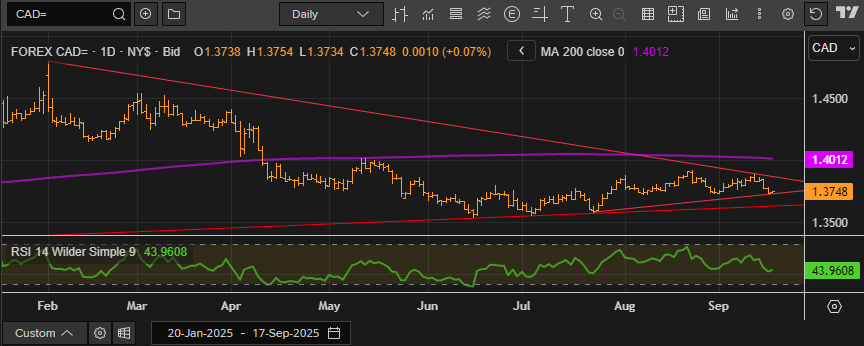
Although the major focus for FX traders today will be on the small matter of the Federal Reserve rate call later in the day, the initial focus for North American markets will be on Ottawa and the Bank of Canada’s rate decision. The market is firmly pricing in a 25-basis-point rate cut as the bank continues to battle with high unemployment. However, as with the central bank further south, big moves are expected for the currency on the forward guidance that we receive from the Rate Statement and consequent Press Conference.
USDCAD is currently sitting close to monthly lows, and any more dovish indications from the committee could see the CAD appreciate significantly and the support for the Loonie break. The bank is still concerned with possible inflation issues from US tariffs, and if these are highlighted, then the update could be interpreted as less dovish than expected, and we could see USDCAD move back up into recent ranges. Whatever the outcome, traders will be aware that the Fed call later in the day will have a bigger impact on the dollar side of the equation, so they may look to convert any USDCAD positions into CAD cross positions to take advantage of further moves.
Resistance 2: 1.3924 – August High
Resistance 1: 1.3852 – Trendline Resistance
Support 1: 1.3731 – Trendline Support and September Low
Support 2: 1.3632 – Long-Term Support Trendline
The post Trade CAD on the Bank of Canada Interest Rate Decision first appeared on IC Markets | Official Blog.
General Market Analysis – 17/09/25
421587 September 17, 2025 12:39 ICMarkets Market News
Stocks Drift Ahead of the Fed – Dow Down 0.3%
US stocks drifted lower ahead of today’s key Federal Reserve Bank rate decision, whilst the dollar crashed despite stronger Retail Sales data. The Dow finished down 0.27% at 45,757, the S&P lost 0.13% to 6,606, and the Nasdaq fell just 0.07% to 22,333. Treasury yields pulled further back on the day despite a rally on the data, the 2-year down 3.4 basis points to 3.503% and the 10-year down 1 basis point to 4.028%. The dollar took a hit, with the DXY losing 0.66% on the day to close at 96.66. Oil prices continued to move higher as traders priced in a weaker dollar and increased geopolitical issues, with Brent up 1.56% to $68.49 and WTI up 1.99% to $64.57 a barrel, whilst gold again hit a fresh high just above $3,700, eventually settling up 0.29% at $3,689.98 on the close.
Dollar Looking Vulnerable into the Fed Meeting
The US dollar took a big hit in trading yesterday as FX traders looked to cover the possibility of an outsize cut at the conclusion of today’s Fed meeting, or a more dovish outlook from the FOMC. The dollar index is now sitting just 30 points above the annual low after some key breaks in major currencies yesterday ahead of today’s Fed announcement. The key mover was the euro, which broke higher to hit a 4-year high against the dollar, but support also broke in the USDJPY, which added to the index’s woes. FX traders are now bracing for a lively few days ahead with currencies guaranteed to move. The chance of a 50-basis point cut is now sitting around 10%, but this would certainly see the dollar crash lower to fresh ranges. However, the likelihood is that we see a 25-basis point cut, and moves will come from the forward guidance that we receive from the FOMC. A more dovish outlook will see the dollar move further south, whilst if they remain more cautious, then we could see a sharp correction of recent moves and the dollar push back into recent ranges.
Fed in Focus Today
It is a busy day on the macroeconomic calendar today, with the major event being the Federal Reserve rate decision towards the end of the day. However, there are some other major events scheduled, and although not expected to have as much of an impact as the FOMC, they could see strong moves in local markets. There is little scheduled in the Asian session, but we do have big data due out of the UK soon after the European open. The latest inflation number is due out, with the year-on-year CPI number expected to come in at 3.8%, still well above where the MPC would like to see it. The New York open will see the initial focus north of the border for the Bank of Canada interest rate decision, where they are expected to cut rates by a further 25 basis points. This is followed by the US Crude Oil Inventory data. However, the main event will come towards the end of the session when we at last have the long-awaited cut from the Fed.
The post General Market Analysis – 17/09/25 first appeared on IC Markets | Official Blog.
Trade USDJPY on the FOMC Interest Rate Decision
421585 September 17, 2025 12:39 ICMarkets Market News
FX traders are preparing for more moves in the market later today when the Federal Reserve Bank delivers its long-awaited rate decision. This meeting has been touted as the next cut in the current cycle for the last few months, and the market is pricing in a 90% chance that we get a 25-basis-point cut, with the other 10% on an outsize 50-basis-point cut. The dollar broke lower in trading yesterday and now sits at vulnerable levels against several major currencies, and traders are expecting big moves in the market whatever the outcome later today.
The likelihood is that we see a 25-basis-point cut, and moves will come from the forward guidance that we receive from the FOMC, with a more dovish outlook leading to more downside for the greenback, while a more conservative outlook – which the FOMC has been favouring for much of the year – would lead to some good relief rallies for the dollar in the majors.
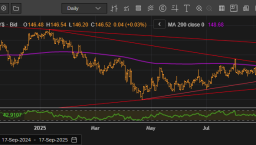
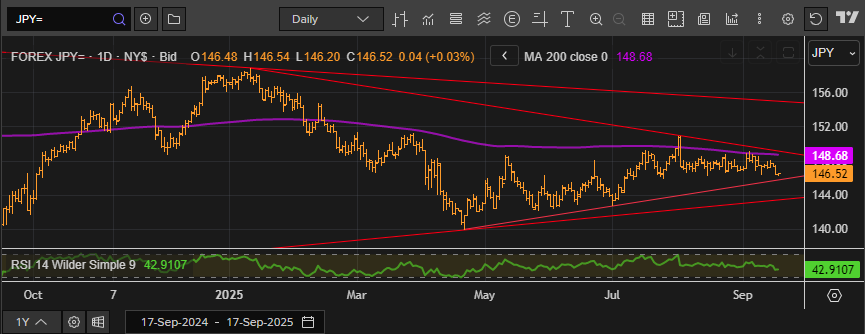
USDJPY is now sitting just above the long-term support line on the daily charts, with a dovish outcome or even the 50-point cut likely leading to a break lower, while a ‘hawkish cut’ would allow traders to leverage off that support level to buy the pair for a move back into the recent range.
Resistance 2: 149.02 – Trendline Resistance
Resistance 1: 150.91 – August High
Support 1: 145.75 – Trendline Support
Support 2: 143.40 – Longer-Term Trendline Support
The post Trade USDJPY on the FOMC Interest Rate Decision first appeared on IC Markets | Official Blog.
Ex-Dividend 17/9/2025
421551 September 16, 2025 19:39 ICMarkets Market News
The post Ex-Dividend 17/9/2025 first appeared on IC Markets | Official Blog.
Tuesday 16th September 2025: Asian Stocks Mixed as Investors Await Fed Rate Cut Decision
421536 September 16, 2025 13:00 ICMarkets Market News
Global Markets:
- Asian Stock Markets : Nikkei up 0.51%, Shanghai Composite down -0.21%, Hang Seng down -0.03% ASX up 0.26%
- Commodities : Gold at $3,721.20 (0.04%), Silver at $43.090 (0.28%), Brent Oil at $67.53 (0.15%), WTI Oil at $67.54 (0.15%)
- Rates : US 10-year yield at 4.033, UK 10-year yield at 4.6310, Germany 10-year yield at 2.6959
News & Data:
- (CAD) Manufacturing Sales m/m 2.5% to 1.7% expected
- (CAD) Wholesale Sales m/m 1.2% to 1.4% expected
Markets Update:
Asian stock markets traded mixed on Tuesday, tracking broadly positive cues from Wall Street as investors stayed cautious ahead of the U.S. Federal Reserve’s policy decision on Wednesday. With inflation subdued and labor market data weakening, traders widely expect the Fed to cut rates by a quarter-point. CME Group’s FedWatch Tool shows a 96.4 percent probability of such a move, with slim chances of a deeper cut. Markets will closely watch Chair Jerome Powell’s remarks for guidance on further easing.
In Australia, the S&P/ASX 200 advanced 21.40 points or 0.24 percent to 8,874.40, lifted by miners and technology shares, while the All Ordinaries rose 0.29 percent. BHP, Rio Tinto, and Fortescue gained strongly, while tech stocks such as Block and Appen also advanced. Gold miners posted solid gains, while bank stocks were mixed. The Australian dollar traded at $0.667.
Japan’s Nikkei 225 rose 136.01 points or 0.30 percent to 44,904.13 after briefly hitting a record high. Tech names like Screen Holdings and Tokyo Electron outperformed, while banks weakened. Exporters were mixed, with Sony slipping but Mitsubishi Electric edging up. Elsewhere, South Korea climbed 1.1 percent, Taiwan added 0.9 percent, while Singapore and China dipped slightly.
On Wall Street, the Nasdaq and S&P 500 closed at record highs Monday, while oil prices advanced amid Middle East tensions and the ongoing Russia-Ukraine war.
Upcoming Events:
- 12:30 PM GMT – CAD CPI m/m
- 12:30 PM GMT – CAD Median CPI y/y
- 12:30 PM GMT – CAD Trimmed CPI y/y
- 12:30 PM GMT – USD Core Retail Sales m/m
- 12:30 PM GMT – USD Retail Sales m/m
The post Tuesday 16th September 2025: Asian Stocks Mixed as Investors Await Fed Rate Cut Decision first appeared on IC Markets | Official Blog.
IC Markets Europe Fundamental Forecast | 16 September 2025
421535 September 16, 2025 12:39 ICMarkets Market News
IC Markets Europe Fundamental Forecast | 16 September 2025
What happened in the Asia session?
The Asia trading session on September 16, 2025, was dominated by optimism surrounding expected Federal Reserve rate cuts, which drove major stock indices to historic highs in Japan and South Korea. However, China’s disappointing economic data served as a reminder of underlying regional challenges. The combination of Fed dovishness, improving US-China trade dynamics, and strong corporate earnings supported risk assets, while safe-haven flows into gold reflected ongoing global uncertainties.
What does it mean for the Europe & US sessions?
Today’s trading environment is dominated by Fed expectations, with traders positioned for the first rate cut of 2025. While markets appear confident in a 25bp reduction, the real focus will be on Fed guidance for future policy paths. Economic data, particularly retail sales, will provide insights into consumer resilience amid this monetary policy transition. The combination of dovish Fed expectations, record-low yields, and geopolitical uncertainties creates a complex backdrop requiring careful risk management across all asset classes.
The Dollar Index (DXY)
Key news events today
Core Retail Sales m/m (12:30 pm GMT)
Retail Sales m/m (12:30 pm GMT)
What can we expect from DXY today?
The US Dollar faced its most significant challenge in months on September 16, 2025, as a confluence of factors – including dovish Fed expectations, intensifying political pressure from President Trump, and technical selling momentum – pushed the currency to multi-month lows. With the Fed’s rate cut decision virtually certain, focus has shifted to the magnitude of the reduction and forward guidance about future policy moves. The dollar’s near-term trajectory will likely depend on the Fed’s ability to balance economic data with political pressures while maintaining its independence, alongside upcoming economic indicators that could either support or challenge the current dovish narrative.
Central Bank Notes:
- The Federal Open Market Committee (FOMC) voted, by majority, to lower the federal funds rate target range by 25 basis points to 4.00%–4.25% at its September 16–17, 2025, meeting, marking the first policy rate adjustment since December 2024 after five consecutive holds.
- The Committee maintained its long-term objective of achieving maximum employment and 2% inflation, acknowledging recent labor market softening and continued tariff-driven price pressures.
- Policymakers expressed elevated concern about downside risks to growth, citing a stalling labor market, modest job creation, and an unemployment rate drifting up toward 4.4%. At the same time, inflation remains above target, with CPI at 3.2% and core inflation at 3.1% as of August 2025; higher energy and food prices, largely attributable to tariffs, continue to weigh on headline measures.
- Although economic activity expanded at a moderate pace in the third quarter, the growth outlook has weakened. Q3 GDP growth is estimated near 1.0% (annualized), with full-year 2025 GDP growth guidance revised to 1.2%, reflecting slowing household consumption and tighter financial conditions.
- In the updated Summary of Economic Projections, the unemployment rate is projected to average 4.5% for the year, with headline PCE inflation revised up slightly to 3.1% for 2025. The Committee anticipates core PCE inflation to remain stubborn, requiring sustained vigilance and a flexible approach to risk management.
- The Committee reiterated its data-dependent approach and openness to further adjustments should employment or inflation deviate meaningfully from current forecasts. Several members dissented, either advocating a larger 50 basis point cut or preferring no adjustment at this meeting, revealing heightened divergence within the Committee.
- Balance sheet reduction continues at a measured pace. The monthly Treasury redemption cap remains at $5B and the agency MBS cap at $35B, as the Board aims to support orderly market conditions in the face of evolving global and domestic uncertainty
- The next meeting is scheduled for 28 to 29 October 2025.
Next 24 Hours Bias
Medium Bearish
Gold (XAU)
Key news events today
Core Retail Sales m/m (12:30 pm GMT)
Retail Sales m/m (12:30 pm GMT)
What can we expect from Gold today?
Gold’s record-breaking performance on September 16, 2025, reflects a confluence of supportive factors, including near-certain Fed rate cut expectations, US dollar weakness, robust ETF inflows, and ongoing geopolitical tensions. While central bank purchases have moderated due to high prices, they remain positive, and technical indicators suggest further upside potential toward the $3,700-$3,800 range. The metal’s 43% year-to-date gain underscores its continued appeal as both an inflation hedge and safe-haven asset in an environment of monetary policy uncertainty and global instability.
Next 24 Hours Bias
Strong Bullish
The Euro (EUR)
Key news events today
German ZEW Economic Sentiment (9:00 am GMT)
What can we expect from EUR today?
The Euro demonstrated resilience on September 16, 2025, reaching $1.1778 despite significant regional challenges. The ECB’s hawkish pivot, signaling an end to rate cuts, provided fundamental support for the currency. However, persistent concerns remain around France’s fiscal crisis, German economic weakness, and escalating trade tensions with both the US and China.
Central Bank Notes:
- The Governing Council kept the three key ECB interest rates unchanged at its September 11, 2025, meeting. The main refinancing rate remains at 2.15%, the marginal lending facility at 2.40%, and the deposit facility at 2.00%. These levels have been maintained after the cuts earlier in 2025, reflecting the Council’s confidence that the current stance is consistent with the price stability mandate.
- Evidence that inflation is running close to the ECB’s medium-term target of 2% supported the decision to hold rates steady. Domestic price pressures are easing as wage growth continues to moderate, and financing conditions remain accommodative. Policymakers reaffirmed a data-dependent, meeting-by-meeting approach to further policy moves, with no pre-commitment to a predetermined path amid ongoing global and domestic risks.
- Eurosystem staff projections foresee headline inflation averaging 2.0% for 2025, 1.8% for 2026, and 2.0% in 2027. The 2025 and 2026 forecasts reflect a downward revision, primarily on lower energy costs and exchange rate effects, even as food inflation remains persistent. Core inflation (excluding energy and food) is expected at 2.0% for both 2026 and 2027, with only minor changes since prior rounds.
- Real GDP growth in the euro area is projected at 1.1% for 2025, 1.1% for 2026, and 1.4% for 2027. A robust first quarter—partly due to firms accelerating exports ahead of anticipated tariff hikes—cushioned a weaker outlook for the remainder of 2025. While business investment continues to face uncertainty from ongoing global trade disputes, especially with the US, government investment and infrastructure spending are expected to provide some support to the outlook..
- Household spending is backed by rising real incomes and continued strength in the labor market. Despite some fading tailwind from previous rate cuts, financing conditions remain broadly favorable and are expected to underpin the resilience of private consumption and investment against outside shocks. Moderating wage growth and profit margin adjustments are helping to absorb residual cost pressures.
- Household spending is backed by rising real incomes and continued strength in the labor market. Despite some fading tailwind from previous rate cuts, financing conditions remain broadly favorable and are expected to underpin the resilience of private consumption and investment against outside shocks. Moderating wage growth and profit margin adjustments are helping to absorb residual cost pressures.
- All future interest rate decisions will continue to be guided by the integrated assessment of economic and financial data, the inflation outlook, and underlying inflation dynamics, and the effectiveness of monetary policy transmission—without any pre-commitment to a specific future rate path.
- The ECB’s Asset Purchase Programme (APP) and Pandemic Emergency Purchase Programme (PEPP) portfolios are declining predictably, as reinvestment of maturities has ceased. Balance-sheet normalization continues in line with the ECB’s previously communicated schedule.
- The next meeting is on 29 to 30 October 2025
Next 24 Hours Bias
Weak Bullish
The Swiss Franc (CHF)
Key news events today
No major news event
What can we expect from CHF today?
The Swiss Franc enters mid-September 2025 from a position of considerable strength, supported by safe-haven flows, contained inflation, and Switzerland’s economic stability. While the upcoming SNB meeting on September 25 is expected to maintain current policy settings, the central bank’s new transparency measures signal an important communication evolution. US trade tensions remain a significant economic challenge, though Switzerland’s diversified economy and the franc’s reserve currency status continue to provide resilience in an uncertain global environment.
Central Bank Notes:
- The SNB eased monetary policy by lowering its key policy rate by 25 basis points, from 0.25% to 0% on 19 June 2025, marking the sixth consecutive reduction.
- Inflationary pressure has decreased further as compared to the previous quarter, decreasing from 0.3% in February to -0.1% in May, mainly attributable to lower prices in tourism and oil products.
- Compared to March, the new conditional inflation forecast is lower in the short term. In the medium term, there is hardly any change from March, putting the average annual inflation at 0.2% for 2025, 0.5% for 2026, and 0.7% for 2027.
- The global economy continued to grow at a moderate pace in the first quarter of 2025, but the global economic outlook for the coming quarters has deteriorated due to the increase in trade tensions.
- Swiss GDP growth was strong in the first quarter of 2025, but this development was largely because, as in other countries, exports to the U.S. were brought forward.
- Following the strong first quarter, growth is likely to slow again and remain rather subdued over the remainder of the year; the SNB expects GDP growth of 1% to 1.5% for 2025 as a whole, while also anticipating GDP growth of 1% to 1.5% for 2026.
- The SNB will continue to monitor the situation closely and will adjust its monetary policy if necessary to ensure inflation remains within the range consistent with price stability over the medium term.
- The next meeting is on 25 September 2025.
Next 24 Hours Bias
Medium Bullish
The Pound (GBP)
Key news events today
Average Earnings Index 3m/y (6:00 am GMT)
Claimant Count Change (6:00 am GMT)
What can we expect from GBP today?
Sterling’s strength on Tuesday reflects broad US Dollar weakness ahead of the Fed’s anticipated rate cut, despite concerning domestic economic fundamentals. While the Pound benefits from relative outperformance against other major currencies, underlying challenges include stagnant growth, elevated inflation, and a cautious Bank of England. The combination of a dovish Fed and resilient UK inflation expectations continues to support Sterling in the near term, though technical resistance levels and domestic economic headwinds present potential challenges ahead.
Central Bank Notes:
- The Bank of England’s Monetary Policy Committee (MPC) voted on 7 August 2025 by a majority (exact split likely 5–3–1 or similar, based on expectations) to cut the Bank Rate by 25 basis points to 4.00%. Multiple members supported the move, citing fragile economic growth and signs of disinflation, while others preferred a larger reduction, and at least one member voted to hold the rate steady due to concerns about persistent inflation.
- The Committee unanimously decided to continue reducing the stock of UK government bond purchases held for monetary policy purposes by £100 billion over the next 12 months, targeting a balance of £558 billion by October 2025. As of 7 August, the gilt stock stands at £590 billion.
- Disinflation has been substantial since 2023 owing to policy tightening and the fading of external shocks. However, an unexpected uptick in headline CPI inflation—to 3.6% in June—reflects pass-through from regulated prices and earlier energy price rises, as well as signs of sticky core inflation.
- Headline CPI inflation is now 3.6%, above the Bank’s 2% target, reflecting regulated and energy price effects. The Committee expects inflation to remain around this level through Q3 before resuming its downward trend into 2026.
- UK GDP growth remains weak. Business and consumer surveys point to lackluster activity, and the labor market continues to loosen, with increasing evidence of slack. Wage growth has softened but remains above pre-pandemic norms.
- Pay growth and employment indicators have moderated further, and the Committee expects a significant slowing in pay settlements over the rest of 2025.
- Global uncertainty remains elevated, especially with rising energy prices and supply disruptions linked to conflict in the Middle East and renewed trade tensions. These factors prompt the MPC to remain vigilant in monitoring cost and wage shocks.
- The risks to inflation are considered two-sided. With the outlook for growth subdued and inflation persistence less clear, the Committee argues that a gradual and careful approach to further easing is warranted, with future policy decisions highly data-dependent.
- The Committee’s bias is still towards maintaining monetary policy at a restrictive stance until there is firmer evidence that inflation will return sustainably to the 2% target over the medium term. Further adjustments to policy will be decided on a meeting-by-meeting basis, with scrutiny of developments in demand, costs, and inflation expectations.
- The next meeting is on 18 September 2025.
Next 24 Hours Bias
Medium Bullish
The Canadian Dollar (CAD)
Key news events today
CPI m/m (12:30 pm GMT)
Median CPI y/y (12:30 pm GMT)
Trimmed CPI y/y (12:30 pm GMT)
Common CPI y/y (12:30 pm GMT)
What can we expect from CAD today?
Tuesday’s developments reflect a Canadian dollar caught between supportive factors like higher oil prices and manufacturing resilience, versus significant headwinds from labor market deterioration and expected monetary easing. The currency’s performance in the coming days will largely depend on the Bank of Canada’s communication strategy and whether policymakers signal a prolonged easing cycle. With both the BoC and Fed expected to cut rates on Wednesday, the relative magnitude and forward guidance from each central bank will be crucial for the USD/CAD direction.
Central Bank Notes:
- The Bank of Canada maintained its target for the overnight rate at 2.75%, with the Bank Rate at 3% and the deposit rate at 2.70% as of July 30, marking the third consecutive meeting with rates on hold.
- The Council cited ongoing U.S. tariff adjustments and unresolved trade negotiations as key drivers of elevated economic uncertainty. The persistence of tariffs at levels well above those of early 2025 continues to present downside risks to growth and keeps inflation expectations elevated, supporting a cautious approach to monetary easing.
- The lack of a clear U.S. policy path, plus frequent threats of additional tariffs, led the Bank to highlight risks to Canadian exports and broader demand, amplifying uncertainty about future growth.
- Canada’s economic growth in the first quarter came in at 2.2%, slightly stronger than the original forecast, while the composition of GDP growth was largely as expected. Consumption slowed from its very strong fourth-quarter pace, but continued to grow despite a large drop in consumer confidence.
- Canadian GDP growth is expected to be near 0% in Q2 2025, closely aligned with the more optimistic scenario outlined earlier in the year. Weakness in manufacturing activity—driven by both U.S. trade disruptions and sector-specific challenges like wildfires—contributed to softer output. A partial recovery is anticipated in Q3 due to rebuilding efforts and stronger retail sales in June.
- Consumer spending slowed, especially as households front-loaded durable goods purchases ahead of tariffs. Housing activity remains subdued, with resales and construction still soft despite some government tax relief measures.
- Headline CPI inflation continued to ease, holding close to 1.7% in June, aided by declines in energy prices following the removal of the fuel charge. However, the Bank’s measures of core inflation and underlying price pressures moved up further due to higher import costs from tariffs and lingering supply disruptions.
- The Governing Council reiterated that it will carefully weigh ongoing upward inflation pressure from tariffs and cost shocks against the gradual downward pull from economic weakness. While additional rate cuts remain possible, timing and scale will depend on trade policy developments and inflation’s path.
- The next meeting is on 17 September 2025.
Next 24 Hours Bias
Medium Bearish
Oil
Key news events today
API Crude Oil Stock (8:30 pm GMT)
What can we expect from Oil today?
Oil markets on September 16, 2025, are caught between conflicting forces. While immediate supply disruption risks from Ukrainian attacks on Russian infrastructure and anticipated Federal Reserve rate cuts are providing near-term price support, fundamental market conditions point to significant oversupply ahead. The EIA’s projection of massive inventory builds and OPEC+’s continued production increases suggest substantial downward price pressure through 2026, with Brent potentially falling to $50 per barrel despite current geopolitical tensions. The market is essentially pricing in short-term disruption risks while bracing for longer-term oversupply challenges.
Next 24 Hours Bias
Weak Bearish
The post IC Markets Europe Fundamental Forecast | 16 September 2025 first appeared on IC Markets | Official Blog.
Tuesday 16th September 2025: Technical Outlook and Review
421518 September 16, 2025 11:39 ICMarkets Market News
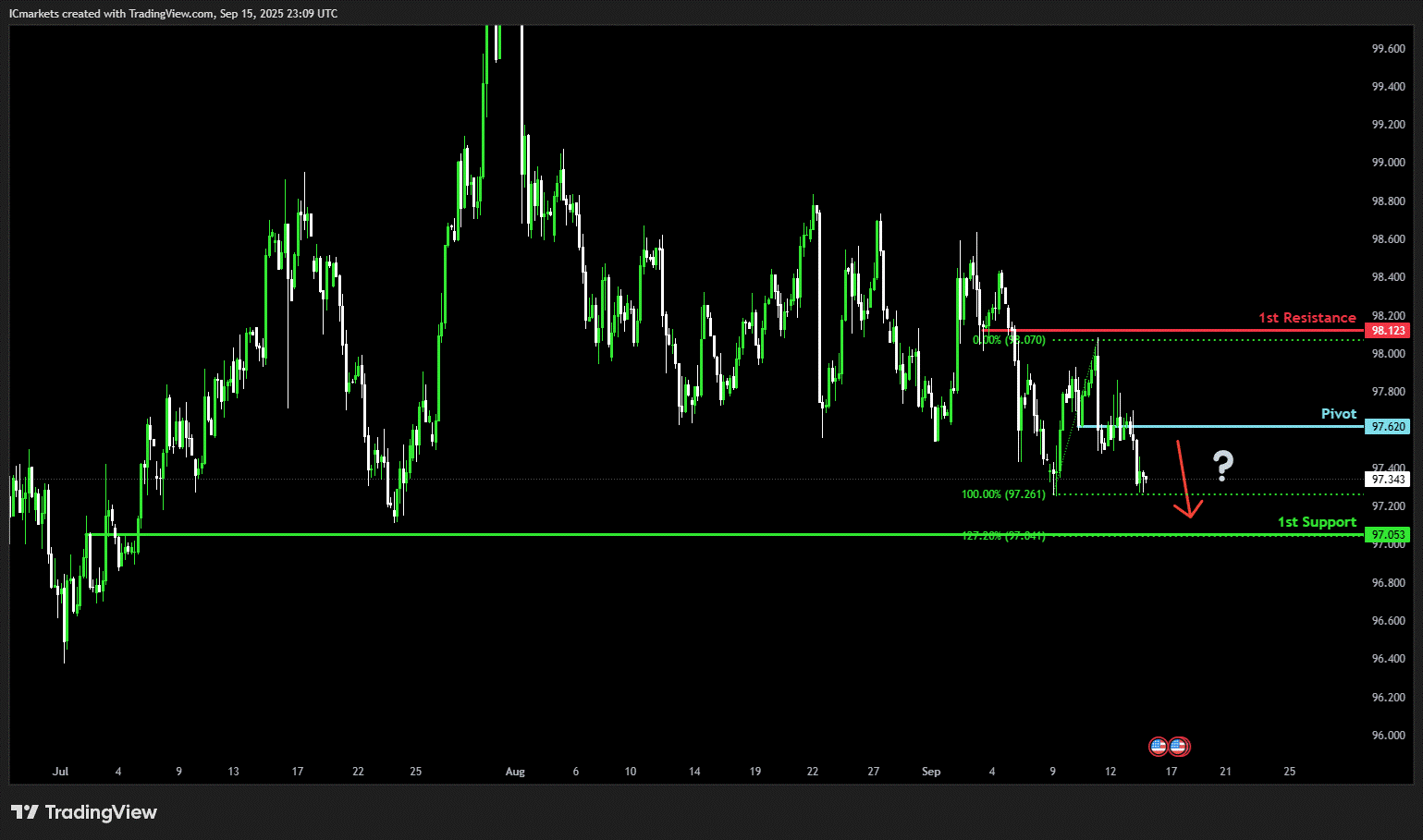
DXY (U.S. Dollar Index):
Potential Direction: Bearish
Overall momentum of the chart: Bearish
The price could continue to make a bearish fall toward the 1st support.
Pivot: 97.62
Supporting reasons: Identified as a pullback resistance, indicating a potential area where selling pressures could intensify.
1st support: 97.05
Supporting reasons: Identified as a pullback support that aligns with the 127.2% Fibonacci extension, indicating a potential area where the price could again stabilize.
1st resistance: 98.12
Supporting reasons: Identified as an overlap resistance, indicating a potential area that could halt any further upward movement.
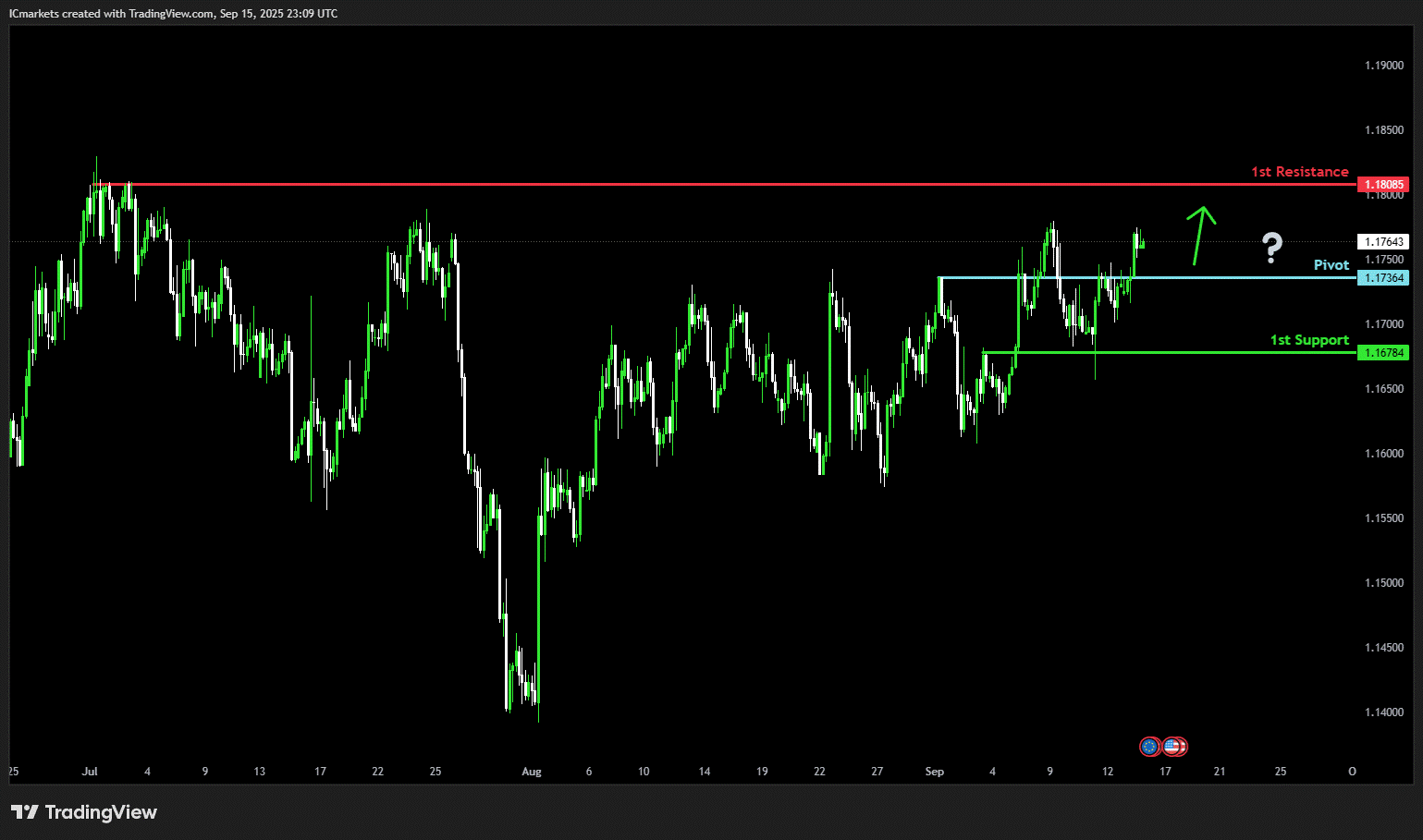
EUR/USD:
Potential Direction: Bullish
Overall momentum of the chart: Bullish
The price could fall toward the pivot and could make a bullish rise toward the 1st resistance.
Pivot: 1.1736
Supporting reasons: Identified as a pullback support, indicating a potential area where buying interest could pick up.
1st support: 1.1678
Supporting reasons: Identified as an overlap support, indicating a potential level where the price could stabilize once again.
1st resistance: 1.1808
Supporting reasons: Identified as a multi-swing high resistance, indicating a potential level that could cap further upward movement.
EUR/JPY:
Potential Direction: Bearish
Overall momentum of the chart: Bullish
The price is approaching the pivot and could make a bearish fall toward the 1st support.
Pivot: 173.41
Supporting reasons: Identified as a pullback resistance that aligns closely with the 61.8% Fibonacci retracement, indicating a potential area where selling pressures could intensify.
1st support: 172.66
Supporting reasons: Identified as a pullback support, indicating a potential area where the price could again stabilize.
1st resistance: 173.89
Supporting reasons: Identified as a swing high resistance, indicating a potential level that could cap further upward movement.
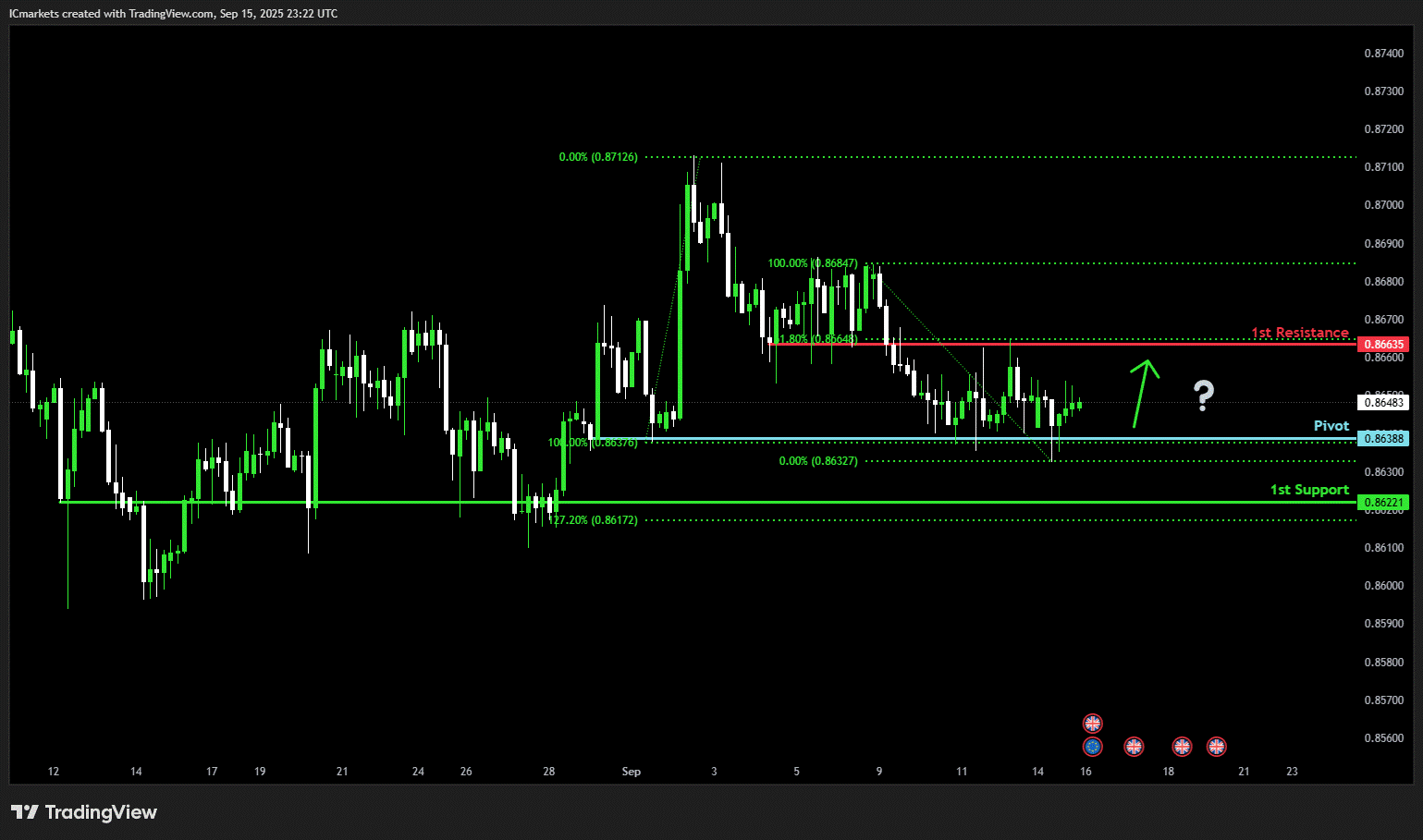
EUR/GBP:
Potential Direction: Bullish
Overall momentum of the chart: Bullish
The price has already bounced off the pivot and could continue to make a bullish rise toward the 1st resistance.
Pivot: 0.8638
Supporting reasons: Identified as a pullback support, indicating a potential area where buying interest could pick up.
1st support: 0.8622
Supporting reasons: Identified as an overlap support that aligns with the 127.2% Fibonacci extension, indicating a potential area where the price could again stabilize.
1st resistance: 0.8663
Supporting reasons: Identified as an overlap resistance that aligns with the 61.8% Fibonacci retracement, indicating a potential level that could cap further upward movement.
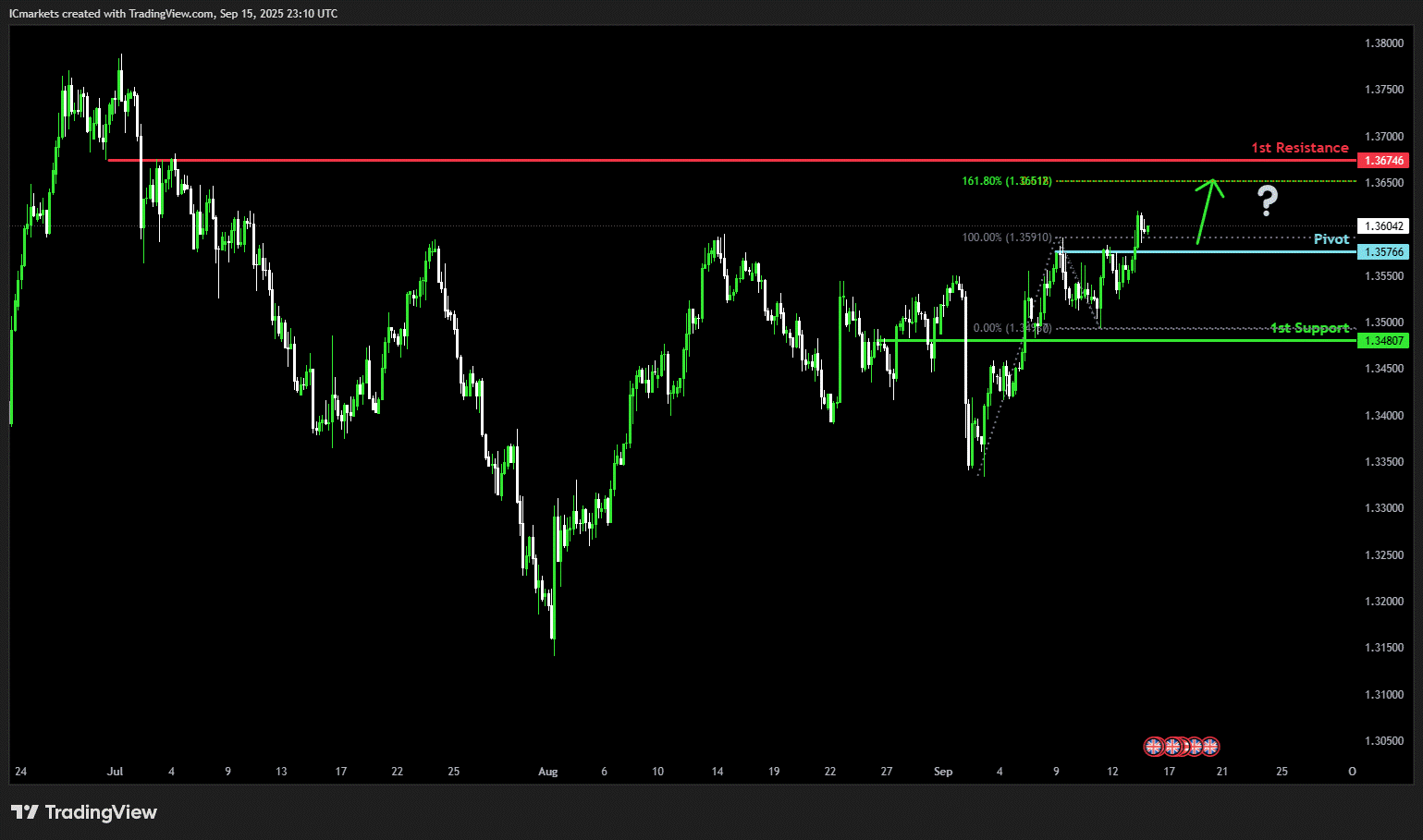
GBP/USD:
Potential Direction: Bullish
Overall momentum of the chart: Bullish
The price is falling toward the pivot and could make a bullish bounce toward the 1st resistance.
Pivot: 1.3576
Supporting reasons: Identified as a pullback support, indicating a potential area where buying interest could pick up.
1st support: 1.3480
Supporting reasons: Identified as a pullback support, indicating a potential area where the price could stabilize once more.
1st resistance: 1.3674
Supporting reasons: Identified as an overlap resistance, indicating a potential level that could halt further upward movement.
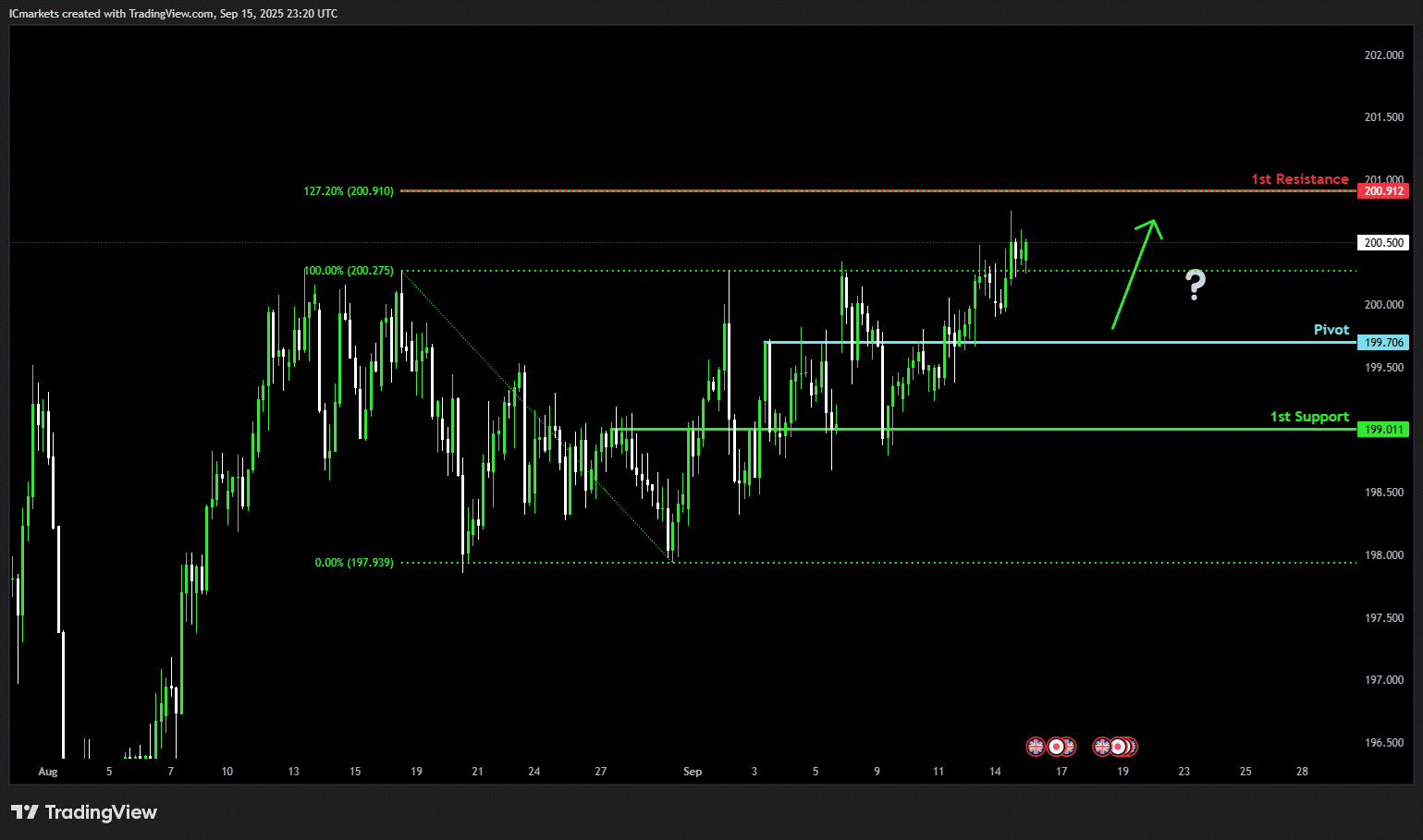
GBP/JPY:
Potential Direction: Bullish
Overall momentum of the chart: Bullish
The price has already bounced off the pivot and could make a bullish rise toward the 1st support.
Pivot: 199.70
Supporting reasons: Identified as a pullback support, indicating a potential area where buying interest could pick up.
1st support: 199.01
Supporting reasons: Identified as an overlap support, indicating a potential level where the price could stabilize once more.
1st resistance: 200.91
Supporting reasons: Identified as a resistance that is supported by the 127.2% Fibonacci extension, indicating a potential level that could halt further upward movement.
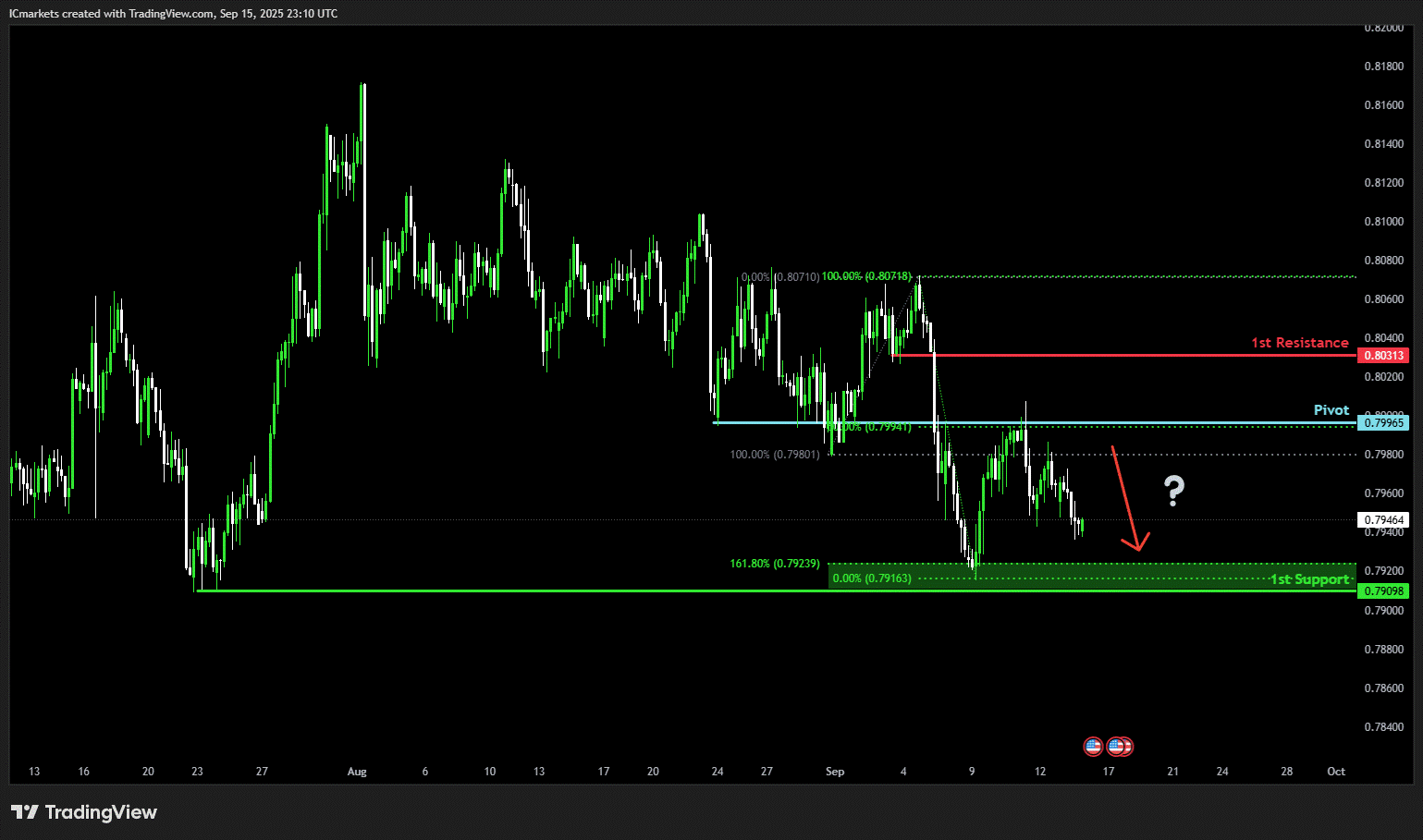
USD/CHF:
Potential Direction: Bearish
Overall momentum of the chart: Bullish
The price could continue to make a bearish fall toward the 1st support.
Pivot: 0.7996
Supporting reasons: Identified as an overlap resistance that aligns with the 50% Fibonacci retracement, indicating a potential area where selling pressures could intensify.
1st support: 0.7909
Supporting reasons: Identified as a swing low support that aligns with the 161.8% Fibonacci extension, indicating a potential level where the price could stabilize once again.
1st resistance: 0.8031
Supporting reasons: Identified as a pullback resistance, indicating a potential level that could cap further upward movement.
USD/JPY:
Potential Direction: Bearish
Overall momentum of the chart: Bullish
The price has already reacted off the pivot and could continue to make a bearish fall toward the 1st support.
Pivot: 147.86
Supporting reasons: Identified as an overlap resistance that aligns closely with the 61.8% Fibonacci retracement, indicating a potential area where selling pressures could intensify.
1st support: 146.41Supporting reasons: Identified as a swing low support, indicating a strong area where buyers might return, and the price could stabilize once again.
1st resistance: 148.85
Supporting reasons: Identified as an overlap resistance. This level represents the next key area where upward movement could be capped amid increased selling pressure
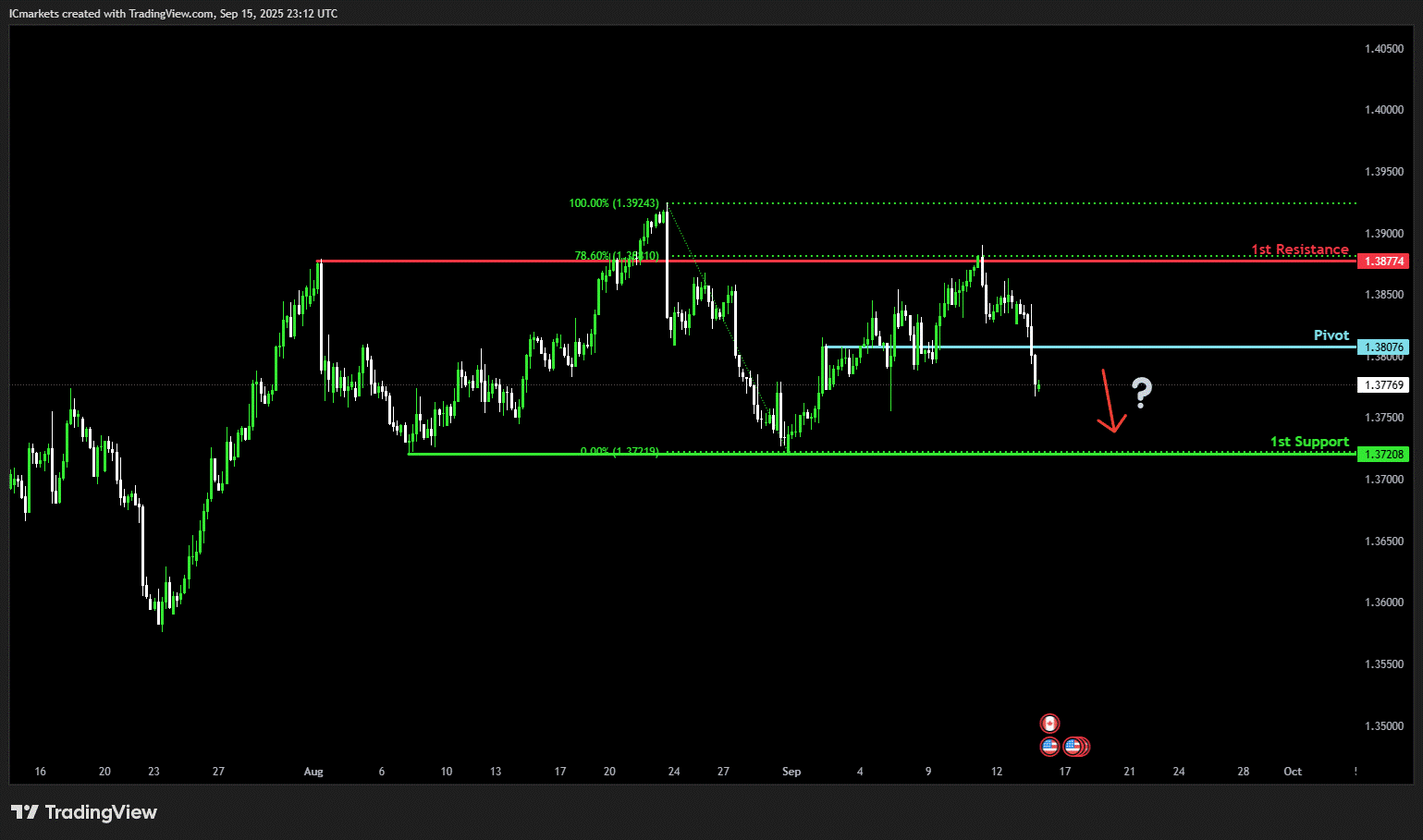
USD/CAD:
Potential Direction: Bearish
Overall momentum of the chart: Bearish
The price could rise toward the pivot and make a bearish fall toward the 1st support.
Pivot: 1.3807
Supporting reasons: Identified as a pullback resistance, indicating a potential area where selling pressures could intensify.
1st support: 1.3720
Supporting reasons: Identified as a swing low support, indicating a key level where the price could stabilize once more.
1st resistance: 1.3877
Supporting reasons: Identified as an overlap resistance that aligns with the 78.6% Fibonacci retracement, making it a possible target for bullish advances and a level where some sellers could return to cap gains
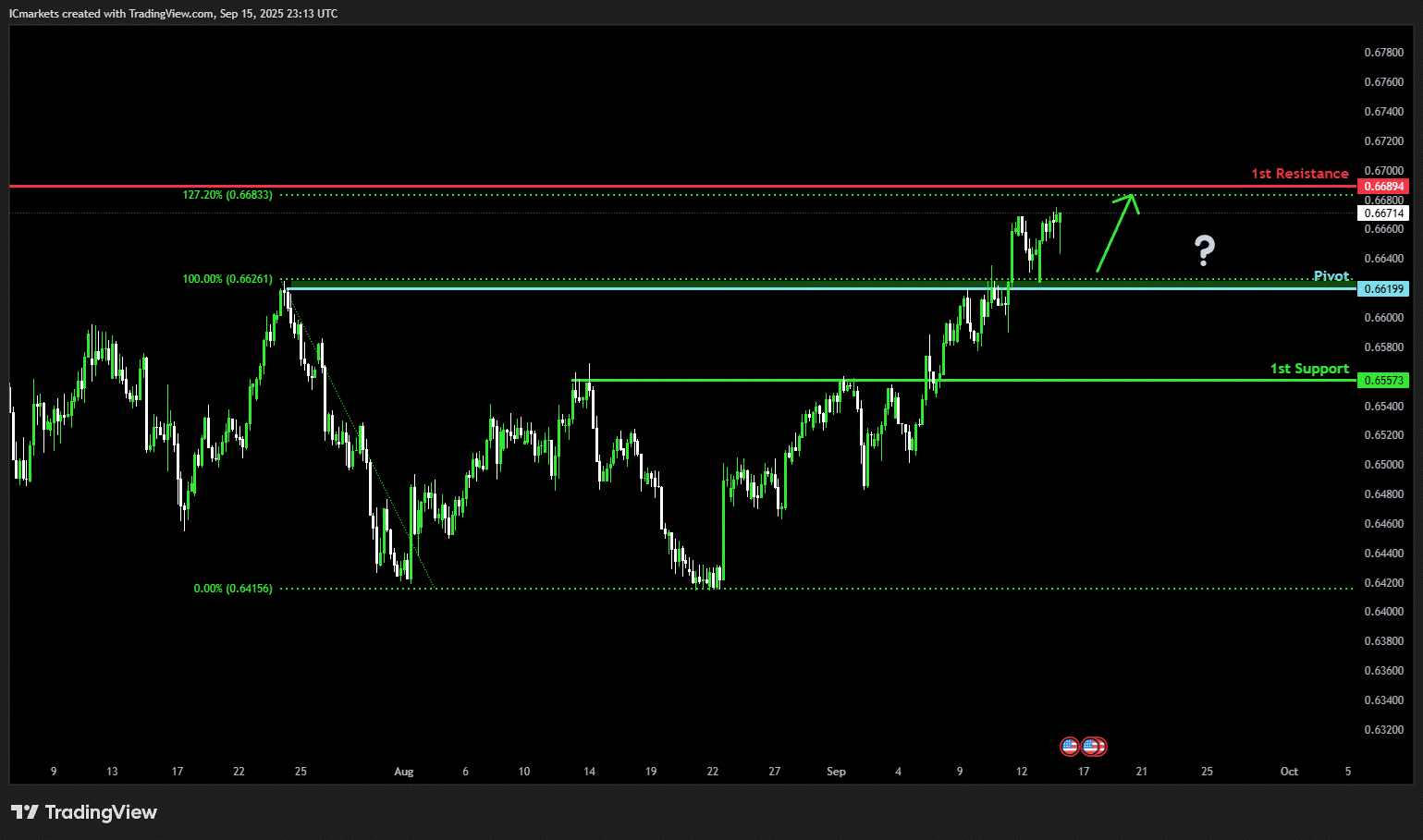
AUD/USD:
Potential Direction: Bullish
Overall momentum of the chart: Bullish
The price could continue to make a bullish rise toward the 1st resistance.
Pivot: 0.6619
Supporting reasons: Identified as a pullback support, indicating a potential area where buying interest could pick up.
1st support: 0.6557
Supporting reasons: Identified as an overlap support, this area has provided strong support historically and may attract buying interest for a potential short-term bounce
1st resistance: 0.6689
Supporting reasons: Identified as a swing high resistance that aligns wth the 127.2% Fibonacci extension, indicating a potential area that could halt any further upward movement.
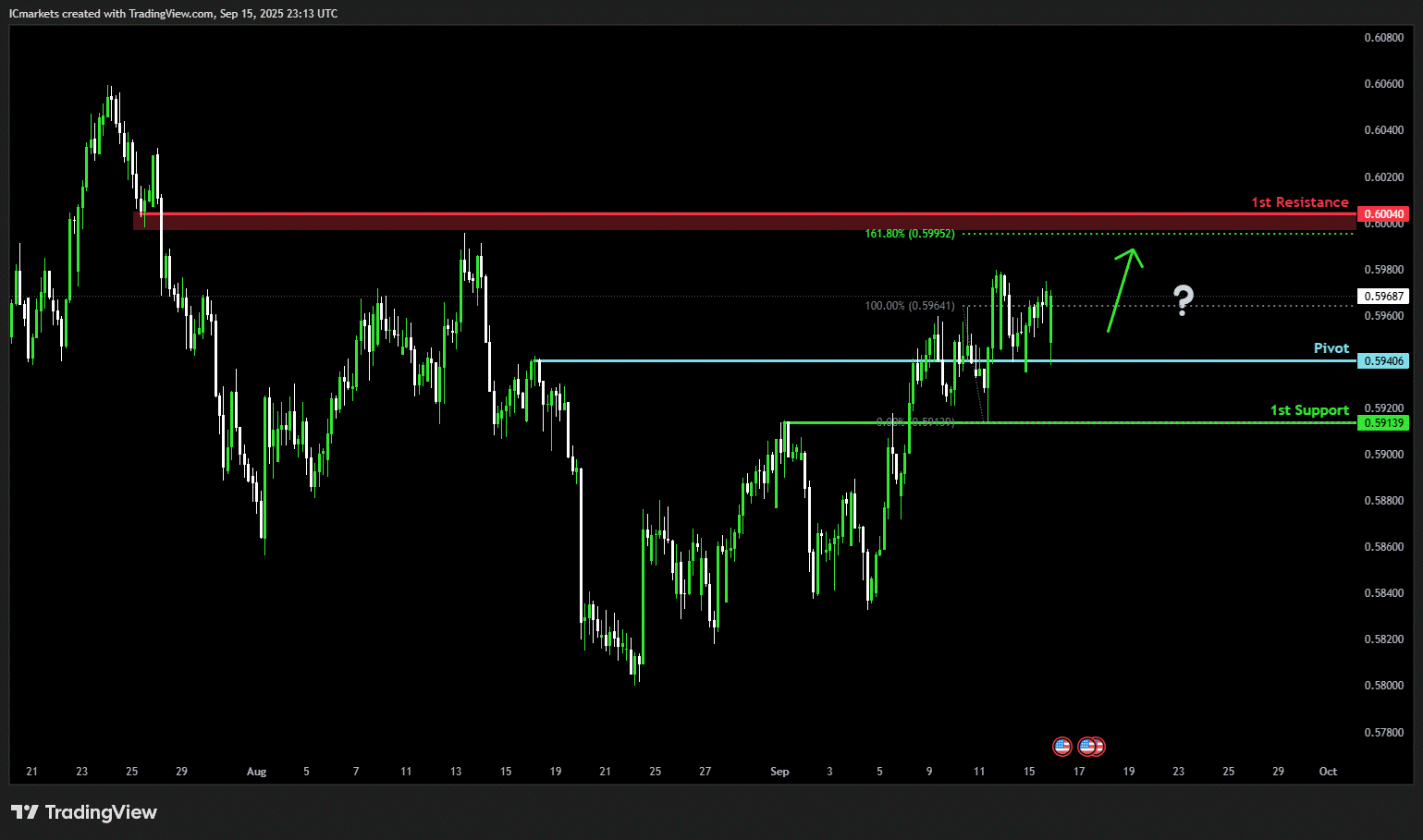
NZD/USD
Potential Direction: Bullish
Overall momentum of the chart: Bullish
The price is testing the pivot and could make a bullish rise toward the 1st resistance.
Pivot: 0.5940
Supporting reasons: Identified as a pullback support, indicating a potential area where buying interest could pick up.
1st support: 0.5913
Supporting reasons: Identified as an overlap support, this area has provided strong support historically and may attract buying interest for a potential short-term bounce
1st resistance: 0.6004
Supporting reasons: Identified as a pullback resistance that aligns closely with the 161.8% Fibonacci extension, indicating a potential area that could halt any further upward movement.
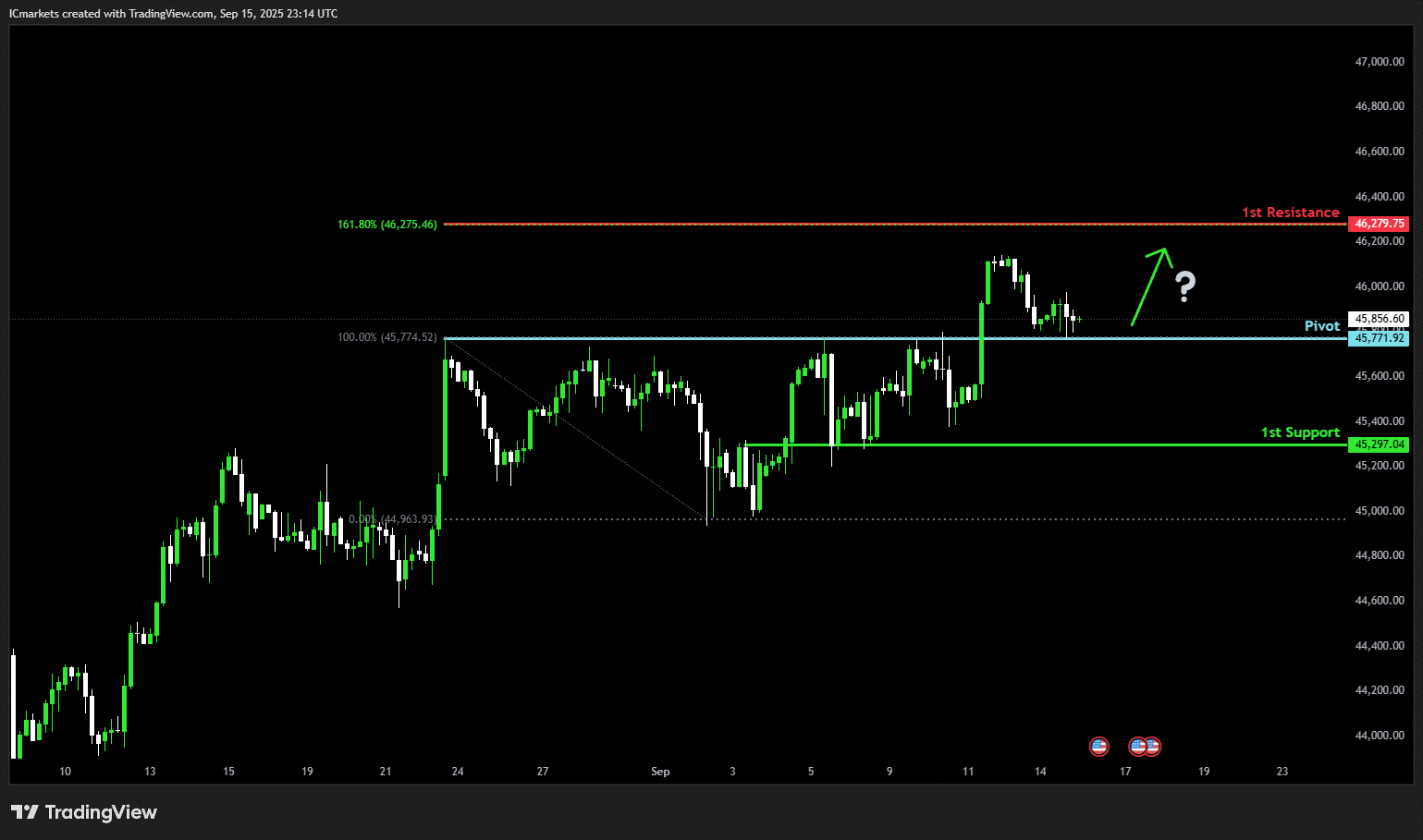
US30 (DJIA):
Potential Direction: Bullish
Overall momentum of the chart: Bullish
The price could fall toward the pivot and make a bullish rise toward the 1st resistance.
Pivot: 45,771.92
Supporting reasons: Identified as an overlap support, indicating a potential area where buying interest could pick up.
1st support: 45,297.04
Supporting reasons: Identified as an overlap support, suggesting a potential area where the price could stabilize once again.
1st resistance: 46,279.75
Supporting reasons: Identified as a esistance that is supported by the 161.8% Fibonacci extension, indicating a potential area that could halt any further upward movement.
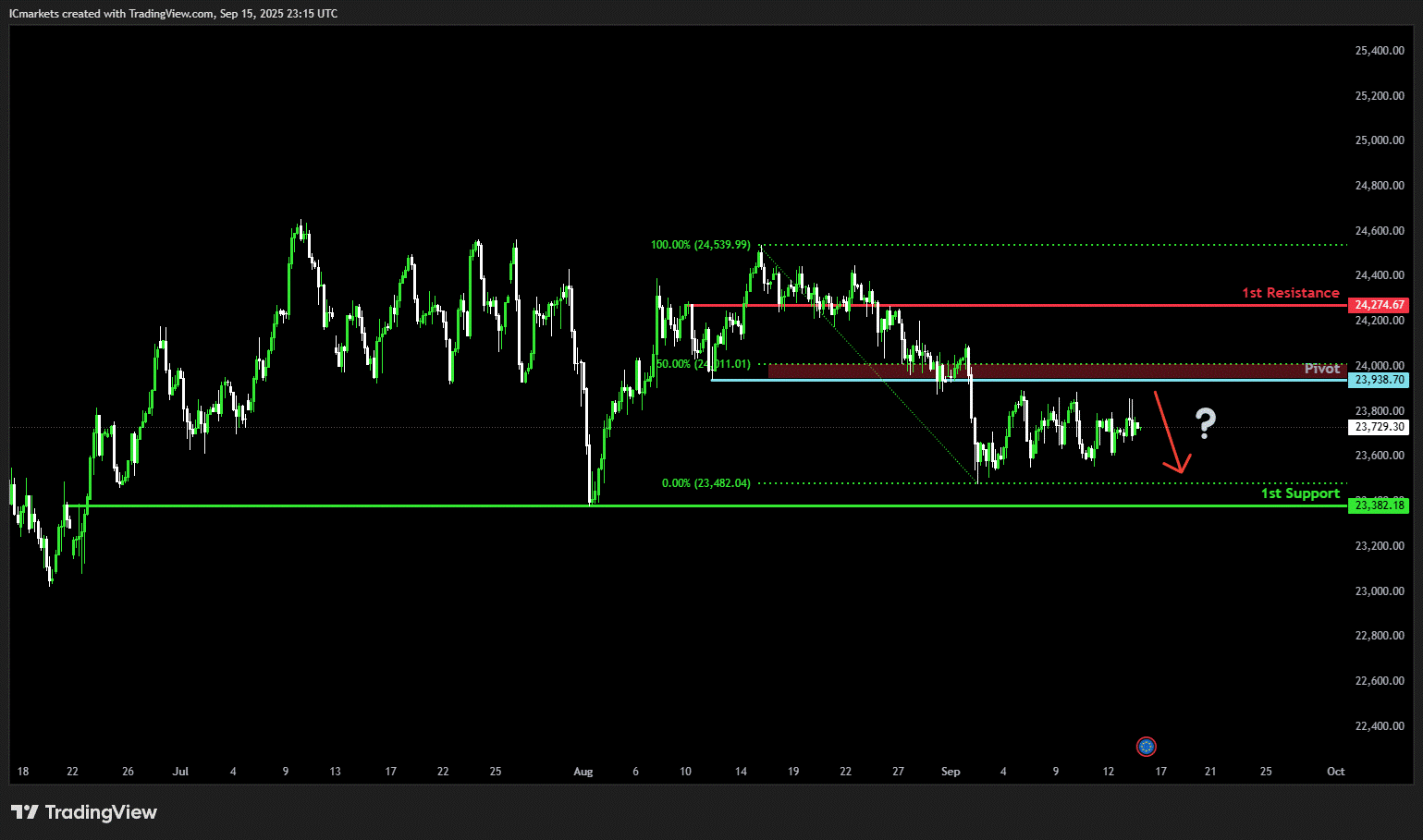
DE40 (DAX):
Potential Direction: Bearish
Overall momentum of the chart: Bullish
The price is rising toward the pivot and could make a bearish move toward the 1st support.
Pivot: 23,938.70
Supporting reasons: Identified as a pullback resistance that aligns closely with the 50% Fibonacci retracement, indicating a potential area where selling pressures could intensify.
1st support: 23,382.18
Supporting reasons: Identified as an overlap support, indicating a key level where the price could stabilize once more.
1st resistance: 24,274.67
Supporting reasons: Identified as an overlap resistance, indicating a potential area that could halt any further upward movement.
US500 (S&P 500):
Potential Direction: Bullish
Overall momentum of the chart: Bullish
The price could fall toward the pivot and make a bullish rise toward the 1st resistance.
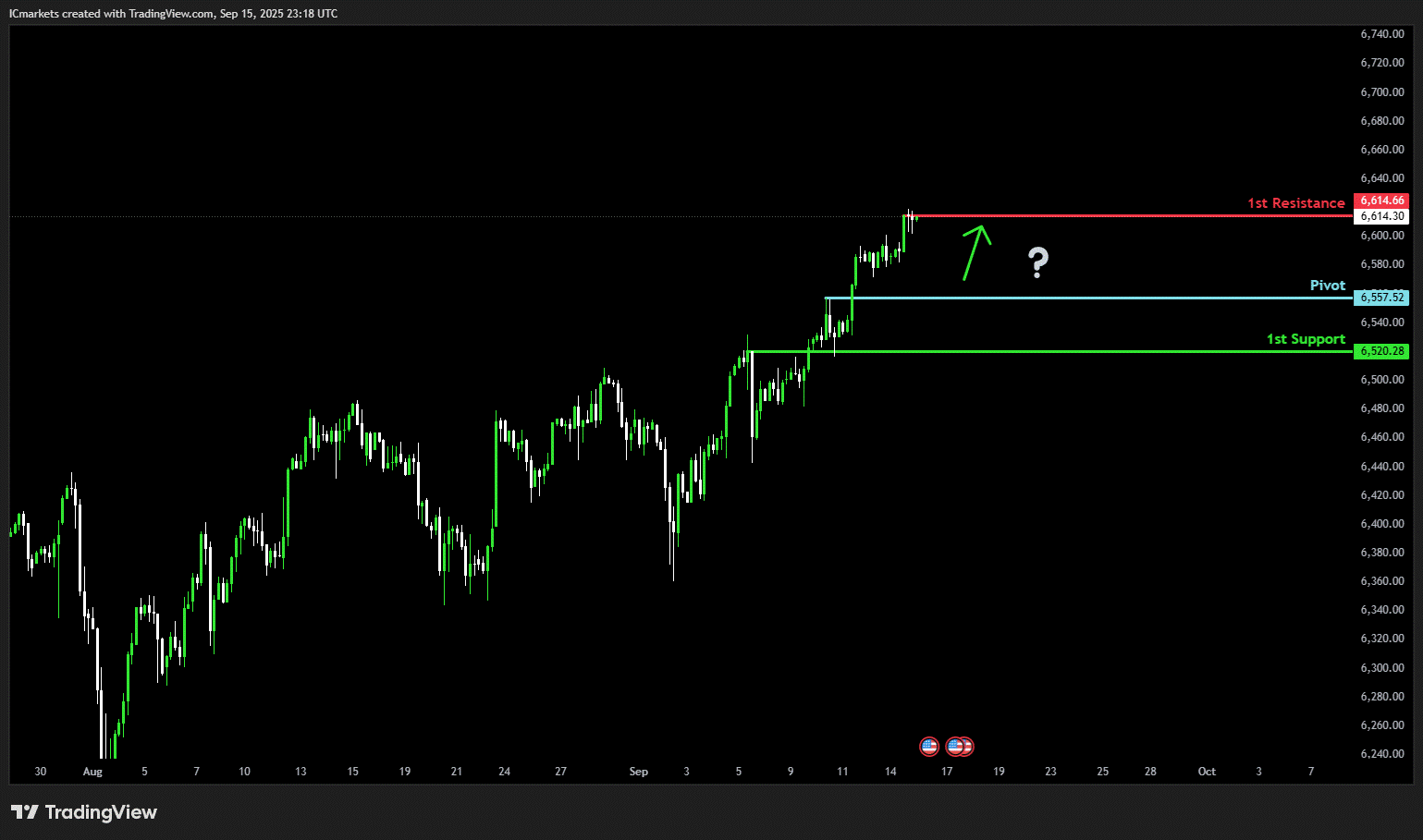
Pivot: 6,557.52
Supporting reasons: Identified as a pullback support, indicating a potential area where buying interest could pick up.
1st support: 6,520.28
Supporting reasons: Identified as an overlap support, indicating a potential level where the price could stabilize once again.
1st resistance: 6,614.66
Supporting reasons: Identified as a swing high resistance, indicating a potential area that could halt any further upward movement.
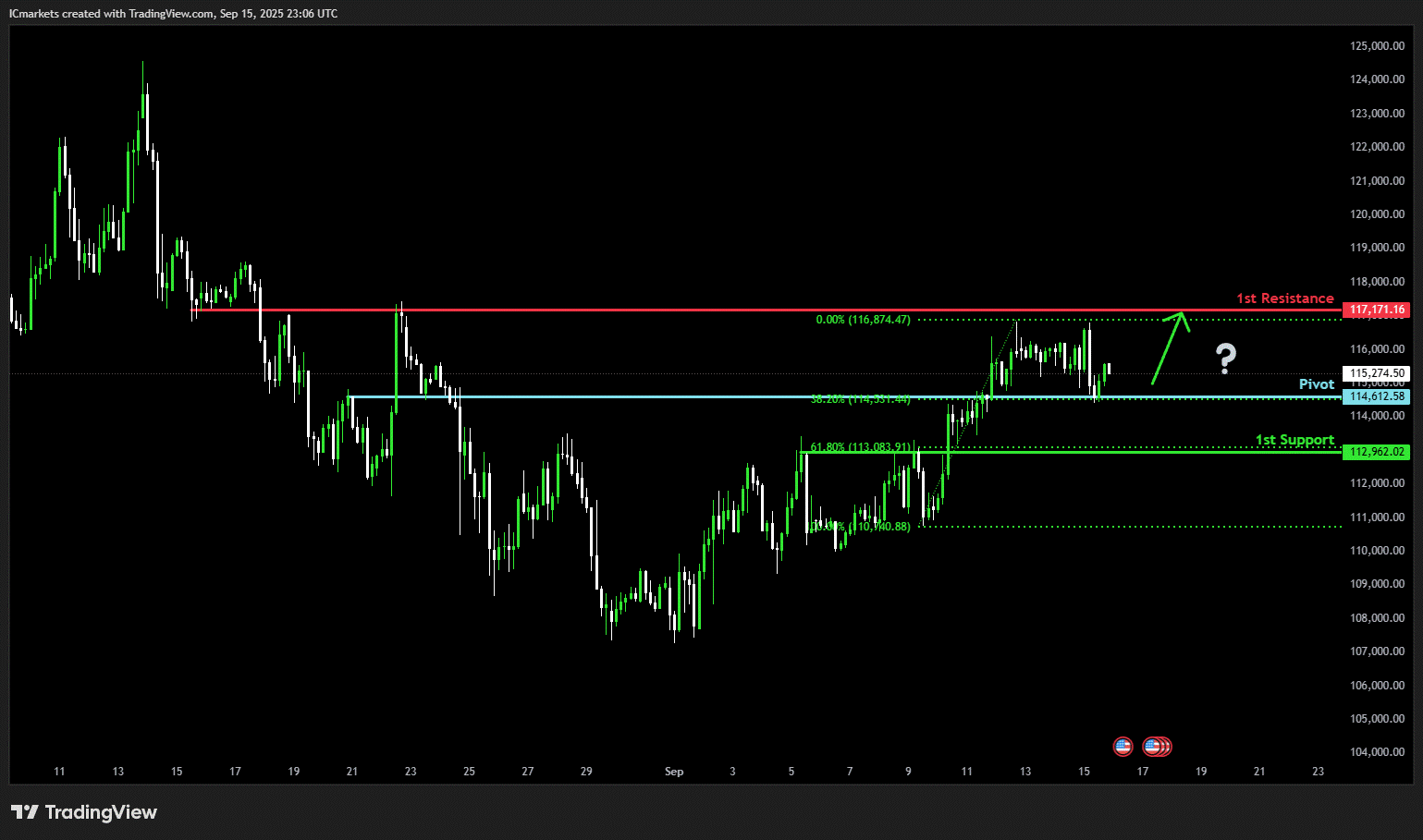
BTC/USD (Bitcoin):
Potential Direction: Bullish
Overall momentum of the chart: Bullish
The price has already bounced off the pivot and could make a bullish rise toward the 1st resistance.
Pivot: 114,612.58
Supporting reasons: Identified as an overlap support that aligns with the 38.2% Fibonacci retracement, indicating a potential area where buying interest could pick up.
1st support: 112,962.02
Supporting reasons: Identified as a pullback support that aligns with the 61.8% Fibonacci retracement, indicating a potential level where the price could stabilize once more.
1st resistance: 117,171.16
Supporting reasons: Identified as an overlap resistance, indicating a potential area that could halt any further upward movement.
ETH/USD (Ethereum):
Potential Direction: Bullish
Overall momentum of the chart: Bullish
The price has already bounced off the pivot and could continue to make a bullish rise toward the 1st resistance.
Pivot: 4,477.50
Supporting reasons: Identified as an overlap support that aligns closely with the 61.8% Fibonacci retracement, indicating a potential area where buying interest could pick up.
1st support: 4,239.45
Supporting reasons: Identified as an overlap support, indicating a potential level where the price could stabilize once more.
1st resistance: 4,761.40
Supporting reasons: Identified as an overlap resistance, indicating a potential area that could halt any further upward movement.
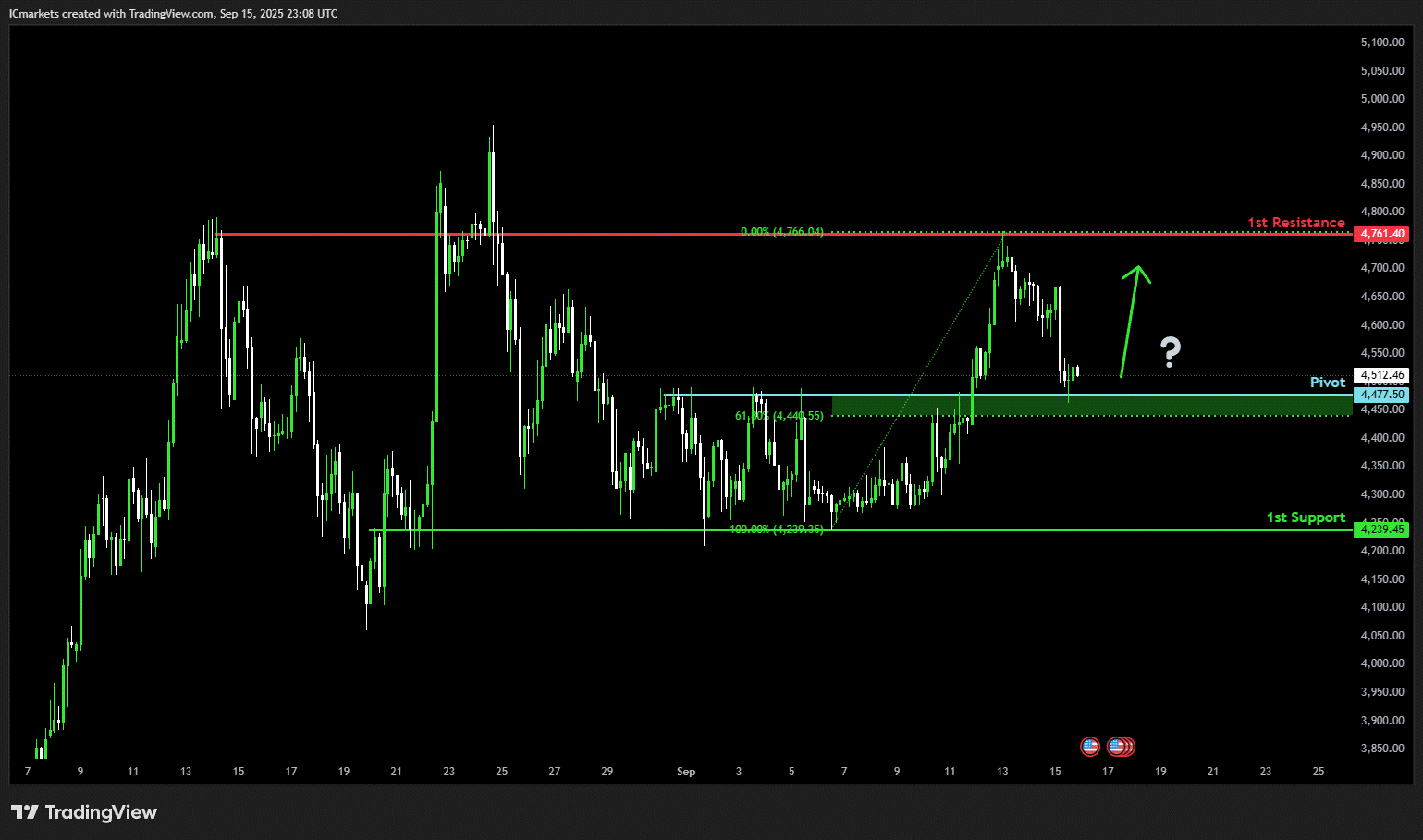
WTI/USD (Oil):
Potential Direction: Bearish
Overall momentum of the chart: Bullish
The price could rise toward the pivot and could make a bearish move toward the 1st support.
Pivot: 64.16
Supporting reasons: Identified as a pullback resistance that aligns with the 50% Fibonacci retracement, indicating a potential area where selling pressures could intensify.
1st support: 62.09
Supporting reasons: Identified as a swing low support, indicating a key level where the price could stabilize once more.
1st resistance: 65.64
Supporting reasons: Identified as a pullback resistance, indicating a potential area that could halt any further upward movement.
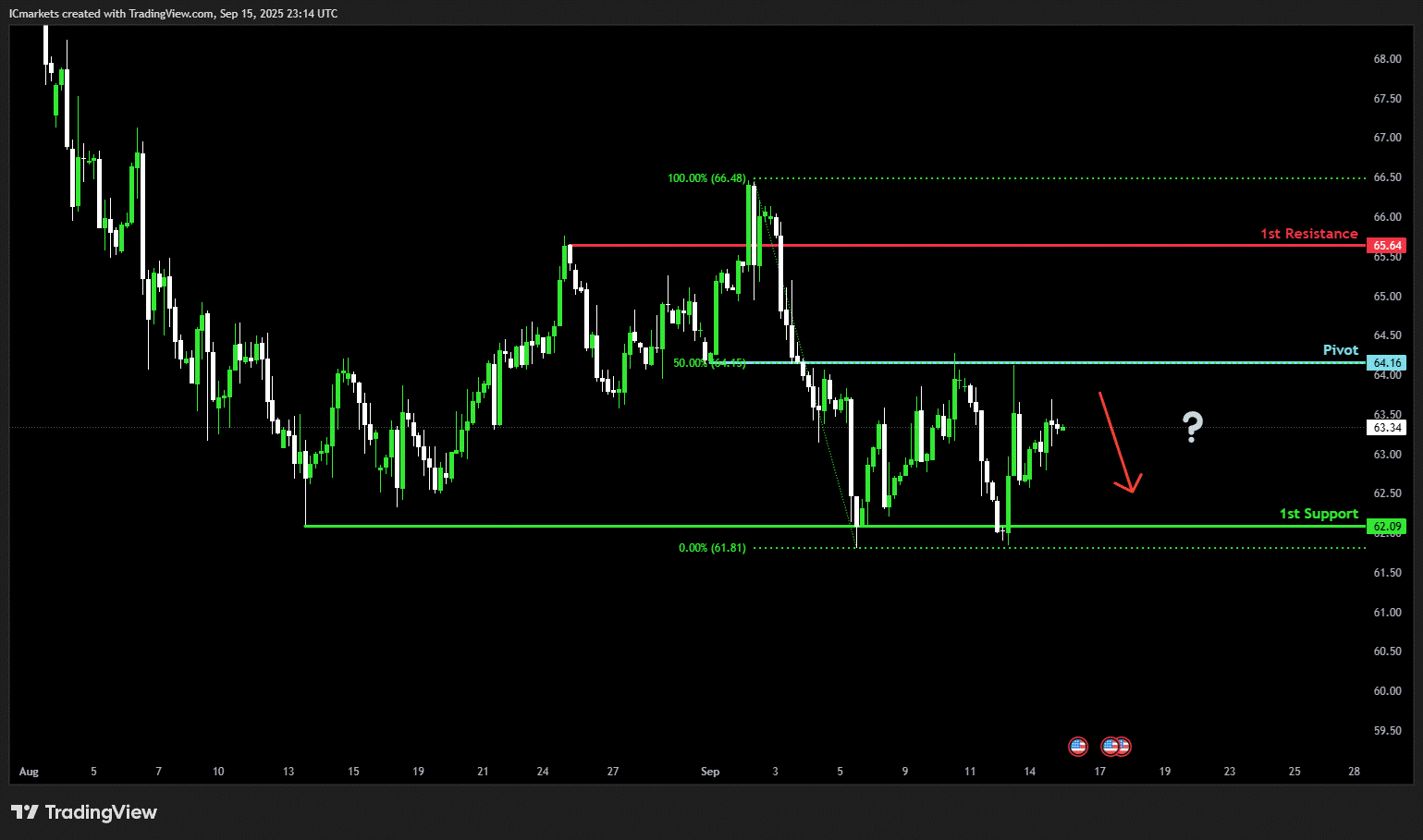
XAU/USD (GOLD):
Potential Direction: Bullish
Overall momentum of the chart: Bullish
The price could fall toward the pivot and make a bullish bounce toward the 1st resistance.
Pivot: 3,654.38
Supporting reasons: Identified as a pullback support, indicating a potential area where buying interest could pick up.
1st support: 3,620.29
Supporting reasons: Identified as a swing low support, indicating a key level where the price could stabilize once more.
1st resistance: 3,691.50
Supporting reasons: Identified as a resistance that is supported by the 127.2% Fibonacci extension, indicating a potential area that could halt any further upward movement.
The accuracy, completeness and timeliness of the information contained on this site cannot be guaranteed. IC Markets does not warranty, guarantee or make any representations, or assume any liability regarding financial results based on the use of the information in the site.
News, views, opinions, recommendations and other information obtained from sources outside of www.icmarkets.com, used in this site are believed to be reliable, but we cannot guarantee their accuracy or completeness. All such information is subject to change at any time without notice. IC Markets assumes no responsibility for the content of any linked site.
The fact that such links may exist does not indicate approval or endorsement of any material contained on any linked site. IC Markets is not liable for any harm caused by the transmission, through accessing the services or information on this site, of a computer virus, or other computer code or programming device that might be used to access, delete, damage, disable, disrupt or otherwise impede in any manner, the operation of the site or of any user’s software, hardware, data or property.
The post Tuesday 16th September 2025: Technical Outlook and Review first appeared on IC Markets | Official Blog.