
Articles
IC Markets Global – Europe Fundamental Forecast | 15 December 2025
December 15, 2025 16:14 ICMarkets Market News
IC Markets Global – Europe Fundamental Forecast | 15 December 2025
What happened in the Asia session?
During today’s Asia session, sentiment was dominated by a combination of global tech weakness and local macro themes: a strong Japanese Tankan survey kept speculation alive that the BOJ may soon hike rates, while traders positioned cautiously ahead of key Chinese November data expected to highlight weak domestic demand despite resilient industrial output. This backdrop, together with lingering fears over an AI‑driven valuation bubble and recent Wall Street tech losses, pushed major Asian equity indices lower, particularly the Kospi, Hang Seng futures, Australian ASX 200, and Japan’s benchmarks, while the yen, yuan, and AUD were the main FX crosses in focus, and Bitcoin extended its slide as risk appetite stayed muted.
What does it mean for the Europe & US sessions?
Today opens a busy macro week: traders should focus on Eurozone industrial production, Swiss SECO forecasts, and Canadian CPI as early tests of growth and inflation momentum, while positioning in EUR, CAD and CHF and in European and US indices will be shaped by how these releases feed into expectations for next steps from the ECB, BoE, BoJ and the Federal Reserve.
The Dollar Index (DXY)
Key news events today
Empire State Manufacturing Index (1:30 pm GMT)
What can we expect from DXY today?
The dollar starts Monday, on the back foot but not in free‑fall, trading just under the 99 DXY level after recent declines as investors wait for US retail sales and PMI releases that will refine expectations for the pace of future Fed easing. Technical breaks below prior support and weekly bearish candles point to a medium‑term softening trend, while macro forecasts and the cumulative effect of three Fed cuts suggest further, though measured, dollar weakness into 2026. Traders are therefore treating intraday bounces as largely corrective within a broader sideways‑to‑lower profile rather than the start of a new bullish phase for the greenback.
Central Bank Notes:
- The Federal Open Market Committee (FOMC) is widely expected to lower the federal funds rate target range by 25 basis points to 3.50%–3.75% at its December 9–10, 2025, meeting, marking the third consecutive cut after the October reduction to 3.75%–4.00%
- The Committee continues to pursue maximum employment and 2% inflation goals, with the labor market showing further softening as the unemployment rate rose to 4.4% in September 2025 amid modest job gains.
- Officials note persistent downside risks to growth alongside resilient activity, with inflation easing to 3.0% year-over-year CPI in September but remaining elevated due to tariff effects; core PCE stands at around 2.8% as of October.
- Economic activity grew at a 3.8% annualized pace in Q2 2025 per revised estimates, though Q3 and Q4 face headwinds from trade tensions, fiscal restraint, and data disruptions like the government shutdown.
- September’s Summary of Economic Projections forecasts 2025 unemployment at a median 4.5%, with PCE inflation near 3.0% and core PCE at 3.1%, signaling a gradual disinflation path; updates expected on December 10 may adjust for higher unemployment and lower growth.
- The Committee maintained its data-dependent approach, noting a softening labor market and inflation above the 2% target, while deciding to lower the federal funds rate target range by 25 basis points to 3.50%-3.75%. Dissent persisted, with multiple members opposing the cut or advocating for a hold, reflecting divisions similar to recent meetings.
- The FOMC confirmed the conclusion of its quantitative tightening program effective December 1, 2025, with Treasury rolloff caps at $5 billion per month and agency MBS caps at $35 billion per month to ensure ample reserves and market stability.
- The next meeting is scheduled for 27 to 28 January 2026.
Next 24 Hours Bias
Medium bearish
Gold (XAU)
Key news events today
Empire State Manufacturing Index (1:30 pm GMT)
What can we expect from Gold today?
Gold starts Monday, trading near the upper end of its recent range around 4,250–4,300 USD/oz, consolidating just below record highs after a powerful year‑long rally driven by Fed rate cuts, lower real yields, and a weaker dollar. Market commentary for the week ahead points to an intact bullish structure with support in the low‑4,100s and potential for renewed upside if dips attract buyers, but also notes overbought conditions, heavy speculative positioning, and the risk of sharp corrections should profit‑taking accelerate or the dollar rebound.
Next 24 Hours Bias
Strong Bullish
The Euro (EUR)
Key news events today
No major news event
What can we expect from EUR today?
The euro starts Monday on a firm footing, with EUR/USD trading around 1.17 near a two‑month high as traders respond to a softer US dollar following the Fed’s recent rate cut and to relatively hawkish messaging from the ECB. Technical structures and current positioning still lean modestly bullish for the euro, but with the pair pressing into a significant resistance band, markets expect choppy, headline‑driven trading as investors reassess interest‑rate paths on both sides of the Atlantic over the coming days.
Central Bank Notes:
- The Governing Council of the ECB kept the three key interest rates unchanged at its 30 October 2025 meeting. The main refinancing rate remains at 2.15%, the marginal lending facility at 2.40%, and the deposit facility at 2.00%. This decision reflects policymakers’ assessment that the current monetary stance remains consistent with medium-term price stability, while incoming data confirm a gradual return of inflation towards the target.
- Recent indicators point to stable price dynamics. Headline inflation remains near the 2% mark, with energy prices contained and food inflation easing slightly after earlier supply bottlenecks. Wage growth continues to moderate, contributing to the slowdown in domestic cost pressures. The ECB reiterated its commitment to a data-driven, meeting-by-meeting approach and emphasized flexibility amid uncertain global financial conditions.
- Eurosystem staff projections have not been materially altered since September. Headline inflation averages remain at 2.0% for 2025, 1.8% for 2026, and 2.0% for 2027. Recent softening in producer prices and subdued pipeline pressures suggest limited upside risks to inflation, though geopolitical tensions and potential commodity shocks continue to pose uncertainties to the outlook.
- Euro area GDP growth remains on track with earlier forecasts, projected at 1.1% for 2025, 1.1% for 2026, and 1.4% for 2027. Forward-looking indicators, including PMIs and industrial sentiment surveys, signal some stabilization in activity following weakness in the third quarter. Public investment and recovering export activity are expected to offset softer private sector demand in the near term.
- The labor market remains resilient, with unemployment rates at multi-decade lows and participation rates strong. Real income growth continues to support household spending, even as consumption growth normalizes from earlier highs. Financing conditions remain favorable, supported by stable banking-sector liquidity and improved credit demand among small and medium-sized firms.
- Business sentiment remains mixed, reflecting lingering uncertainty over global trade policy and the path of US tariffs. However, easing supply chain costs and improved export competitiveness due to softer exchange rates are providing some relief to manufacturing and external-oriented sectors.
- The Governing Council reaffirmed that future decisions will depend on an integrated assessment of incoming data—covering inflation trends, financial conditions, and the state of policy transmission. The Council emphasized that no pre-set path for rates exists; keeping all options open should the economic outlook shift markedly.
- Balance sheet reduction continues smoothly, with holdings under the APP and PEPP declining as reinvestments have ceased. The ECB confirmed that the pace of portfolio runoff remains in line with its previously communicated normalization plan, supporting a gradual withdrawal of monetary accommodation in a predictable manner.
- The next meeting is on 17 to 18 December 2025
Next 24 Hours Bias
Medium Bullish
The Swiss Franc (CHF)
Key news events today
No major news event
What can we expect from CHF today?
The Swiss franc starts Monday on a firm footing, trading near multi‑year highs versus the dollar as markets digest an SNB that has stayed on hold at 0% but sounded marginally more optimistic thanks to lower US tariffs and resilient global demand, while a freshly eased Fed keeps downward pressure on the greenback. Recent data showing zero inflation and a small Q3 contraction mean Swiss policymakers still see risks from an overly strong currency, yet safe‑haven flows and improved trade prospects continue to underpin CHF, leaving it slightly softer on the month but significantly stronger year‑on‑year against major peers
Central Bank Notes:
- At its 11 December 2025 monetary policy assessment, the Swiss National Bank (SNB) is widely expected to leave the policy rate unchanged at 0%, extending the pause that began in September as the Governing Board judges that current settings are sufficient to keep inflation near, but still below, its target while avoiding an unnecessary move into negative rates.
- Recent data show that the tentative rebound in Swiss inflation has stalled, with headline CPI easing from 0.1% year‑on‑year in October to 0.0% in November and core inflation slipping to about 0.4%, reinforcing the view that underlying price pressures remain very weak and that deflation risks, while contained, have not fully disappeared.
- The SNB’s conditional inflation forecast is likely to remain close to the September projections, with inflation still seen averaging roughly 0.2% in 2025, 0.5% in 2026, and 0.7% in 2027 under an unchanged policy rate path, though the latest CPI prints argue for a slightly lower near‑term profile and keep open the option of renewed easing if activity or prices weaken further.
- The global backdrop has deteriorated further, as continuing U.S. tariff actions and softer external demand weigh on world trade, while uncertainty in key European and U.S. markets for Swiss exports persists, leaving the SNB cautious about the growth outlook despite Switzerland’s relatively resilient domestic demand.
- Business and labor‑market sentiment in export‑oriented manufacturing remains subdued, with firms reporting pressure on margins from the still‑strong franc and softer foreign orders, although the broader economy is still expected to grow at around 1–1.5% in 2025 and unemployment only drifting up gradually from low levels.
- The SNB continues to stress its willingness to act if deflation risks re‑emerge, reiterating that it can ease policy through renewed rate cuts or targeted foreign‑exchange intervention if necessary, while also highlighting its commitment to transparent communication, including the publication of detailed minutes from recent assessments and ongoing dialogue with international partners on FX policy
The next meeting is on 19 March 2026.
Next 24 Hours Bias
Medium Bullish
The Pound (GBP)
Key news events today
No major news event
What can we expect from GBP today?
On Monday, the Pound is slightly weaker, with GBP/USD drifting down to the mid‑1.33s as traders trim exposure before crucial UK inflation figures and Thursday’s Bank of England meeting. Recent soft GDP and moderating inflation have increased expectations of a 25 bps BoE rate cut, weighing on Sterling and prompting some “sell‑on‑rally” strategies despite the currency’s still‑solid performance over the past month.
Central Bank Notes:
- The Bank of England’s Monetary Policy Committee (MPC) met on 6 November 2025 and voted 7–2 to keep the Bank Rate unchanged at 4.00 percent for a second consecutive meeting. The decision reflects the Committee’s cautious approach as inflation remains above target, but underlying economic momentum continues to weaken. Two members maintained their votes for a 25-basis-point cut, citing further signs of labor-market softening and weak business sentiment.
- The BOE adjusted its guidance on quantitative tightening (QT), maintaining the reduced pace established in September. The planned reduction of UK government bond holdings remains at £67.5 billion over the next 12 months, leaving the current gilt balance near £550 billion. Policymakers described the recalibrated QT path as “appropriate for current market conditions,” emphasizing the importance of liquidity management amid heightened volatility.
- Headline inflation moderated slightly to 3.6 percent in October from 3.8 percent previously, driven by easing food and transport prices. However, core inflation has shown only gradual progress, holding near 3.9 percent. The MPC noted that services inflation and administered energy costs continue to exert pressure, highlighting the challenge of achieving the 2 percent target sustainably. The Committee’s latest projections see inflation falling toward 3 percent by mid-2026, with further downside expected if energy and wage dynamics continue to normalize.
- Economic activity remains subdued. Estimates place Q3 GDP growth close to zero, with both business output and consumer spending restrained. The unemployment rate has edged up to 4.8 percent, while pay growth cooled to just under 5 percent year-on-year. MPC members acknowledged that pay settlements are weakening further, signaling an easing in labor cost pressures as demand softens. Surveys from the manufacturing and services sectors suggest muted hiring intentions through year-end.
- International factors continue to complicate the policy outlook. Fluctuating oil prices—partly linked to renewed Middle East tensions—alongside fragile global demand have contributed to higher market volatility. The MPC reiterated that external shocks, including global food and energy disruptions, could temporarily slow the disinflation path but remain unlikely to derail the medium-term moderation in prices.
- The Committee assessed risks around inflation as balanced. Downside risks arise from sluggish domestic growth and declining real income momentum, while upside risks remain tied to elevated inflation expectations and stubborn services inflation. Policymakers emphasized the need for patience, maintaining that any rate cuts ahead of clear inflation progress could undermine confidence in policy credibility.
- The MPC’s overall stance remains restrictive but increasingly balanced, with future moves expected to follow a cautious, data-driven trajectory. The Committee reaffirmed that monetary policy will stay tight until there is compelling evidence that inflation is returning to the 2 percent target on a durable basis.
- The next meeting is on 18 December 2025.
Next 24 Hours Bias
Medium Bullish
The Canadian Dollar (CAD)
Key news events today
CPI m/m (1:30 pm GMT)
Median CPI y/y (1:30 pm GMT)
Trimmed CPI y/y (1:30 pm GMT)
Common CPI y/y (1:30 pm GMT)
What can we expect from CAD today?
Going into Monday the Canadian dollar is trading near its strongest levels in roughly three months as USD/CAD hovers around the mid‑1.37s, underpinned by a perception that the Bank of Canada is effectively “done cutting” after holding rates at 2.25% last week and by expectations that today’s CPI, housing, and manufacturing data will show inflation still near target but growth only mildly softer. Markets are positioned for modest further CAD strength if inflation surprises higher or proves sticky.
Central Bank Notes:
- The Council noted that U.S. tariff tensions have eased slightly following early progress in bilateral discussions, though the external trade environment remains fragile. Businesses continue to hold back on long-term investment, with the Bank highlighting that sustained clarity on U.S. trade policy is needed to restore confidence.
- The Bank acknowledged that uncertainty persists despite the softer U.S. tone, as incoming data show limited improvement in export orders. The manufacturing sector has stabilized but remains below pre-2024 output levels, reflecting weak global demand and cautious corporate spending.
- Canada’s economy showed tentative signs of recovery in early Q4, with GDP estimated to expand by 0.3% in October after two quarters of contraction. Mining and energy activity strengthened modestly, aided by steady crude demand, while goods exports posted a fractional gain.
- Service sector growth remained uneven, supported mainly by tourism-related and technology services. However, retail spending and household consumption were subdued, constrained by slower job creation and lingering consumer caution. The Bank judged overall momentum as fragile but improving marginally.
- Housing activity showed modest reacceleration in major urban markets as mortgage rates stabilized near record lows. Nonetheless, affordability pressures and stricter lending standards continue to limit overall resale volumes, resulting in only a gradual recovery in the housing sector.
- Headline CPI inflation rose to 2.1% in October, reaching the Bank’s target for the first time in six months. Higher energy prices and a modest uptick in food and shelter costs drove the increase. Core inflation measures remained stable, suggesting underlying price pressures are contained.
- The Governing Council reiterated its data-dependent stance, indicating that the current policy rate remains appropriate amid tentative growth and balanced inflation risks. Officials noted that while additional stimulus is not ruled out, the emphasis has shifted toward monitoring the sustainability of the recovery rather than immediate rate adjustments.
- The next meeting is on 17 to 18 December 2025.
Next 24 Hours Bias
Medium Bullish
Oil
Key news events today
No major news event
What can we expect from Oil today?
On Monday, 15 December 2025, oil staged only a mild bounce, with Brent around the low 60s and WTI in the high 50s, after both benchmarks slid more than 4% last week and now trade near two‑month lows. The key narrative is that expectations of a sizable global surplus and high inventories outweigh fresh geopolitical worries, including U.S.–Venezuela tensions, so rallies are being sold and sentiment remains broadly bearish even as traders trim some short positions today.
Next 24 Hours Bias
Medium Bearish
The post IC Markets Global – Europe Fundamental Forecast | 15 December 2025 first appeared on IC Markets | Official Blog.
IC Markets Global – Asia Fundamental Forecast | 15 December 2025
December 15, 2025 16:14 ICMarkets Market News
IC Markets Global – Asia Fundamental Forecast | 15 December 2025
What happened in the U.S. session?
Overnight U.S. trading was dominated less by fresh headlines than by positioning for a heavy upcoming data slate that will reveal how the economy has weathered the shutdown‑related blind spot. With investors debating whether the Fed will be able to deliver more than one additional rate cut next year, yields drifted higher, the dollar found a floor, and U.S. stocks slipped from recent records as money rotated away from speculative growth toward more defensive assets.
What does it mean for the Asia Session?
Going into Monday’s Asian session, trading desks should prioritize China’s early‑morning data dump on retail sales, industrial production, investment, and employment as the main scheduled catalyst, while also monitoring headlines around Japan-China tensions and any fresh signals on the Fed and Bank of Japan policy paths. For Asian traders, that argues for tight risk management around the China release window, sensitivity to moves in U.S. yields and the dollar, and close tracking of weekend geopolitical developments that could hit markets with gap risk at the open.
The Dollar Index (DXY)
Key news events today
Empire State Manufacturing Index (1:30 pm GMT)
What can we expect from DXY today?
On Monday, the dollar is stabilizing after recent losses but still trades near multi‑week lows, with the DXY index just below 99 and well off its highs for the year. Market participants remain focused on a cooling U.S. labor market and an established Fed easing cycle, both of which are seen capping any sustained dollar rallies into the end of 2025. Sentiment across FX desks is that the currency may experience short‑term bounce attempts, but the broader trend points to a softer dollar as investors rotate into higher‑yield and risk assets and position for further rate cuts in 2026.
Central Bank Notes:
- The Federal Open Market Committee (FOMC) is widely expected to lower the federal funds rate target range by 25 basis points to 3.50%–3.75% at its December 9–10, 2025, meeting, marking the third consecutive cut after the October reduction to 3.75%–4.00%
- The Committee continues to pursue maximum employment and 2% inflation goals, with the labor market showing further softening as the unemployment rate rose to 4.4% in September 2025 amid modest job gains.
- Officials note persistent downside risks to growth alongside resilient activity, with inflation easing to 3.0% year-over-year CPI in September but remaining elevated due to tariff effects; core PCE stands at around 2.8% as of October.
- Economic activity grew at a 3.8% annualized pace in Q2 2025 per revised estimates, though Q3 and Q4 face headwinds from trade tensions, fiscal restraint, and data disruptions like the government shutdown.
- September’s Summary of Economic Projections forecasts 2025 unemployment at a median 4.5%, with PCE inflation near 3.0% and core PCE at 3.1%, signaling a gradual disinflation path; updates expected on December 10 may adjust for higher unemployment and lower growth.
- The Committee maintained its data-dependent approach, noting a softening labor market and inflation above the 2% target, while deciding to lower the federal funds rate target range by 25 basis points to 3.50%-3.75%. Dissent persisted, with multiple members opposing the cut or advocating for a hold, reflecting divisions similar to recent meetings.
- The FOMC confirmed the conclusion of its quantitative tightening program effective December 1, 2025, with Treasury rolloff caps at $5 billion per month and agency MBS caps at $35 billion per month to ensure ample reserves and market stability.
- The next meeting is scheduled for 27 to 28 January 2026.
Next 24 Hours Bias
Medium Bearish
Gold (XAU)
Key news events today
Empire State Manufacturing Index (1:30 pm GMT)
What can we expect from Gold today?
Gold enters Monday, hovering just below record territory around 4,300 USD per ounce, supported by expectations of further Fed easing, softer US growth data, and persistent geopolitical risks. While the strategic trend remains clearly bullish, several analysts highlight nearby resistance and overbought signals, suggesting that short‑term price action may feature consolidation or shallow pullbacks within established support zones rather than an immediate sustained breakout.
Next 24 Hours Bias
Strong Bullish
The Australian Dollar (AUD)
Key news events today
No major news event
What can we expect from AUD today?
The Australian Dollar is trading slightly off recent highs but holding in the mid‑0.66 range against the US dollar, with price action muted by a lack of major Australian data or headlines on the calendar for Monday in local time. Recent support for the currency comes from the RBA’s decision to keep the cash rate at 3.60% while signalling concern about persistent inflation and ruling out near‑term cuts, which has led markets to delay expectations of easing and even factor in a small chance of another hike in 2026.
Central Bank Notes:
- The Reserve Bank of Australia held its cash rate steady at 3.60% at the November 2025 policy meeting, adopting a cautious tone amid a surprise uptick in inflation data for the September quarter. This marks the fourth consecutive pause since the 25 basis point cut in August. The Board attributed some of the inflation rise to temporary factors like higher petrol prices and council rates, but noted signs of more persistent pressures from consumer demand.
- Policymakers emphasized vigilance on inflation, with trimmed mean inflation expected to remain elevated in the near term before nearing the 2–3% target midpoint by mid-2027. Recent data showed underlying inflation staying above target until at least the second half of 2026, prompting upward revisions to forecasts. Capacity pressures are seen as slightly more pronounced than previously assessed, delaying any easing.
- Headline CPI for the September quarter exceeded expectations, driven partly by temporary items, while underlying measures signal ongoing stickiness. The shift to monthly CPI reporting, with the first full edition in November 2025, will enhance real-time inflation monitoring. Housing and services remain resilient contributors to price pressures.
- Domestic demand shows firmness in services alongside below-trend growth elsewhere, with capacity pressures not expected to ease significantly. The labor market is gradually softening, with unemployment projected to stabilize around 4.4%, though wage growth and productivity dynamics keep unit labor costs a concern. Household spending faces headwinds from high borrowing costs.
- Global risks include geopolitical tensions and commodity volatility, set against modestly revised-up world growth outlooks. The Board describes its policy as mildly restrictive and data-dependent, balancing inflation control with employment goals. No rate hike was considered despite the inflation surprise.
- Monetary policy remains mildly restrictive to address lingering price stability risks amid household and global vulnerabilities. Communications reaffirm the dual mandate of 2–3% inflation and full employment, with readiness to adjust based on incoming data.
- Market expectations point to the cash rate holding through early 2026, with a possible modest cut to 3.3% mid-year if inflation eases as forecast. The new monthly CPI data will be key for timely insights.
- Monetary policy remains mildly restrictive, balancing progress on price stability against vulnerabilities in household demand and global outlook. Board communications reaffirm a dual mandate: price stability and full employment, while underscoring readiness to respond should risks materialize sharply.
- Analysts generally expect the cash rate to remain at current levels through early 2026, with only modest cuts possible later in the year if inflation moderates. The new monthly CPI release (first full edition Nov 2025) will be watched closely for timely signals on price trends.
- The next meeting is on 2 to 3 February 2026.
Next 24 Hours Bias
Medium Bullish
The Kiwi Dollar (NZD)
Key news events today
No major news event
What can we expect from NZD today?
The New Zealand Dollar is holding firm near the 0.58 level against the US Dollar after a recent climb to multi‑week highs, underpinned by expectations that the Reserve Bank of New Zealand is nearing the end of its rate‑cut cycle and by a softer US Dollar. However, lingering concerns about the strength of China’s recovery and the global growth outlook are tempering bullish momentum, leaving the NZD in a consolidative range as traders await the next round of key data and central‑bank signals.
Central Bank Notes:
- The Monetary Policy Committee (MPC) left the Official Cash Rate (OCR) unchanged at 2.25% at its 26 November 2025 meeting, following the widely anticipated 25-basis-point reduction from 2.50%, and signaled that policy is now firmly in stimulatory territory while keeping the option of further easing on the table if needed.
- The decision was again reached by consensus, with members judging that the cumulative 325 basis points of easing over the past year warranted a period of assessment, even as several emphasized a willingness to cut further should incoming data point to a more protracted downturn or renewed disinflationary pressures.
- Headline consumer price inflation is projected to hover near 3% in late 2025 before gradually easing toward the 2% midpoint of the 1–3% target band through 2026, supported by contained inflation expectations around 2.3% over the two-year horizon and an expected pickup in spare capacity.
- The MPC noted that domestic demand remains subdued but shows tentative signs of stabilisation, with softer household spending and construction only partially offset by improving services activity; nevertheless, policymakers still expect services inflation to ease as wage growth moderates and the labour market loosens further over the coming year.
- Financial conditions continue to ease as wholesale and retail borrowing rates reprice to the lower OCR, contributing to gradually rising mortgage approvals and improving housing-related sentiment, although broader business credit growth remains patchy and sensitive to uncertainty about the durability of the recovery.
- Recent data confirm that GDP momentum is weak but not deteriorating as sharply as earlier in 2025, with high-frequency indicators pointing to a shallow recovery from a low base and ongoing headwinds from elevated living costs and fragile confidence weighing on discretionary consumption and investment.
- The MPC reiterated that external risks remain skewed to the downside, particularly from softer Chinese demand and uncertainty around United States trade policy, but noted that a lower New Zealand dollar continues to provide some offset via improved export competitiveness and support for tradables inflation.
- Looking ahead to early 2026, the Committee maintained a mild easing bias, indicating that a further cut toward 2.00–2.10% cannot be ruled out if activity fails to gain traction or if inflation undershoots projections, but current forecasts envisage the OCR remaining near 2.25% for an extended period provided inflation converges toward target and the recovery proceeds broadly as expected.
- The next meeting is on 18 February 2026.
Next 24 Hours Bias
Medium Bullish
The Japanese Yen (JPY)
Key news events today
No major news event
What can we expect from JPY today?
Today, the yen remains weak but relatively stable near the mid‑155s per dollar, as traders wait for the Bank of Japan’s crucial December meeting. Markets largely expect a 25‑basis‑point rate hike to 0.75%, which would mark the highest Japanese policy rate in about 30 years and could start to unwind some yen carry trades by narrowing the rate gap with the United States. Analysts see scope for yen strengthening if the BoJ delivers a clearly hawkish message, but persistent concerns about Japan’s growth and the risk of renewed yen weakness keep intervention fears in the background.
Central Bank Notes:
- The Policy Board of the Bank of Japan met on 30–31 October and, by a clear majority vote, decided to maintain its key monetary policy approach for the upcoming period.
- The BOJ will continue to encourage the uncollateralized overnight call rate to remain at around 0.5%, in line with the prior stance.
- The gradual quarterly reduction in monthly outright purchases of Japanese Government Bonds (JGBs) remains intact, with amounts unchanged from the previous schedule. Purchases are set to decrease by about ¥400 billion per quarter through March 2026, shifting to about ¥200 billion per quarter from April to June 2026, and targeting a ¥2 trillion purchase level for Q1 2027. The bank reaffirmed its intention to maintain flexibility, with readiness to respond if market conditions warrant an adjustment.
- Japan’s economy continues to show moderate recovery, primarily led by solid capital expenditures, although export growth and corporate activity remain restrained by external demand uncertainty and the ongoing effects of U.S. trade policies.
- Annual headline inflation (excluding fresh food) accelerated to 2.9% year-on-year in September, marking the first uptick in four months and staying above the BOJ’s 2% target. Broad-based inflation persists, with food and energy cost pressures, but wage growth continues to support household consumption. Input cost pressures from the earlier surge in imports eased slightly.
- Short-term inflation momentum could moderate as food-price hikes ease, though rent, healthcare, and service-sector price increases tied to labor shortages provide support. Firms and households maintain a gradual upward drift in inflation expectations.
- For the near term, BOJ projects growth below trend as external demand stays subdued and corporate investment plans remain cautious. Still, accommodative financial conditions and steady gains in real labor income will underpin domestic consumption.
- Over the medium term, as overseas economies recover and trade conditions normalize, Japan’s growth potential should improve. Persistent labor market tightness, higher wage settlements, and rising medium- to long-term inflation expectations are expected to keep core inflation on a gradual upward trajectory, converging toward the 2% price stability target later in the forecast horizon.
- The next meeting is scheduled for 18 to 19 December 2025.
Next 24 Hours Bias
Medium Bearish
Oil
Key news events today
No major news event
What can we expect from Oil today?
Oil prices today, Monday 14 December 2025, are trading weak near recent lows, with Brent hovering around the low‑60s per barrel and WTI in the high‑50s, as markets remain focused on oversupply risks and softening demand expectations. The International Energy Agency continues to project a sizeable surplus for 2026, while OPEC’s latest reports keep demand growth forecasts steady, signaling that producers may need to manage output carefully to avoid further downside pressure on prices.
Next 24 Hours Bias
Medium Bearish
The post IC Markets Global – Asia Fundamental Forecast | 15 December 2025 first appeared on IC Markets | Official Blog.
Monday 15th December 2025: Technical Outlook and Review
December 15, 2025 16:00 ICMarkets Market News
DXY (U.S. Dollar Index):
Potential Direction: Bearish
Overall momentum of the chart: Bearish
The price has already reacted off the pivot and may continue its bearish move toward the 1st support.
Pivot: 99.23
Supporting reasons: Identified as an overlap resistance, where selling pressures could intensify and potentially cap any upward retracement
1st support: 97.18
Supporting reasons: Identified as a pullback support, indicating a potential area where the price could again stabilize.
1st resistance: 100.25
Supporting reasons: Identified as a multi-swing high resistance, indicating a potential area that could halt any further upward movement

EUR/USD:
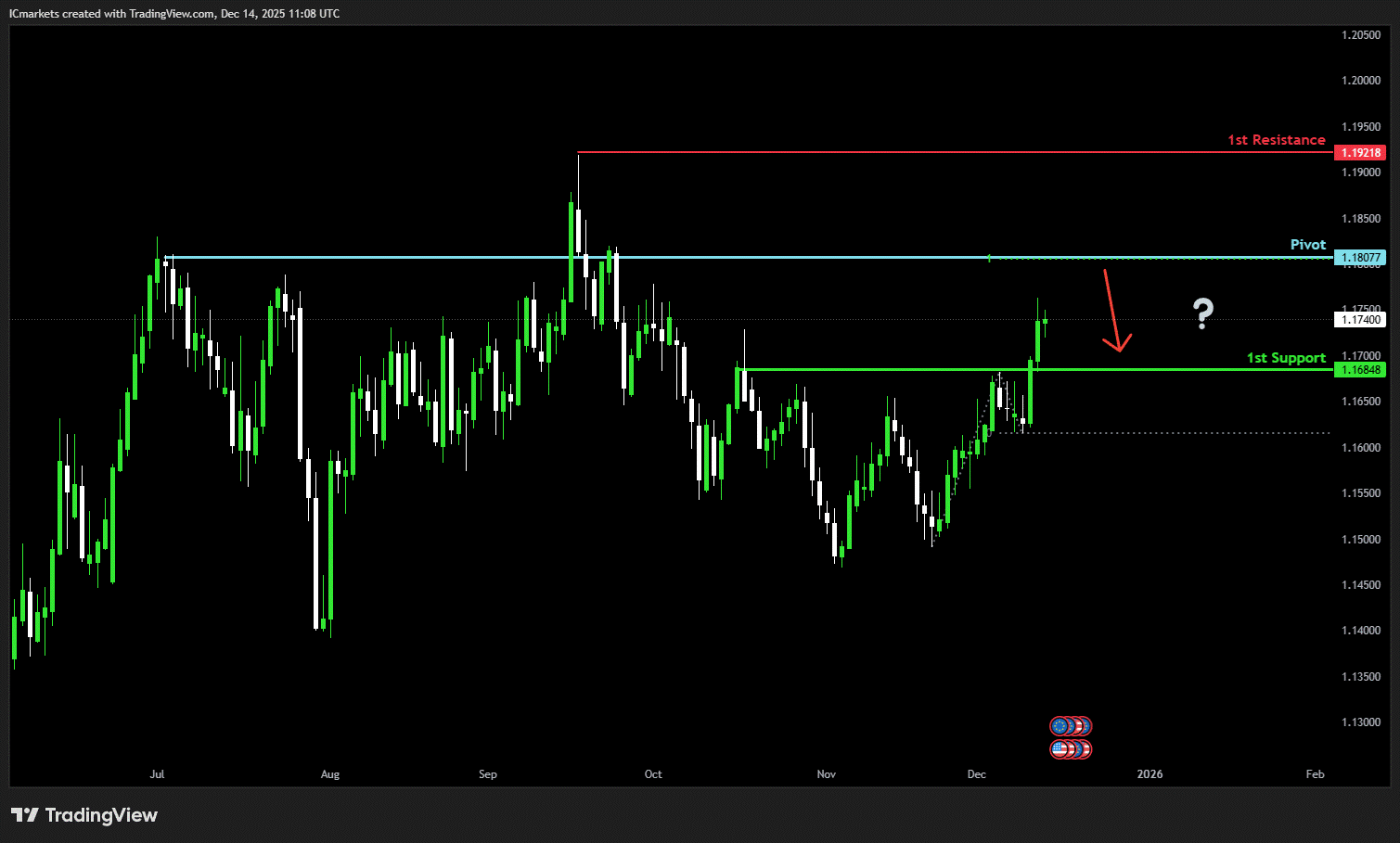
Potential Direction: Bearish
Overall momentum of the chart: Bullish
The price could see a short-term pullback toward the pivot before continuing its bearish move down toward the 1st support.
Pivot: 1.1807
Supporting reasons: Identified as a pullback resistance, where selling pressures could intensify and potentially cap any upward retracement.
1st support: 1.1684
Supporting reasons: Identified as a pullback support, indicating a potential level where the price could stabilize once again.
1st resistance: 1.1921
Supporting reasons: Identified as a swing high resistance, indicating a potential level that could cap further upward movement.
EUR/JPY:
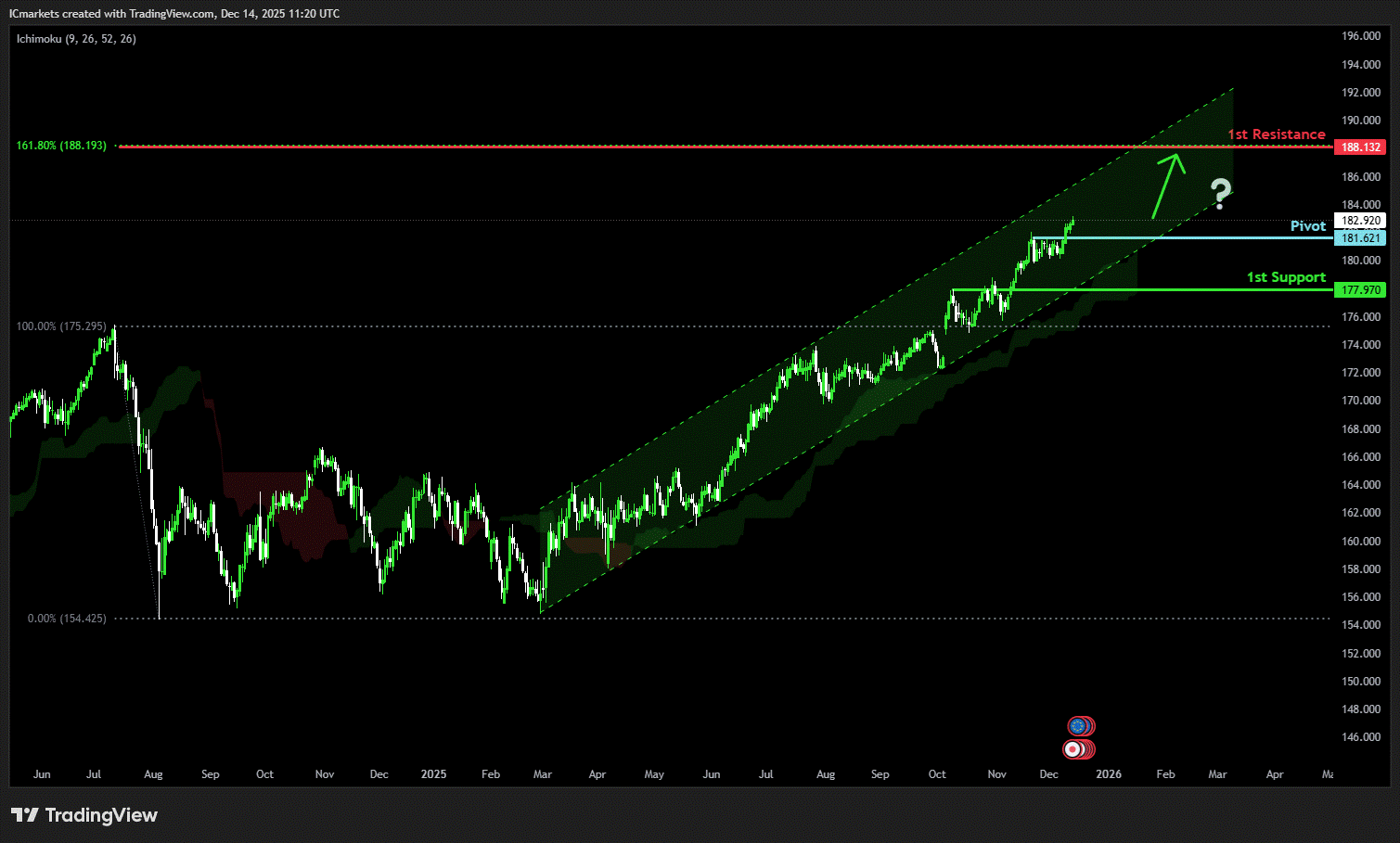
Potential Direction: Bullish
Overall momentum of the chart: Bullish
The price could make a short-term pullback toward the pivot before rising again toward the 1st resistance.
Pivot: 181.62
Supporting reasons: Identified as a pullback support, where renewed buying pressure could emerge to push the price higher.
1st support: 177.97
Supporting reasons: Identified as a pullback support, indicating a potential area where the price could again stabilize.
1st resistance: 188.13
Supporting reasons: Identified as a resistance that is supported by the 161.8% Fibonacci extension, indicating a potential level that could cap further upward movement.
EUR/GBP:
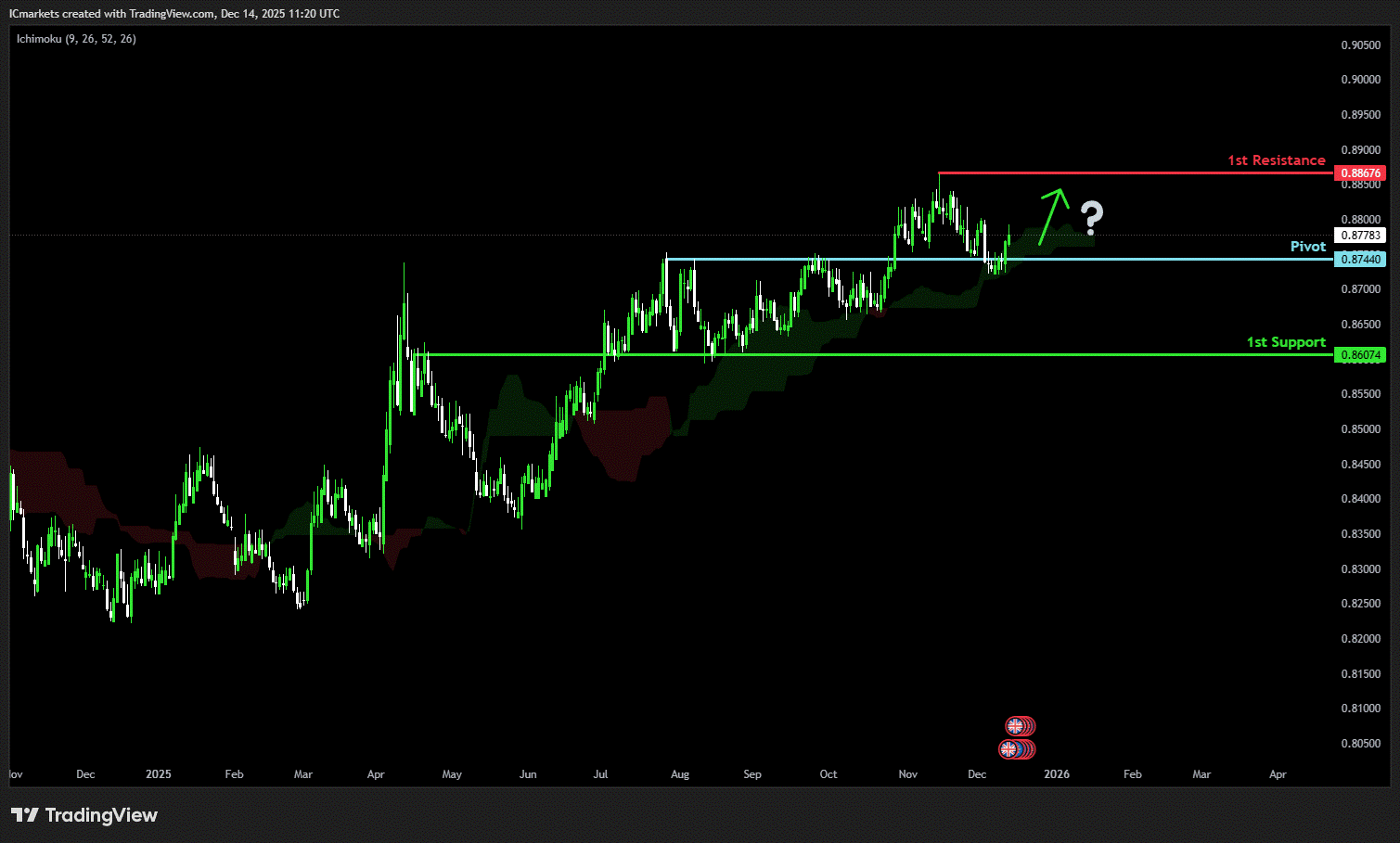
Potential Direction: Bullish
Overall momentum of the chart: Bullish
The price has already bounced off the pivot and may continue its bullish move toward the 1st resistance
Pivot: 0.8744
Supporting reasons: Identified as an overlap support, where renewed buying pressure could emerge to push the price higher.
1st support: 0.8607
Supporting reasons: Identified as an overlap support, indicating a potential area where the price could stabilize once more.
1st resistance: 0.8867
Supporting reasons: Identified as a swing high resistance, indicating a potential level that could cap further upward movement.
GBP/USD:
Potential Direction: Bearish
Overall momentum of the chart: Bullish
The price has already reacted off the pivot and may continue its bearish move toward the 1st support.
Pivot: 1.3394
Supporting reasons: Identified as an overlap resistance that aligns with the 50Fibonacci retracement, where selling pressures could intensify and potentially cap any upward retracement
1st support: 1.3208
Supporting reasons: Identified as an overlap support, indicating a potential area where the price could stabilize once more.
1st resistance: 1.3585
Supporting reasons: Identified as a pullback resistance, indicating a potential level that could halt further upward movement.
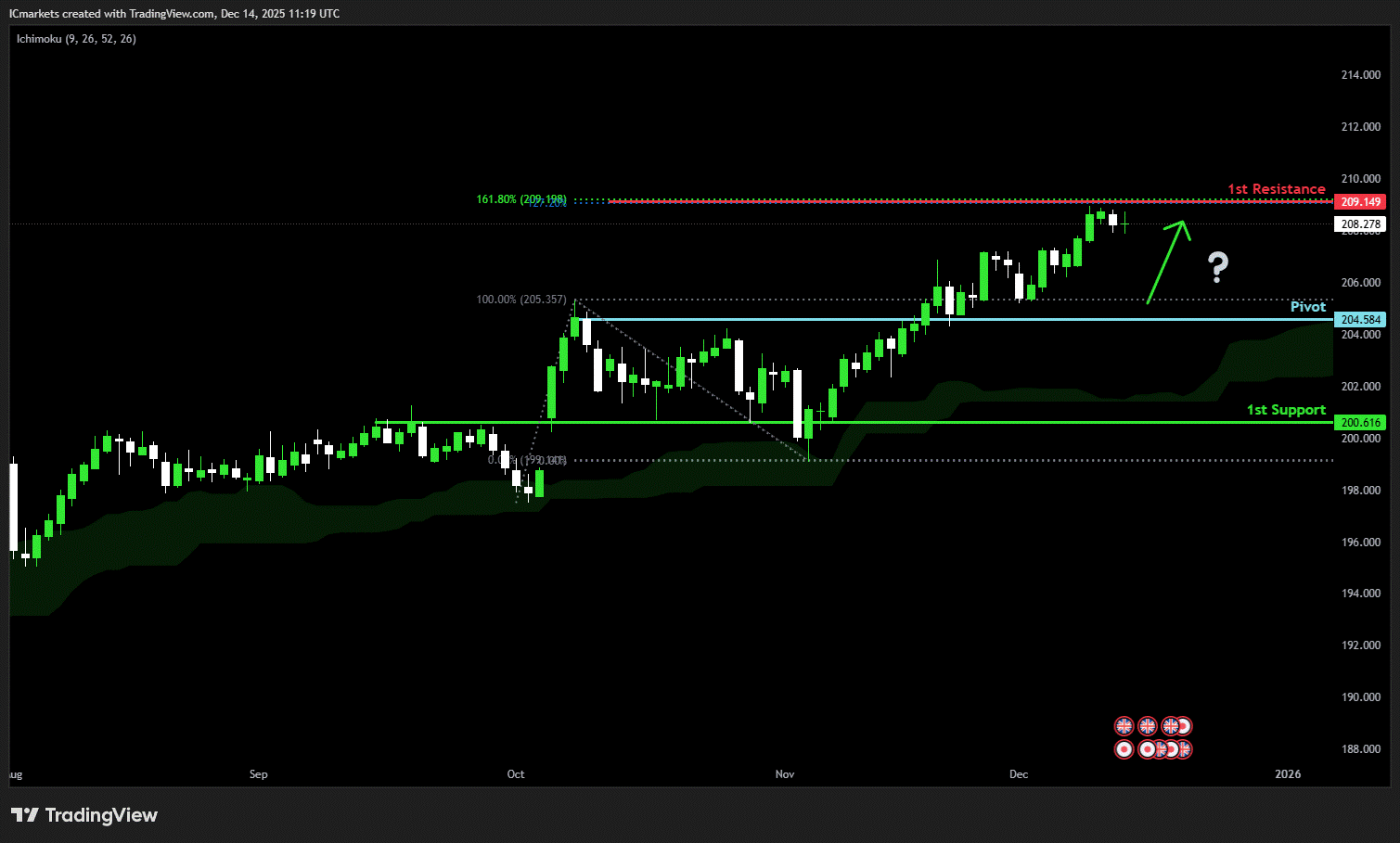
GBP/JPY:
Potential Direction: Bullish
Overall momentum of the chart: Bullish
The price could make a short-term pullback toward the pivot before rising again toward the 1st resistance
Pivot: 204,58
Supporting reasons: Identified as a pullback support, where renewed buying pressure could emerge to push the price higher.
1st support: 200.61
Supporting reasons: Identified as an overlap support, indicating a potential level where the price could stabilize once more.
1st resistance: 209.14
Supporting reasons: Identified as a resistance that aligns with the 161.8% Fibonacci extension, indicating a potential level that could halt further upward movement.
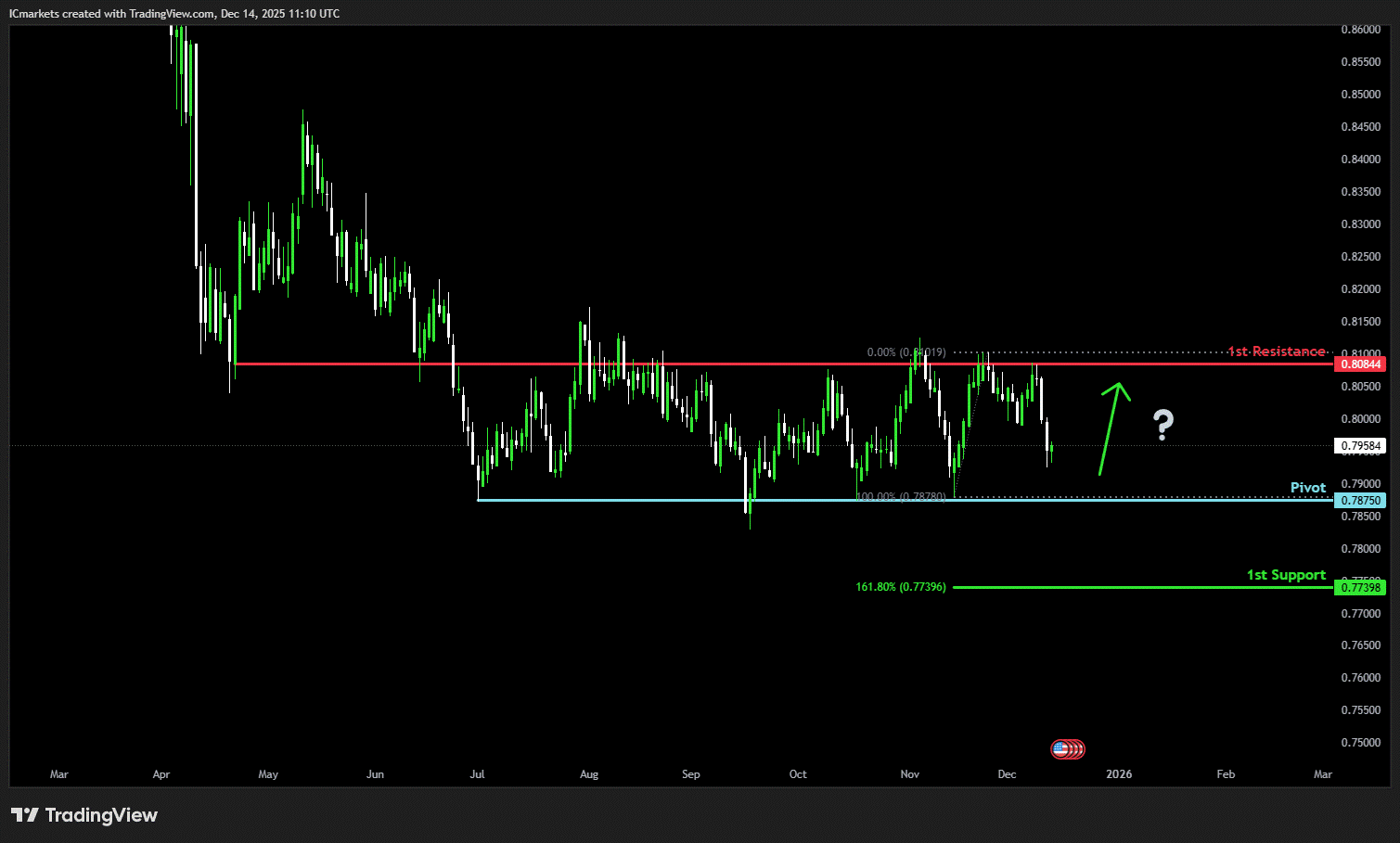
USD/CHF:
Potential Direction: Bullish
Overall momentum of the chart: Bearish
The price could see a short-term pullback toward the pivot before rising again toward the 1st resistance.
Pivot: 0.7875
Supporting reasons: Identified as an overlap support, where renewed buying pressure could emerge to push the price higher.
1st support: 0.7739
Supporting reasons: Identified as a support that is supported by the 161.8% Fibonacci extension, indicating a potential level where the price could stabilize once again.
1st resistance: 0.8084
Supporting reasons: Identified as an overlap resistance, indicating a potential level that could cap further upward movement.
USD/JPY:
Potential Direction: Bullish
Overall momentum of the chart: Bullish
The price could make a short-term pullback toward the pivot before rising again toward the 1st resistance
Pivot: 154.41
Supporting reasons: Identified as a pullback support, where renewed buying pressure could emerge to push the price higher.
1st support: 151.03
Supporting reasons: Identified as a pullback support, indicating a strong area where buyers might return, and the price could stabilize once again.
1st resistance: 158.33
Supporting reasons: Identified as an overlap resistance. This level represents the next key area where upward movement could be capped amid increased selling pressure

USD/CAD:
Potential Direction: Bearish
Overall momentum of the chart: Bearish
The price could see a short-term pullback toward the pivot before continuing its bearish move down toward the 1st support.
Pivot: 1.3916
Supporting reasons: Identified as a pullback resistance, where selling pressures could intensify and potentially cap any upward retracement.
1st support: 1.3761
Supporting reasons: Identified as an overlap support, indicating a key level where the price could stabilize once more.
1st resistance: 1.4107
Supporting reasons: Identified as a multi swing high resistance, making it a possible target for bullish advances and a level where some sellers could return to cap gains

AUD/USD:
Potential Direction: Bullish
Overall momentum of the chart: Bullish
The price could make a short-term pullback toward the pivot before rising again toward the 1st resistance
Pivot: 0.6538
Supporting reasons: Identified as a pullback support, where renewed buying pressure could emerge to push the price higher.
1st support: 0.6404
Supporting reasons: Identified as a pullback support, this area has provided strong support historically and may attract buying interest for a potential short-term bounce
1st resistance: 0.6681
Supporting reasons: Identified as a swing high resistance that aligns with the 161.8% Fibonacci extension, indicating a potential area that could halt any further upward movement.
NZD/USD
Potential Direction: Bullish
Overall momentum of the chart: Bearish
The price could make a short-term pullback toward the pivot before rising again toward the 1st resistance
Pivot: 0.5682
Supporting reasons: Identified as a pullback support, where renewed buying pressure could emerge to push the price higher.
1st support: 0.5584
Supporting reasons: Identified as a swing low support, this area has provided strong support historically and may attract buying interest for a potential short-term bounce
1st resistance: 0.5838
Supporting reasons: Identified as an overlap resistance that aligns with the 61.8% Fibonacci retracement, indicating a potential area that could halt any further upward movement.
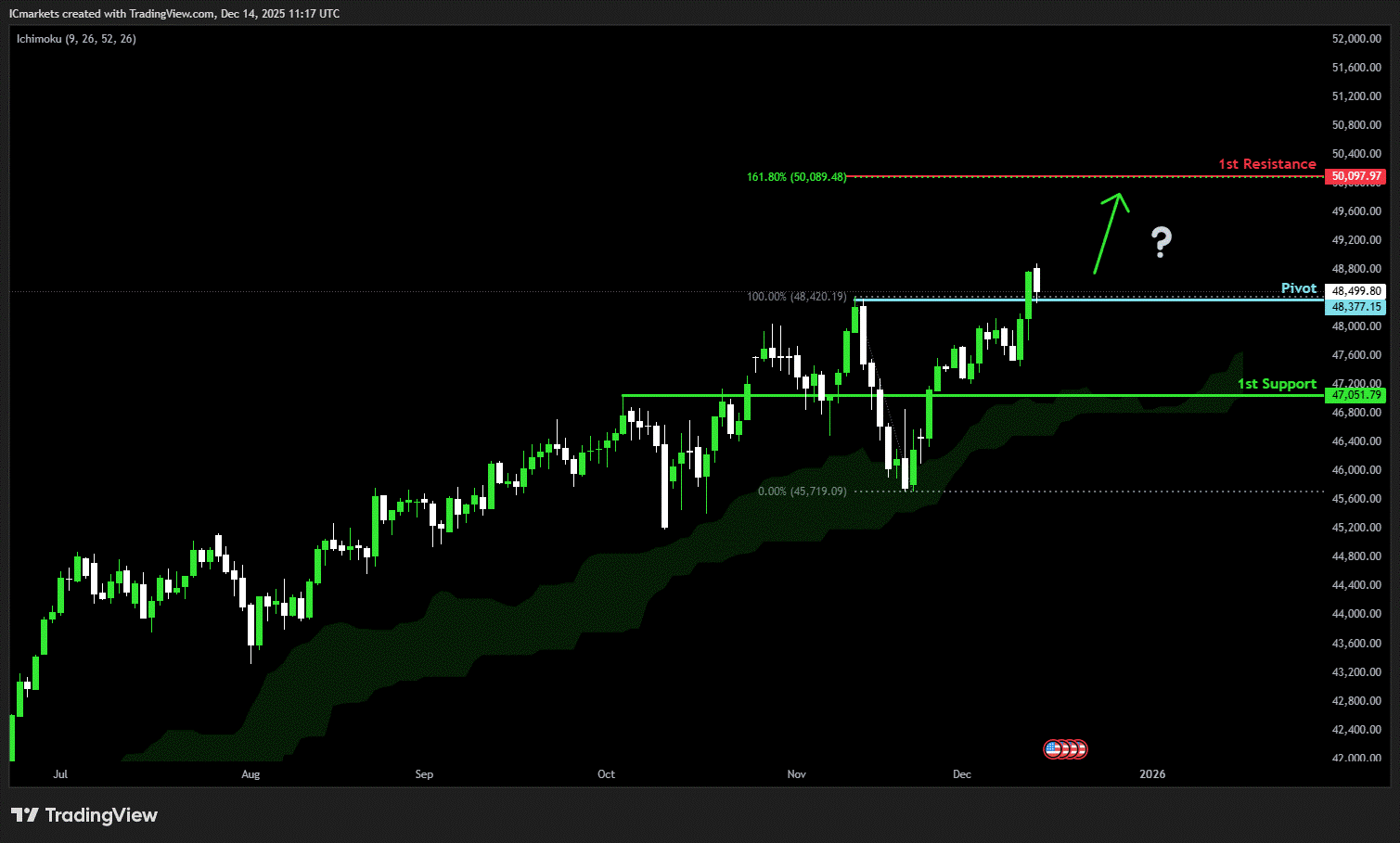
US30 (DJIA):
Potential Direction: Bullish
Overall momentum of the chart: Bullish
The price could make a short-term pullback toward the pivot before rising again toward the 1st resistance
Pivot: 48,377.15
Supporting reasons: Identified as a pullback support, where renewed buying pressure could emerge to push the price higher.
1st support: 47,051.79
Supporting reasons: Identified as a pullback support, suggesting a potential area where the price could stabilize once again.
1st resistance: 50,097.97
Supporting reasons: Identified as a resistance that is supported by the 161.8% Fibonacci extension, indicating a potential area that could halt any further upward movement.
DE40 (DAX):
Potential Direction: Bullish
Overall momentum of the chart: Bullish
The price could make a short-term pullback toward the pivot before rising again toward the 1st resistance
Pivot: 23,834.30
Supporting reasons: Identified as a pullback support, where renewed buying pressure could emerge to push the price higher.
1st support: 23,059.30
Supporting reasons: Identified as a pullback support, indicating a key level where the price could stabilize once more.
1st resistance: 24,635.40
Supporting reasons: Identified as a multi-swing high resistance, indicating a potential area that could halt any further upward movement.

US500 (S&P 500):
Potential Direction: Bullish
Overall momentum of the chart: Bullish
The price could make a short-term pullback toward the pivot before rising again toward the 1st resistance
Pivot: 6,505.98
Supporting reasons: Identified as an overlap support, where renewed buying pressure could emerge to push the price higher.
1st support: 6,141.15
Supporting reasons: Identified as a pullback support that aligns with the 38.2% Fibonacci retracement, indicating a potential level where the price could stabilize once again.
1st resistance: 6,900.95
Supporting reasons: Identified as a swing high resistance, indicating a potential area that could halt any further upward movement.
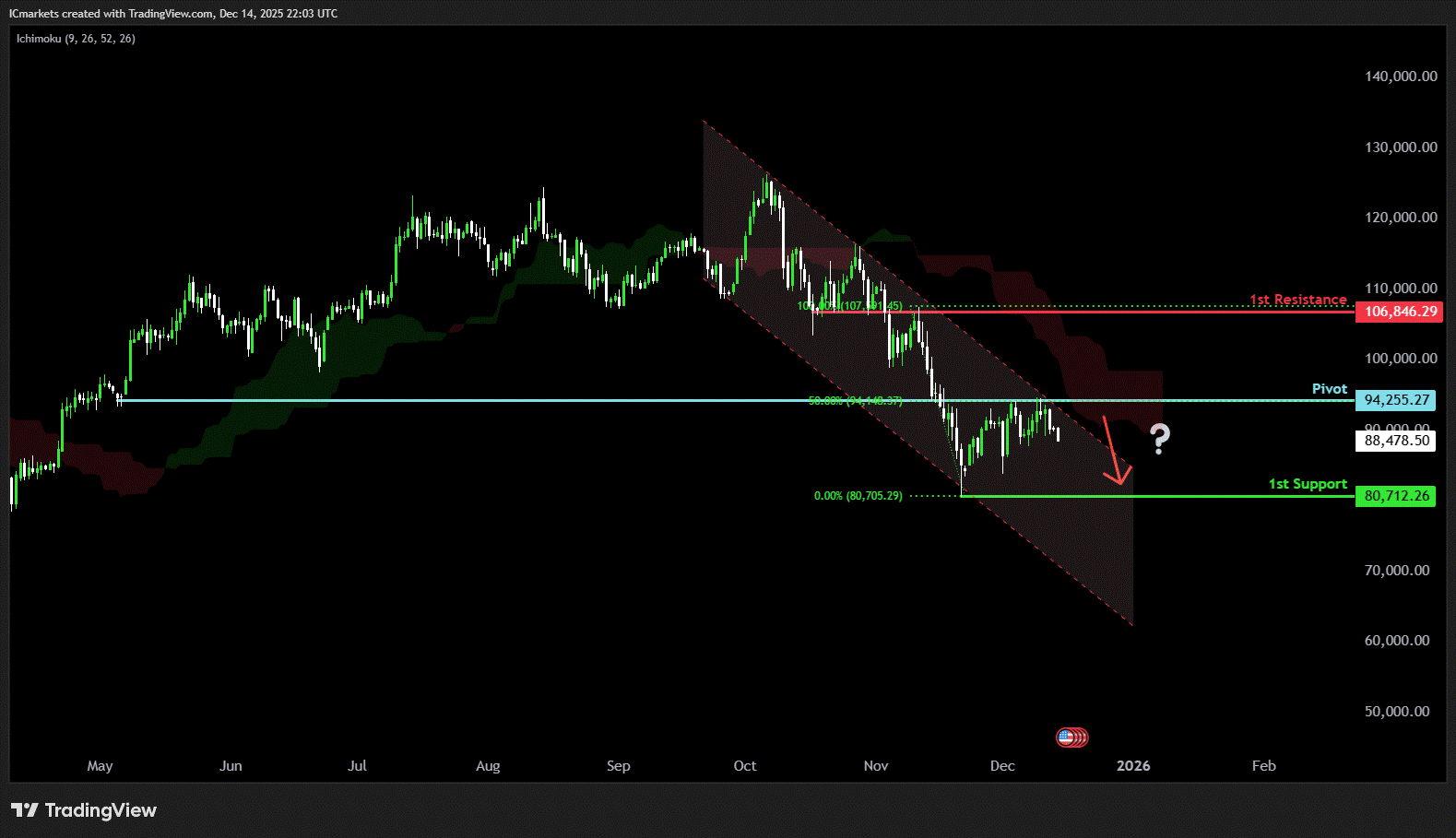
BTC/USD (Bitcoin):
Potential Direction: Bearish
Overall momentum of the chart: Bullish
The price has already reacted off the pivot and may continue its bearish move toward the 1st support.
Pivot: 94,255.27
Supporting reasons: Identified as a pullback resistance that aligns with the 50% Fibonacci retracement, where selling pressures could intensify and potentially cap any upward retracement.
1st support: 80,712.26
Supporting reasons: Identified as an overlap support, indicating a potential level where the price could stabilize once more.
1st resistance: 106,846.29
Supporting reasons: Identified as an overlap resistance, indicating a potential area that could halt any further upward movement.
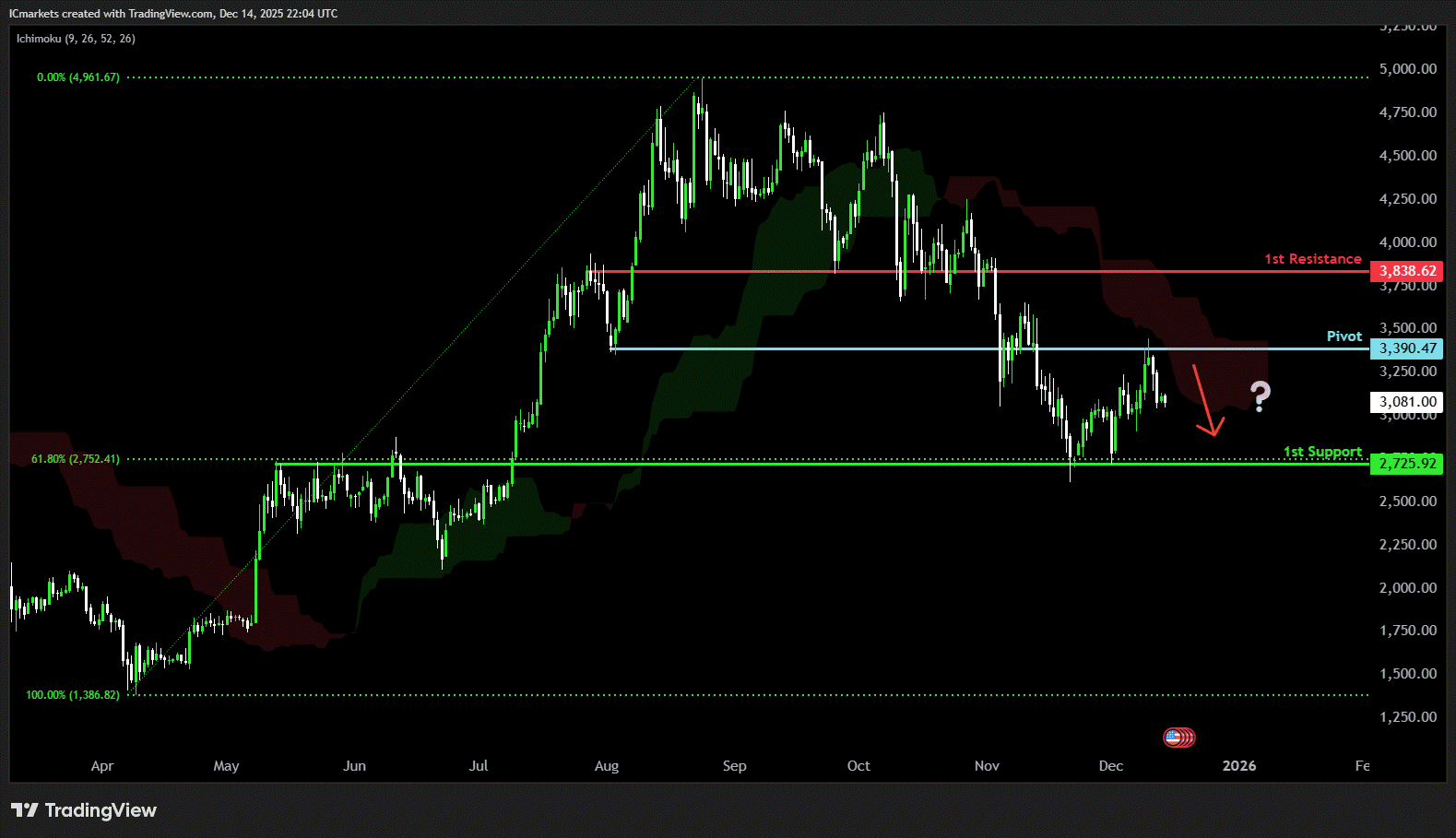
ETH/USD (Ethereum):
Potential Direction: Bearish
Overall momentum of the chart: Bullish
The price has already reacted off the pivot and may continue its bearish move toward the 1st support.
Pivot: 3,390.47
Supporting reasons: Identified as a pullback resistance, where selling pressures could intensify and potentially cap any upward retracement.
1st support: 2,725.92
Supporting reasons: Identified as an overlap support that aligns with the 61.8% Fibonacci retracement, indicating a potential level where the price could stabilize once more.
1st resistance: 3,838.62
Supporting reasons: Identified as a pullback resistance, indicating a potential area that could halt any further upward movement.
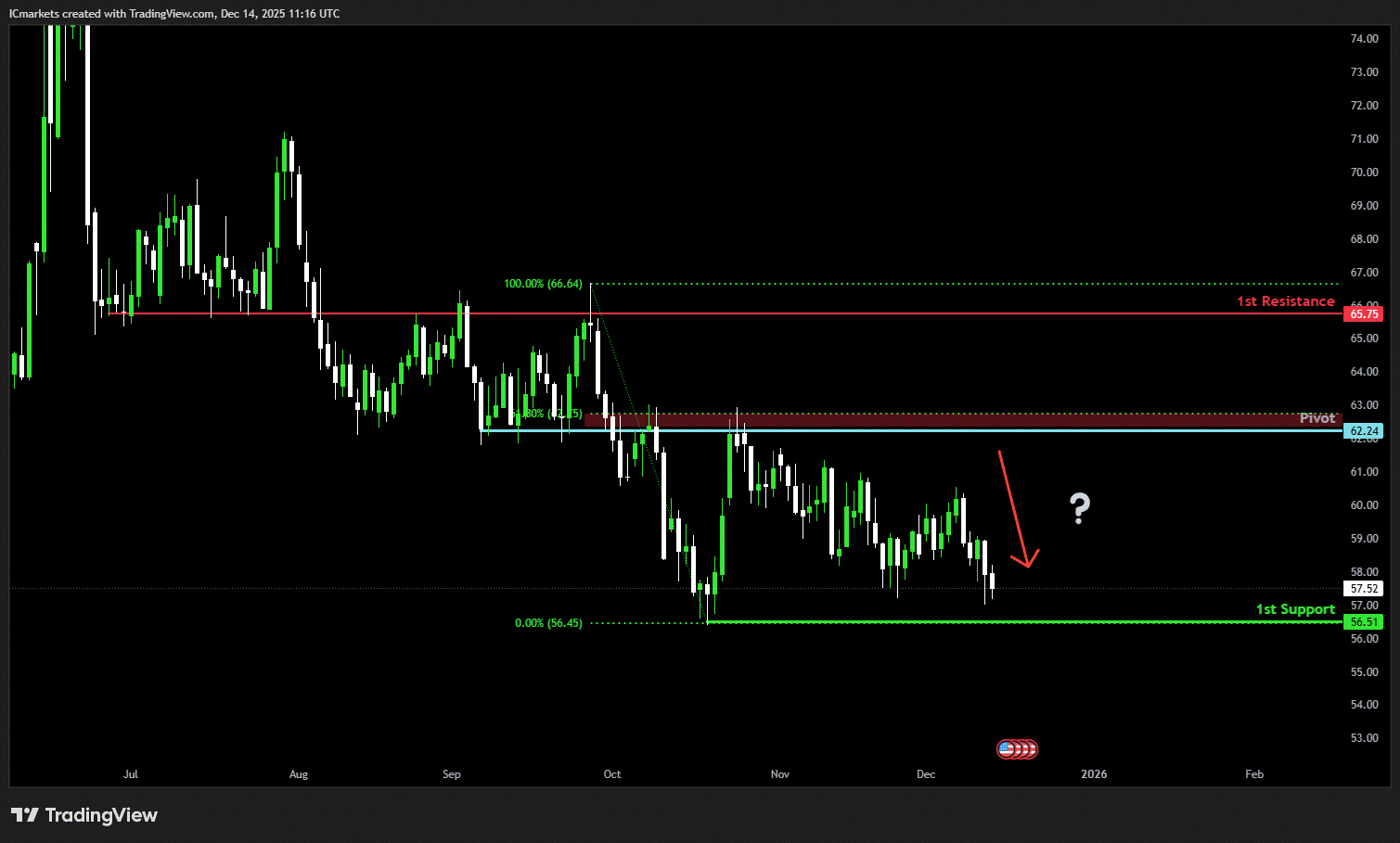
WTI/USD (Oil):
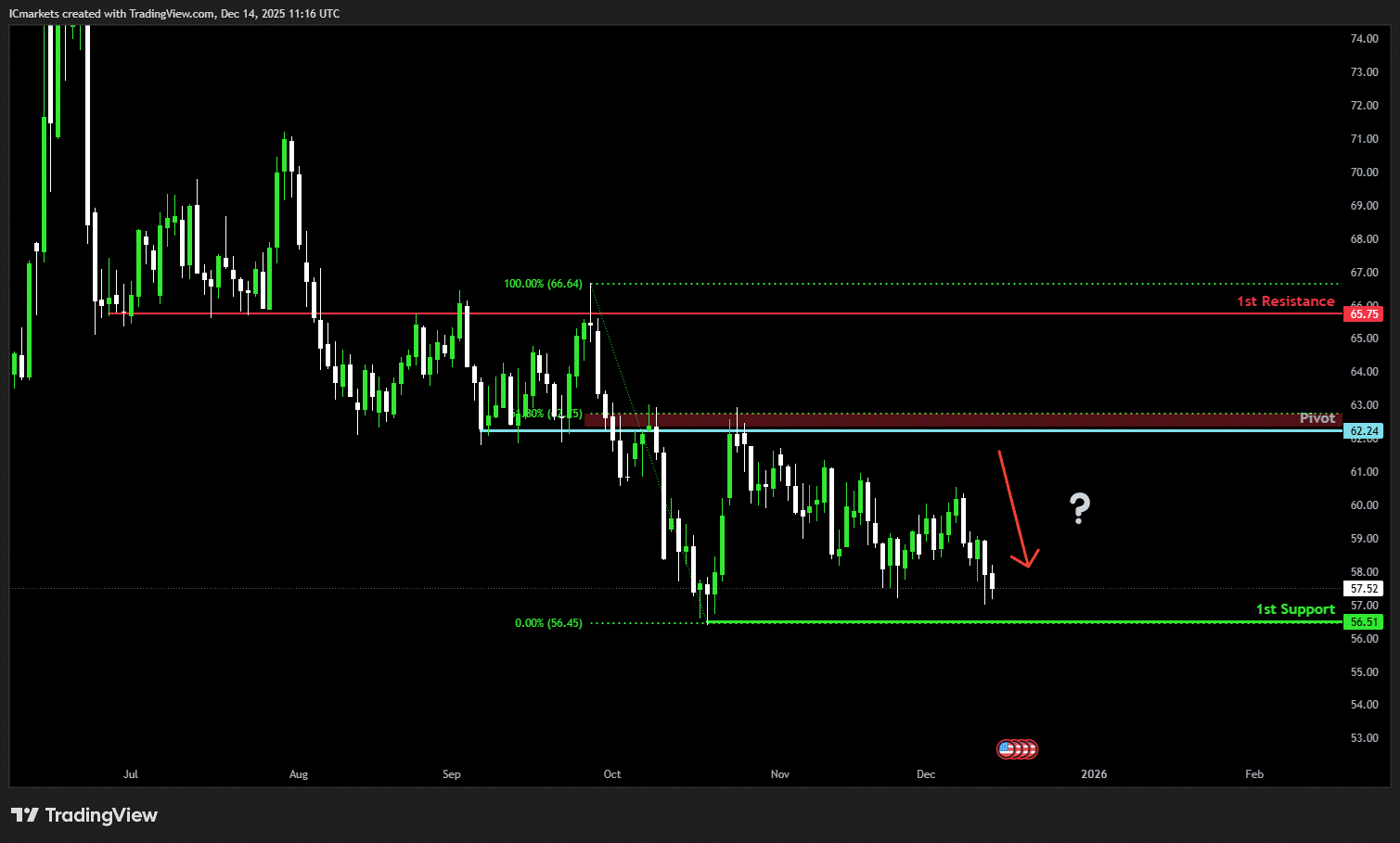
Potential Direction: Bearish
Overall momentum of the chart: Bullish
The price could see a short-term pullback toward the pivot before continuing its bearish move down toward the 1st support.
Pivot: 62.24
Supporting reasons: Identified as a pullback resistance that aligns with the 61.8% Fibonacci retracement, where selling pressures could intensify and potentially cap any upward retracement
1st support: 56.51
Supporting reasons: Identified as a swing low support, indicating a key level where the price could stabilize once more.
1st resistance: 65.75
Supporting reasons: Identified as an overlap resistance that aligns with the 61.8% Fibonacci retracement, indicating a potential area that could halt any further upward movement.
XAU/USD (GOLD):
Potential Direction: Bullish
Overall momentum of the chart: Bullish
The price could see a short-term pullback toward the pivot before rising again toward the 1st resistance.
Pivot: 4,244.72
Supporting reasons: Identified as a pullback support, where renewed buying pressure could emerge to push the price higher.
1st support: 4,041.68
Supporting reasons: Identified as a pullback support, indicating a key level where the price could stabilize once more.
1st resistance: 4,379.38
Supporting reasons: Identified as a swing resistance, indicating a potential area that could halt any further upward movement.

The accuracy, completeness and timeliness of the information contained on this site cannot be guaranteed. IC Markets Global does not warranty, guarantee or make any representations, or assume any liability regarding financial results based on the use of the information in the site.
News, views, opinions, recommendations and other information obtained from sources outside of www.icmarkets.com, used in this site are believed to be reliable, but we cannot guarantee their accuracy or completeness. All such information is subject to change at any time without notice. IC Markets Global assumes no responsibility for the content of any linked site.
The fact that such links may exist does not indicate approval or endorsement of any material contained on any linked site. IC Markets Global is not liable for any harm caused by the transmission, through accessing the services or information on this site, of a computer virus, or other computer code or programming device that might be used to access, delete, damage, disable, disrupt or otherwise impede in any manner, the operation of the site or of any user’s software, hardware, data or property.
The post Monday 15th December 2025: Technical Outlook and Review first appeared on IC Markets | Official Blog.
Monday 15th December 2025: Asian Markets Slide on Wall Street Tech Rout, Australia and Japan Lead Declines
December 15, 2025 16:00 ICMarkets Market News
Global Markets:
- Asian Stock Markets : Nikkei down -1.56%, Shanghai Composite down -0.11%, Hang Seng down -0.99% ASX down -0.83%
- Commodities : Gold at $4,358.70 (0.70%), Silver at $62.850 (1.33%), Brent Oil at $61.42 (0.49%), WTI Oil at $57.55 (0.54%)
- Rates : US 10-year yield at 4.181, UK 10-year yield at 4.5180, Germany 10-year yield at 2.8611
News & Data:
- (CAD) Building Permits m/m 14.9% to -1.4% expected
Markets Update:
Asian stock markets are trading mostly lower on Monday, tracking broadly negative cues from Wall Street on Friday, where heavy selling in technology stocks weighed sharply on sentiment. Losses on the tech-heavy Nasdaq, driven by renewed concerns over stretched valuations and uncertainty around the interest-rate outlook, set a cautious tone across the region. Asian markets had closed mostly higher in the previous session.
In Australia, shares are notably lower, giving back part of Friday’s strong gains. The benchmark S&P/ASX 200 has slipped below the 8,650 level amid weakness in mining and energy stocks, reflecting softer commodity prices. Major miners and oil producers are mostly lower, while tech stocks are mixed. Gold miners are also under pressure, although the big banks are showing a mixed performance.
Japanese shares are trading sharply lower, reversing the previous session’s gains. The Nikkei 225 has fallen below 50,100, dragged down by declines in technology and exporter stocks, partly offset by modest gains in automakers and financials. Shares of SoftBank Group are among the biggest laggards, while select defensives and healthcare names are advancing.
Economic data showed Japan’s business sentiment improved slightly in the December quarter, according to the Tankan Survey released by the Bank of Japan.
Elsewhere in Asia, South Korea and Taiwan are down more than 1 percent, while most other regional markets are modestly lower. On Wall Street, all major averages ended lower on Friday, with technology stocks leading the decline. European markets also finished weaker, and crude oil prices eased, with U.S. dollar movements remaining firm against the yen.
Upcoming Events:
- 01:30 PM GMT – CAD CPI m/m
- 01:30 PM GMT – CAD Median CPI y/y
- 01:30 PM GMT – CAD Trimmed CPI y/y
The post Monday 15th December 2025: Asian Markets Slide on Wall Street Tech Rout, Australia and Japan Lead Declines first appeared on IC Markets | Official Blog.
investingLive Asia-Pacific FX news wrap: Yen moves higher on BoJ data & expectations
December 15, 2025 12:00 Forexlive Latest News Market News
- Japan Tertiary Industry Index October +0.9% m/m (beats expected of +0.2% & prior +0.3%)
- Citi forecasts 2 RBA rate hikes in 2026, February followed by May, as inflation risks rise
- Indian rupee hits record low, downtrend remains despite likely RBI intervention
- China yuan hits 14-month high even as weak consumer demand clouds economic growth outlook
- China signals more policy support (same old?) as economy ‘stabilises’ in November
- BOJ Tankan and comments lift December hike odds, yen firms
- RBNZ Governor Breman: If economy evolves as expected, current 2.5% rate likely remains
- China Nov Retail Sales (YoY) 1.3% (exp 2.9%) & Industrial Production (YoY) 4.8% (exp 5.0%)
- China November new house prices -0.4% m/m and -2.4% y/y
- PBOC sets USD/ CNY reference rate for today at 7.0656 (vs. estimate at 7.0569)
- Roomba maker iRobot files for bankruptcy, cedes control to supplier
- China Vanke fails to secure delay on $284m bond payment, gets just 5 days breathing space
- BOJ official says Tankan shows easing trade fears but rising cost pressures
- UK asking house prices fall sharply in December, Rightmove says
- Bank of Japan Tankan shows large manufacturing index improved from Q3
- Rollover for U.S. Equity Index Futures is Monday, December 15, 2025: What You Need to Know
- NZD forecast downgraded as NZIER cuts near-term growth outlook
- Intervention watch – South Korea extends bond market stabilisation programmes into 2026
- Fortescue to buy remaining stake in Alta Copper for CAD139m
- Early market response cite Bondi terrorist attack as AUD weight
- Musk says small nuclear reactors ‘super dumb’
- China to issue ultra-long-term bonds to fund strategic priorities – weekend announcement
- Hassett says Trump is a lightweight on the Federal Reserve
- Kuwait’s oil minister said recent slide in crude prices unexpected, fair oil price $60–68
- RBNZ files civil proceedings against ASB over Anti-Money Laundering breaches
- Ukraine offers to drop NATO bid as U.S.-led peace talks continue
- New Zealand services sector sinks deeper into contraction in November
- Monday morning open levels – indicative forex prices – 15 December 2025
Japan’s corporate sentiment remained broadly stable in the Bank of Japan’s December Tankan survey, with large manufacturers’ sentiment holding steady and services-sector conditions remaining elevated. While profit expectations softened and labour shortages persisted, follow-up comments from a BOJ official highlighted easing trade uncertainty, improved cost pass-through and resilient demand, particularly linked to AI and semiconductors. Rising labour costs and price pressures were cited as headwinds, but overall the data and commentary reinforced the case for gradual policy normalisation. The BOJ is widely expected to deliver a rate hike at its December 18–19 meeting.
In FX markets, the yen initially weakened following the Tankan release, with USD/JPY pushing toward the 156.00 level in early trade. However, the move quickly reversed as markets digested the details, with the pair sliding back to around 155.30, reflecting growing sensitivity to BOJ policy expectations.
—
NZD/USD lost ground on remarks from Reserve Bank of New Zealand Governor Breman hinting at a further move lower in rates, if needed.
—
Over the weekend, China’s finance ministry said it plans to issue ultra-long-term special government bonds next year, with proceeds earmarked for key national strategies, security initiatives and industrial upgrading. The announcement signals ongoing fiscal support, though the lack of detail around specific projects limited immediate market reaction.
Stress in the property sector remains acute. Bonds issued by China Vanke were sold heavily, with the developer still locked in negotiations with bondholders just one business day ahead of a key maturity and no agreement yet in place. Fresh data underscored the depth of the downturn, with new home prices falling month-on-month for a 30th straight month and existing home prices declining for a 31st consecutive month.
November activity data painted a mixed picture. Retail sales growth slowed sharply, reflecting weak consumer demand amid falling household wealth. The National Bureau of Statistics said the economy had “stabilised while improving,” citing firmer momentum in parts of industrial production and services, but acknowledged ongoing challenges. Officials pledged to step up counter-cyclical and cross-cyclical policy adjustments, signalling readiness to deploy further support if needed, though no specific measures were announced.
—
In regional FX, the onshore yuan climbed to a 14-month high, while the Indian rupee continued to weaken, drawing further intervention from the Reserve Bank of India.
Geopolitics
Ukraine signalled a potential shift in its war aims, with President Volodymyr Zelenskiy indicating a willingness to drop NATO membership ambitions as peace talks with U.S. envoys in Berlin showed signs of progress.
—
Note:
Rollover for U.S. equity index futures takes place on Monday, December 15, with liquidity expected to migrate into the next contract as volume and open interest shift.
Asia-Pac
stocks:
- Japan
(Nikkei 225) -1.47% - Hong
Kong (Hang Seng) -0.92% - Shanghai
Composite -0.11% - Australia
(S&P/ASX 200) -0.77%
This article was written by Eamonn Sheridan at investinglive.com.
Japan Tertiary Industry Index October +0.9% m/m (beats expected of +0.2% & prior +0.3%)
December 15, 2025 11:39 Forexlive Latest News Market News
Japan Tertiary Industry Index October +0.9% m/m
- beats expected of +0.2% & prior +0.3%
USD/JPY has hit a new session low around 151.21.
—
The Japan Tertiary Industry Index measures monthly changes in output across Japan’s service sector, which accounts for roughly 70% of the economy.
Compiled by the Ministry of Economy, Trade and Industry (METI), the index tracks activity in industries such as wholesale and retail trade, transport, information and communications, finance, real estate, healthcare and personal services. It is designed to capture the volume of services produced rather than prices, making it a useful gauge of real economic activity. Because services dominate domestic demand and employment, the index is closely watched for signals on consumption trends, wage dynamics and inflation pressures.
Persistent strength can reinforce the case for tighter monetary policy, while weakness may point to slowing demand and reduced inflation momentum.
This result is a good ‘un, further supporting the BOJ rate hike expectation at this week’s meeting (Thursday and Friday).
This article was written by Eamonn Sheridan at investinglive.com.
China signals more policy support (same old?) as economy ‘stabilises’ in November
December 15, 2025 09:39 Forexlive Latest News Market News
China’s economy showed signs of stabilisation and gradual improvement in November, but authorities warned that external headwinds and persistent domestic imbalances continue to weigh on the outlook, signalling a readiness to step up policy support.
Speaking after the release of November activity data, a spokesperson for the National Bureau of Statistics (NBS) said economic conditions had “stabilised while improving,” reflecting firmer momentum in parts of industrial production and services. However, the official cautioned that changes in the external environment are having a deeper impact, underscoring ongoing pressure from global demand conditions, trade uncertainty and financial market volatility.
The spokesperson highlighted a growing tension between strong domestic supply capacity and weak demand, describing the imbalance as increasingly prominent. While production capacity in some sectors remains ample, subdued household and corporate demand continues to constrain pricing power and profitability. As a result, certain industries and firms are facing mounting operational difficulties.
The comments reinforce the view that China’s recovery remains uneven, with supply-side strength outpacing demand-side momentum. This imbalance has contributed to lingering deflationary pressures and has kept policymakers focused on supporting demand without reigniting financial risks.
In response, the NBS said authorities will step up both counter-cyclical and cross-cyclical policy adjustments, language that typically signals a willingness to deploy additional fiscal, monetary and structural support if conditions warrant. While no specific measures were outlined, the guidance suggests policymakers remain prepared to fine-tune stimulus to stabilise growth and cushion against external shocks.
The remarks are likely to reinforce market expectations for continued targeted support into early 2026, particularly if domestic demand fails to recover more decisively. For now, officials appear intent on maintaining stability while preserving flexibility to respond to a more challenging global backdrop.
This article was written by Eamonn Sheridan at investinglive.com.
China Nov Retail Sale (YoY) 1.3% (exp 2.9%) & Industrial Production (YoY) 4.8% (exp 5.0%)
December 15, 2025 09:14 Forexlive Latest News Market News
China’s property investment plummeted to a 15.9% year-on-year decline in the first 11 months, a widening drop from the previous period.
- Property sales and new construction starts also continued to decrease, alongside a significant fall in funds raised by developers.
Urban area unemployment rate 5.10%
- same as October, 5.10%
–
Earlier:
- China debt crackdown pushes LGFVs into costly shadow loans, reviving hidden-risk worries
- USTR Greer calls for smaller, balanced China trade and tighter USMCA enforcement
This article was written by Eamonn Sheridan at investinglive.com.
China November new house prices -0.4% m/m and -2.4% y/y
December 15, 2025 08:39 Forexlive Latest News Market News
China November 2025 house prices
China New Home Prices -0.39% m/m
- prior –0.45%
- for the y/y, -2.4% (prior -2.2%)
Used Homes Prices -0.66% m/m
- prior –0.66%
—
I seem to write something like this every month … This is a self feeding vicious cycle. Why buy a home when the price will soon fall? The indebted property sector continues to weigh on the Chinese economy. Stimulus and surprisingly resilient exports are a counter balance of sorts.
—
Earlier:
- China to issue ultra-long-term bonds to fund strategic priorities – weekend announcement
- China Vanke fails to secure delay on $284m bond payment, gets just 5 days breathing space
—
And, plenty of data to come from China soon:
This article was written by Eamonn Sheridan at investinglive.com.
UK asking house prices fall sharply in December, Rightmove says
December 15, 2025 07:14 Forexlive Latest News Market News
UK home asking prices fell by more than is typical for the time of year in early December, according to property website Rightmove, highlighting a subdued housing market around last month’s government budget.
- Rightmove said average asking prices for newly listed homes dropped 1.8% month-on-month in the four weeks to December 6, a steeper fall than the 10-year average decline of 1.4% for the period.
- Prices were also 0.6% lower than a year earlier (compared with November of -0.5% y/y)
The report adds to evidence of softer market conditions. The UK budget included plans for a new annual tax on homes valued above £2 million from April 2028.Rightmove said there were early signs of a post-budget pickup in sales activity at the top end of the London market.
Looking ahead, Rightmove expects a more stable economic backdrop to support a rebound in activity and around 2% house price growth in 2026.
This article was written by Eamonn Sheridan at investinglive.com.
China to issue ultra-long-term bonds to fund strategic priorities – weekend announcement
December 15, 2025 05:39 Forexlive Latest News Market News
China’s finance ministry said it plans to issue ultra-long-term special government bonds next year, with proceeds earmarked to support key national strategies and security-related initiatives.
In a statement released on Saturday, the ministry said funds will also be used to finance large-scale equipment upgrades and consumer goods trade-in programs, following a meeting to implement decisions from the Central Economic Work Conference.
The ministry did not disclose details on the specific strategic or major construction projects that will receive funding. It also reiterated its commitment to tackling local government debt risks, pledging to actively reduce existing liabilities and strictly prevent the accumulation of new hidden debt.
—
The announcement signals continued fiscal support for growth and industrial upgrading, though the lack of project detail may limit near-term market reaction.
This article was written by Eamonn Sheridan at investinglive.com.
Musk says small nuclear reactors ‘super dumb’
December 15, 2025 05:39 Forexlive Latest News Market News
Musk weighing in on nuclear reactors in a tweet:
- The Sun is an enormous, free fusion reactor in the sky. It is super dumb to make tiny fusion reactors on Earth.
- Even if you burned 4 Jupiters, the Sun would still round up to 100% of all power that will ever be produced in the solar system!!
- Stop wasting money on puny little reactors, unless actively acknowledging that they are just there for your pet science project jfc.
This article was written by Eamonn Sheridan at investinglive.com.